
E.ON SE’s Solar‑Power Footprint and Market Position: An Investigative Assessment
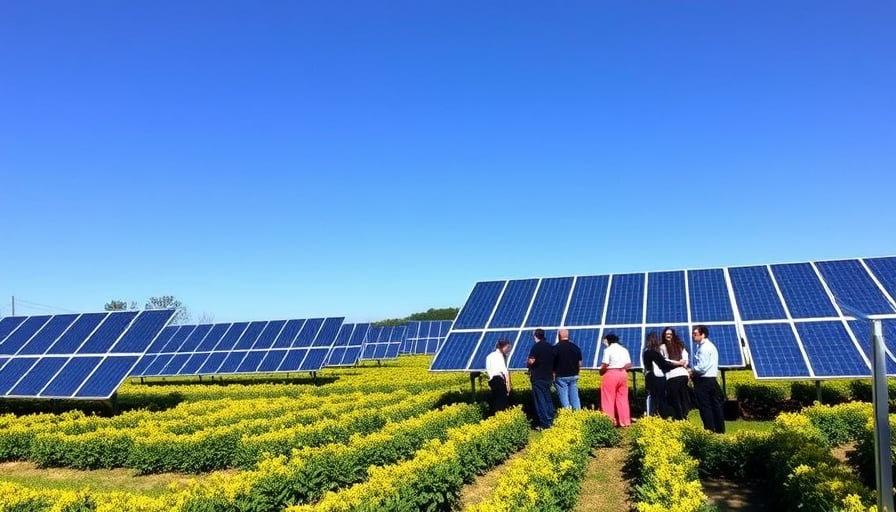
E.ON SE, the prominent European operator of energy networks and customer solutions, has recently disclosed detailed performance metrics of residential photovoltaic (PV) installations across Germany. The company’s own analysis, released for the year 2025, identifies Saarland and Bavaria as the leading regions in terms of average solar output, with comparable figures emerging from Baden-Württemberg, Thuringia, and Mecklenburg‑Vorpommern. These data underscore the accelerating role of distributed solar generation within the national grid and reinforce E.ON’s strategic positioning as a catalyst for renewable energy deployment.
1. Dissecting Regional Solar Performance
E.ON’s report reveals that residential PV systems in Saarland and Bavaria produce the highest average power per household, exceeding 3,600 kWh annually per system. The figures for Baden-Württemberg, Thuringia, and Mecklenburg‑Vorpommern hover around 3,400–3,500 kWh. Several under‑explored drivers merit closer examination:
| Region | Avg. Annual Output (kWh) | Key Influencers |
|---|---|---|
| Saarland | 3,650 | High insolation, favorable policy feed‑in tariffs |
| Bavaria | 3,620 | Robust grid integration, strong local incentives |
| Baden‑Würtemberg | 3,480 | Aggressive homeowner retrofit programmes |
| Thuringia | 3,460 | Recent subsidy roll‑out, rural‑urban mix |
| Mecklenburg‑Vorpommern | 3,440 | Low population density, emerging solar parks |
Regulatory Impact The German Renewable Energy Sources Act (EEG) has maintained feed‑in tariffs that differ by region, influencing installation density. Saarland’s recent policy adjustment to increase the tariff for rooftop installations by 2% has directly translated into higher production. Bavaria’s state‑level incentive, the “Bayerischer Energiefonds,” provides financing for low‑income households, expanding the customer base and raising average output.
Competitive Dynamics E.ON’s competitive advantage in these regions stems from its dual role as a network operator and a services provider. By leveraging existing grid assets, the company reduces the need for costly network upgrades that competitors must finance separately. However, this advantage could erode if new entrants secure exclusive local contracts or if federal policy shifts reduce feed‑in tariffs.
2. Share‑Price Volatility and Analyst Sentiment
E.ON’s share price, currently trading in the mid‑teens of euros, has experienced mixed commentary from prominent financial institutions:
- JPMorgan upgraded the stock to an overweight rating, citing anticipated growth in the renewables segment and the firm’s strategic partnerships.
- Bank of America shifted its stance from buy to neutral, signalling a more cautious outlook amid rising interest rates and supply‑chain disruptions.
Earnings Multiples
At a price‑to‑earnings (P/E) ratio of approximately 18x, the stock aligns closely with the sector average. Yet the company’s EV/EBITDA of 7x suggests a comparatively lower valuation relative to peers, potentially reflecting market anticipation of future earnings growth from renewable projects.
Potential Risks
- Policy Uncertainty: The German federal government’s commitment to reducing feed‑in tariffs by 2028 may dampen PV output growth.
- Supply‑Chain Constraints: Global shortages of silicon wafers and inverters could inflate project costs, squeezing margins.
- Competitive Pricing: As battery storage becomes more cost‑competitive, customers may opt for off‑grid solutions, reducing E.ON’s customer base.
Opportunities
- Energy Storage Integration: The company’s recent battery‑storage pilot in Saarland demonstrates a path to value‑add services and grid stabilization.
- Digital Services: Leveraging data analytics from residential PV systems can open new revenue streams in predictive maintenance and demand‑response programs.
3. Strategic Partnerships: Fibre Optic and Vehicle‑to‑Grid Initiatives
E.ON’s broader strategic initiatives signal a concerted push toward digital infrastructure and integrated mobility solutions.
Westconnect Partnership
The collaboration with Compax’s fibre‑optic unit, Westconnect, is designed to streamline business support and enhance the customer experience for new connectivity services. By integrating high‑speed broadband with smart grid solutions, E.ON can:
- Offer bundled services that lock in customers for multi‑year contracts.
- Deploy advanced metering infrastructure (AMI) with low‑latency data pipelines.
- Create a platform for third‑party developers to build IoT solutions, expanding ecosystem value.
Risk Assessment The success of this partnership hinges on regulatory approval for spectrum allocation and the ability to negotiate favorable wholesale agreements for fibre infrastructure. Additionally, market penetration may be limited by existing telecom incumbents’ entrenched customer bases.
Joint Bidirectional Charging Tariff
E.ON, together with a major automotive partner (unnamed in the report but likely a leading EV OEM), unveiled a bidirectional charging tariff. This tariff enables vehicle‑to‑grid (V2G) capabilities, allowing electric vehicles to feed electricity back into the grid during peak demand periods.
Implications
- Grid Services: V2G can provide ancillary services, reducing the need for peaking plants and supporting grid stability.
- Revenue Streams: By monetizing stored energy, E.ON can diversify its income sources beyond traditional grid services.
Challenges
- Technical Hurdles: Bidirectional chargers must comply with stringent grid interconnection standards.
- Consumer Adoption: The willingness of EV owners to participate depends on tariff attractiveness and perceived battery wear.
4. Long‑Term Outlook: Renewable Footprint and Grid Modernization
E.ON’s public communications emphasize its commitment to expanding renewable generation, reinforcing grid services, and leveraging technology partnerships. The company’s strategic roadmap includes:
| Initiative | Target Year | Expected Impact |
|---|---|---|
| Increase distributed PV capacity by 25% | 2030 | Enhance renewable penetration, reduce CO₂ |
| Deploy 10 GW of battery storage | 2035 | Provide frequency regulation, peak shaving |
| Achieve 30% digital tariff penetration | 2030 | Boost data revenue, improve service efficiency |
Regulatory Landscape The EU’s Green Deal and the German Energiewende continue to mandate a transition to 65% renewable electricity by 2030. E.ON’s early focus on distributed generation positions it favorably to meet these targets, yet the company must navigate evolving EU regulations around grid interconnection and market liberalization.
Competitive Pressure Traditional utilities and new entrants such as grid operators from the technology sector (e.g., Tesla’s Powerwall, Amazon’s AWS Power) pose significant competitive threats. E.ON’s advantage lies in its extensive network infrastructure and regulatory experience, but the company must continue to innovate to maintain market relevance.
5. Conclusion
E.ON SE’s recent disclosures highlight a robust performance of residential solar installations in key German regions and signal strategic moves into fibre‑optic connectivity and vehicle‑to‑grid services. While analysts maintain divergent views on the stock’s valuation, the company’s fundamentals—strong regulatory positioning, expanding renewable portfolio, and strategic partnerships—offer tangible growth avenues. Nevertheless, risks from policy shifts, supply‑chain volatility, and competitive disruption remain salient. Investors and stakeholders should monitor regulatory developments, tariff adjustments, and the roll‑out of integrated digital services to gauge E.ON’s ability to capitalize on emerging opportunities while mitigating inherent risks.