
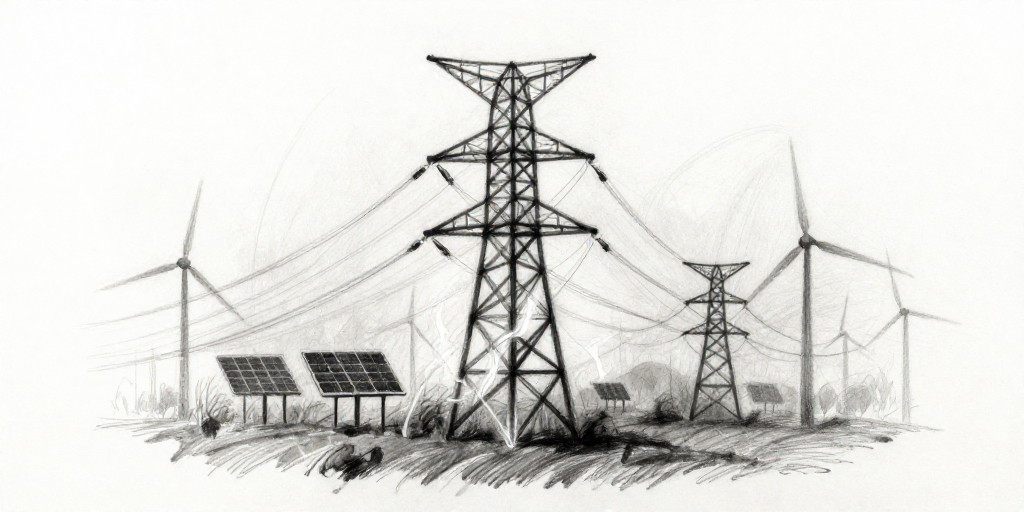
Dividend Continuity Amidst Strategic Grid Modernisation
E.ON SE announced at its 2026 Annual General Meeting that the company will continue to raise its dividend, declaring a payout of 57 cents per share for the 2025 fiscal year. This decision, ratified by an overwhelming majority of shareholders, represents the eleventh consecutive increase in E.ON’s dividend policy. The move underscores the firm’s commitment to providing a steady return to investors while simultaneously directing substantial capital toward the expansion, digitalisation, and resilience of its power transmission and distribution network.
Dividend Outlook and Capital Allocation
Chief Executive Officer Leonhard Birnbaum outlined an ambitious target of a five‑per‑cent annual dividend growth through 2030, contingent upon favourable regulatory and market conditions. The board’s financial statements for 2025 demonstrate a robust operating profit and a solid net income, providing the financial foundation for the stated dividend trajectory.
For the 2024‑2028 investment cycle, E.ON earmarks €8.5 billion in total expenditure, with approximately €7 billion allocated to grid infrastructure. This allocation reflects an emphasis on:
- High‑capacity transmission upgrades to accommodate fluctuating renewable output.
- Advanced distribution network (DN) digitalisation—including SCADA systems, phasor measurement units (PMUs), and automated fault‑location, isolation, and restoration (FLIRT) solutions.
- Energy storage deployment (both utility‑scale batteries and pumped‑hydro projects) to smooth supply variability.
The dividend policy, therefore, is not merely a shareholder perk but a strategic signal that E.ON will sustain investment momentum while preserving earnings quality.
Grid Stability and Renewable Integration Challenges
Technical Dynamics of a Hybrid Power System
The European power grid is undergoing a massive paradigm shift from centralized, dispatch‑based generation to a distributed, renewable‑heavy landscape. Integrating variable renewable energy (VRE) sources such as wind and solar imposes several technical challenges:
| Challenge | Technical Impact | Mitigation Strategy |
|---|---|---|
| Intermittency | Rapid fluctuations in active power → voltage and frequency excursions | Frequency‑responsive storage, demand‑side management, synthetic inertia |
| Reduced Rotating Mass | Lower system inertia → slower frequency response | Battery‑assisted inertia emulation, synchronous condensers |
| Congestion | Variable generation creates line overloads → loss of power quality | Reinforced HVDC corridors, flexible AC transmission system (FACTS) devices |
| Protection Coordination | Rapidly changing fault currents → protection mis‑operation | Adaptive protection schemes, real‑time relay tuning |
E.ON’s investment focus on high‑capacity transmission and digitalised distribution directly addresses these issues by providing the necessary bandwidth and real‑time observability to manage system dynamics.
Grid Stability Enhancements
The planned grid upgrades target the deployment of Flexible AC Transmission System (FACTS) devices—such as static VAR compensators (SVCs) and voltage‑source converters (VSCs)—and High‑Voltage Direct Current (HVDC) links to enhance power transfer capability and reduce congestion. These technologies allow operators to modulate reactive power and stabilize voltage levels without necessitating new thermal lines.
Furthermore, the integration of energy storage at both transmission‑ and distribution‑levels serves multiple stabilisation roles:
- Frequency Support: Fast‑response battery storage can act as a virtual synchronous machine, providing primary frequency response within milliseconds.
- Voltage Regulation: Storage can inject or absorb reactive power, thereby maintaining voltage profiles across the network.
- Peak Shaving and Load Shifting: By storing surplus renewable generation during periods of low demand, storage mitigates curtailment and smooths the net load curve.
Infrastructure Investment Requirements and Economic Impact
Capital Expenditure Breakdown
E.ON’s €7 billion allocation over five years translates to an average €1.4 billion per annum dedicated to network infrastructure. The breakdown is projected as follows:
- Transmission Upgrades: 40 % (€2.8 billion)
- Distribution Digitalisation: 25 % (€1.75 billion)
- Energy Storage: 20 % (€1.4 billion)
- Resilience Enhancements (e.g., microgrids, cybersecurity): 15 % (€1.05 billion)
This capital deployment is expected to expand the grid’s capacity by up to 15 GW in transmission and 5 GW in distributed storage, thereby accommodating an estimated 30 % increase in renewable penetration by 2030.
Regulatory and Rate Structures
The European Union’s Clean Energy Package and the Fit for 55 package impose stringent requirements on renewable integration and emissions reductions. In Germany, the Net Energy Tax (Netzentgelte) and the Energy Transition Act (Energiewende) provide frameworks that:
- Encourage investment through grid access tariffs that favour renewable feed‑in.
- Mandate grid connection standards to ensure harmonised protection and interconnection protocols.
- Implement time‑of‑use tariffs to incentivise load shifting and reduce peak demand.
E.ON’s investment plan aligns with these regulations by positioning the company to benefit from grid‑connection subsidies and performance‑based incentives. Moreover, the planned upgrades may improve grid efficiency by reducing line losses, which can translate into lower distribution costs for consumers.
Economic Impacts on Consumers
While substantial capital spending can raise the short‑term cost burden on utilities, grid modernisation offers long‑term economic benefits:
- Reduced Transmission Losses: Upgraded lines lower energy waste, potentially lowering wholesale prices.
- Enhanced Reliability: Improved fault detection and automated restoration reduce outage durations, enhancing consumer confidence.
- Facilitated Renewable Adoption: Lower curtailment rates allow for a higher share of low‑cost VRE, eventually reducing variable renewable costs passed on to consumers.
- Grid Resilience: Enhanced cyber‑physical security protects consumers against service interruptions.
E.ON’s commitment to stable dividend returns signals that the company anticipates maintaining a favorable risk‑return profile for shareholders despite the higher capital intensity, thereby mitigating the potential for significant consumer rate hikes.
Market Context and Investor Sentiment
The broader European equity market closed with modest declines in the DAX and other major indices, while the German energy sector outperformed peers. E.ON’s shares exhibited a modest gain in line with the overall market trend and remained near the 200‑day moving average, indicating market resilience amid geopolitical and energy price volatility.
Analysts emphasize that the firm’s dividend policy and infrastructure investment strategy enhance its attractiveness in an era where energy costs remain elevated. The upcoming dividend payment in late April will serve as a tangible affirmation of the company’s confidence in sustaining shareholder returns while advancing its grid modernization agenda.
In conclusion, E.ON SE’s decision to sustain dividend growth alongside aggressive investment in grid infrastructure demonstrates a balanced approach to financial performance, regulatory compliance, and technical resilience. By addressing the complex dynamics of grid stability and renewable integration, the company positions itself to lead the energy transition while mitigating adverse economic impacts on consumers.