Corporate Overview and Market Context
E.ON SE, Germany’s largest energy conglomerate, has recently attracted regulatory attention through a series of disclosures in the German Federal Gazette. The filings detail a series of net short‑selling positions held by a capital‑market entity, ranging from approximately 0.5 % to just over 6 % of E.ON’s issued share capital. Although these notices are purely financial in nature, they underscore a broader theme in the industry: the interplay between market sentiment, regulatory transparency, and the operational realities of a company tasked with delivering reliable power to millions of consumers.
The disclosures arrived in September‑October 2026, a period marked by a modest decline in German equity indices driven by weak commodity prices and heightened euro‑zone inflationary pressures. E.ON’s share price mirrored this trend, sliding slightly in line with the broader market. No material corporate announcements from the utility were made during this timeframe, suggesting that the price movements were primarily reactionary to macro‑economic factors rather than company‑specific catalysts.
While the short‑selling activity is a common feature of liquidity and market sentiment, its presence serves as a reminder that investor confidence in utilities hinges not only on operational performance but also on perceived regulatory risk and the pace of infrastructure investment. In the following sections we examine how these market dynamics intersect with the technical challenges of modernizing Germany’s power generation, transmission, and distribution (GTD) systems.
Grid Stability in a Rapidly Decarbonized Power System
The Role of Flexibility
Germany’s Energiewende has accelerated the penetration of variable renewable energy sources (VRES), such as wind and solar photovoltaics. This shift increases the share of intermittent power in the energy mix, raising the demand for grid flexibility to maintain voltage and frequency stability. Flexibility mechanisms include:
- Fast‑frequency response (FFR) provided by inverter‑based resources (IBRs) and battery storage.
- Demand response (DR) schemes that adjust consumption patterns in real time.
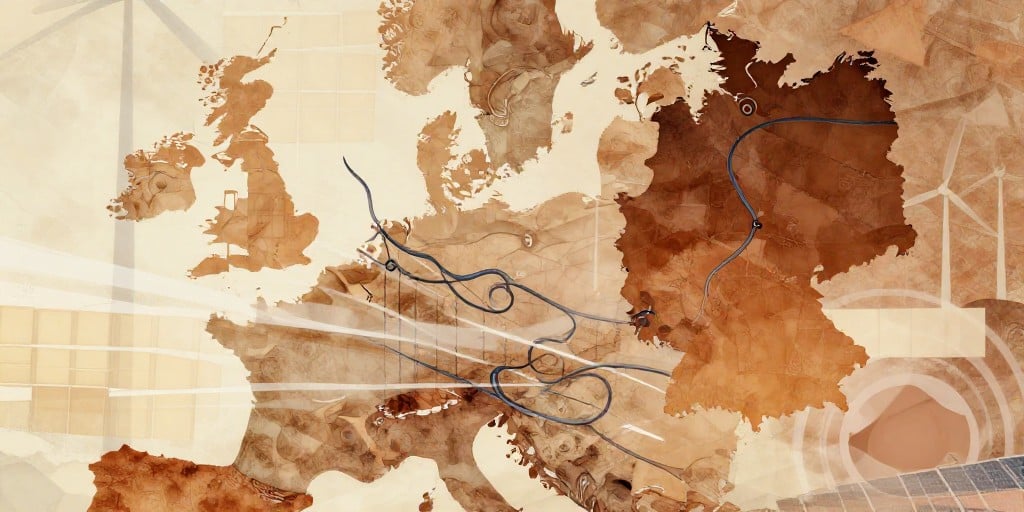
- Inter‑regional transmission links that balance supply and demand across borders.
E.ON’s portfolio of large‑scale battery storage projects, combined with its participation in ancillary services markets, is critical to delivering the rapid response required by modern power systems. However, the deployment of these assets must be coordinated with existing grid infrastructure to avoid creating new bottlenecks.
Grid Resilience and Cyber‑Physical Security
With the growing prevalence of digital controls, the security of GTD systems becomes paramount. Cyber‑physical attacks can disrupt power flow calculations, leading to cascading failures. E.ON has invested in advanced SCADA (Supervisory Control and Data Acquisition) systems that incorporate real‑time monitoring, anomaly detection, and automated protection schemes. Nevertheless, maintaining resilience requires continuous upgrades, rigorous testing, and collaboration with national security agencies.
Renewable Integration Challenges
Curtailment and Losses
While VRES installations continue to rise, grid constraints often result in curtailment, where renewable output is limited to avoid overloading network assets. This situation drives up operating costs and can undermine the economic case for renewable projects. E.ON’s strategy of expanding its HVDC (High‑Voltage Direct Current) transmission capacity aims to transport excess renewable power from resource‑rich regions (e.g., the North Sea) to demand centers without incurring high line losses.
Grid Congestion and Reinforcement
The spatial mismatch between renewable generation sites and load centers creates congestion on existing transmission corridors. E.ON’s recent investment in 380‑kV line upgrades, as well as the construction of underground cables in dense urban areas, helps to relieve this congestion. Moreover, the adoption of FACTS (Flexible AC Transmission Systems) devices—such as STATCOMs and SVCs—enables dynamic voltage control, allowing the grid to accommodate higher VRES penetration without compromising reliability.
Infrastructure Investment Requirements
Capital Expenditure Forecasts
According to E.ON’s latest financial reports, the company earmarked €15 billion for infrastructure upgrades over the next five years. This allocation includes:
- HVDC corridor expansion (estimated €3 billion) to enhance cross‑border interconnectivity.
- Underground cable deployment (estimated €4 billion) in urban centers to mitigate visual impact and improve reliability.
- Smart grid deployment (estimated €2 billion) for advanced metering, real‑time data analytics, and automated fault detection.
- Battery storage scaling (estimated €6 billion) to provide frequency response and peak‑shaving services.
These investments are essential to meet the European Union’s 2030 targets for renewable penetration and grid resilience. However, they also elevate capital intensity, which may translate into higher consumer rates unless offset by regulatory mechanisms.
Financing Mechanisms
E.ON employs a mix of debt, equity, and green bonds to finance its infrastructure program. Regulatory frameworks such as Germany’s “Energie- und Klimaschutzgesetz” (Energy and Climate Protection Act) provide incentives for green bonds, including preferential tax treatment and preferential access to capital markets. Additionally, the European Investment Bank’s (EIB) “Renewable Energy Guarantees of Origin” (REGO) framework helps attract institutional investors seeking ESG‑aligned assets.
Regulatory Frameworks and Rate Structures
Unbundling and Market Liberalization
Germany’s deregulated electricity market, governed by the “Erneuerbare-Energien-Gesetz” (Renewable Energy Sources Act) and the “Verkehrs- und Energiewirtschaftsgesetz” (Transport and Energy Economy Act), mandates the separation of generation, transmission, and distribution activities. E.ON’s dual role as a transmission system operator (TSO) and a distribution network operator (DNO) requires strict adherence to unbundling provisions to avoid anti‑competitive practices.
Rate Design and Consumer Cost Implications
Rate structures in Germany typically include:
- Energy charges: price per MWh of electricity consumed.
- Network charges: fixed and variable fees covering transmission and distribution costs.
- Renewable surcharge: a mandatory contribution to support VRES development.
E.ON’s recent tariff proposals propose a modest increase (≈ 2 %) in network charges to finance the aforementioned grid upgrades. While such increases are justified by the need for system reliability, regulators scrutinize them to ensure they do not disproportionately burden low‑income households. The implementation of a “tariff shield” mechanism can mitigate adverse effects by capping the maximum consumer bill.
Economic Impacts of Utility Modernization
Cost‑Benefit Analysis
Investment in grid resilience yields both direct and indirect benefits. Direct benefits include reduced outage costs, improved power quality, and increased renewable capacity utilization. Indirect benefits encompass:
- Reduced carbon emissions (estimated €3 billion in avoided CO₂ pricing over 10 years).
- Enhanced economic activity via improved reliability for industrial customers.
- Job creation in construction, engineering, and operations.
E.ON’s internal modeling indicates that for every €1 billion invested in grid upgrades, the economy gains approximately €1.2 billion in net present value, largely driven by avoided downtime and increased renewable penetration.
Consumer Cost Dynamics
While infrastructure costs ultimately flow to consumers, the transition can yield long‑term savings by lowering the reliance on fossil fuel‑based peaking plants. Moreover, the adoption of advanced distribution automation can reduce operational expenses and allow for more efficient energy distribution, potentially translating into lower energy charges over the long term.
Engineering Insights into Power System Dynamics
Transient Stability and Load Shedding
Transient stability analyses simulate how the system responds to large disturbances, such as faults or sudden load changes. E.ON’s TSO uses high‑fidelity simulation tools (e.g., PSS®E, DIgSILENT PowerFactory) to evaluate the system’s ability to maintain synchronism. If instability is detected, automated load‑shedding schemes are triggered to prevent cascading failures.
Power Flow Optimization
Optimal Power Flow (OPF) algorithms determine the most cost‑efficient operating point, balancing generation dispatch, line flows, and voltage constraints. E.ON’s grid optimization platform integrates machine‑learning predictive models to anticipate renewable output and load demand, allowing for proactive dispatch decisions that reduce congestion and enhance stability.
Grid Modernization and the Role of Digital Twins
Digital twins—virtual replicas of physical assets—enable real‑time monitoring and predictive maintenance. By simulating the electrical, mechanical, and thermal behavior of substations, E.ON can preemptively identify degradation and schedule maintenance before failures occur. This proactive approach reduces downtime and improves overall system resilience.
Conclusion
E.ON’s recent regulatory filings concerning short‑selling positions highlight market dynamics that, while financially focused, intersect with the company’s broader mandate to deliver reliable, affordable, and sustainable power. The challenges of integrating high levels of VRES, ensuring grid stability, and meeting regulatory requirements necessitate significant infrastructure investment. By leveraging advanced engineering tools, digitalization, and smart financing mechanisms, E.ON can navigate the complexities of utility modernization, ultimately balancing economic growth, consumer costs, and the imperatives of the energy transition.