E.ON SE: Quarterly Stability Amidst Sectoral Volatility
E.ON SE’s performance in the first quarter of 2026 remained broadly stable, with the German utility holding a mid‑level position in the DAX. Its share price showed limited movement, reflecting a modest increase in market value compared with the prior session, while overall trading volume remained within typical ranges for the group. In the broader German market, the DAX experienced notable swings, with several peers posting significant gains and losses, yet E.ON’s relative performance stayed near the median of the index.
Energy Market Developments
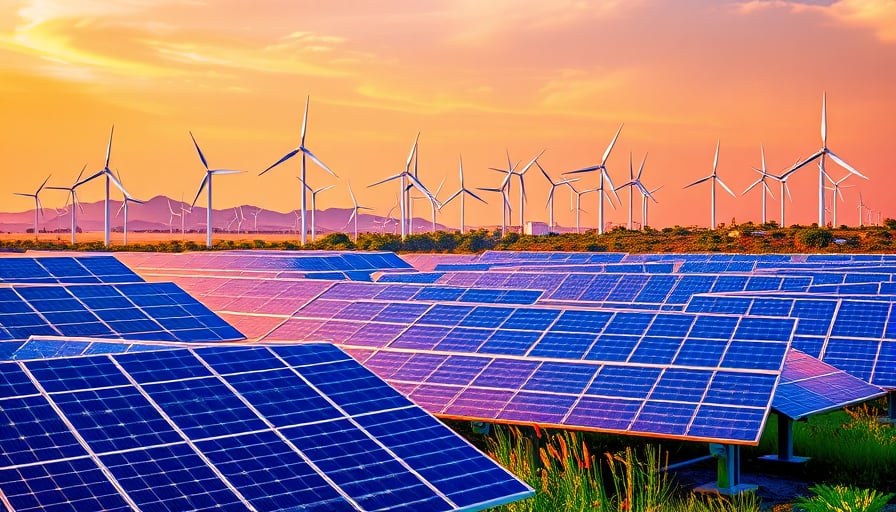
The quarter saw German renewable output rise to just over half of national consumption, driven primarily by wind and solar. The government’s planned reforms—aimed at better aligning grid expansion with renewable supply and potentially phasing out subsidies for small solar installations—have generated mixed reactions within the industry. Critics warn that such measures could slow the pace of the energy transition, while proponents argue they will enhance network resilience and curb costs.
Grid Congestion Management
The European regulator’s review of grid congestion management, including the use of redispatch, has highlighted the tension between renewable generation and grid capacity. Some policy proposals suggest removing compensation for renewable plants that must curtail output in congested areas, a development that may affect E.ON’s operational planning. The regulatory environment thus imposes a new layer of uncertainty on the utility’s capacity to deliver renewable power efficiently.
Geopolitical and Wholesale Price Dynamics
The broader energy policy environment, influenced by geopolitical factors such as the ongoing Iran conflict, continues to shape wholesale price dynamics and, by extension, the cost base for utilities. Elevated gas prices and supply concerns feed into higher operating costs, which may compress margins for utilities like E.ON that are heavily exposed to the wholesale market.
Financial Fundamentals
Amid these sectoral shifts, E.ON’s financial fundamentals remain solid. The company reported a stable revenue base and a consistent earnings trajectory for the latest fiscal year. Market capitalisation, while modest compared with larger German peers, is maintained through steady trading activity. This resilience suggests that E.ON’s diversified portfolio—combining conventional assets with renewable generation and grid services—provides a buffer against regulatory and market volatility.
Strategic Positioning and Competitive Dynamics
E.ON’s mid‑level stance within the DAX underscores a cautious yet steady approach to growth. While larger peers may be more aggressive in capital deployment or innovation, E.ON’s emphasis on operational efficiency and risk management keeps it competitive. The utility’s strategic focus on network optimisation and integration of renewable sources positions it favorably as Europe moves toward decarbonisation, albeit within the constraints of evolving subsidy frameworks.
Broader Economic Implications
The developments affecting E.ON illustrate how sector-specific dynamics—such as renewable penetration, grid capacity, and geopolitical shocks—intersect with broader economic trends. The shift toward renewables is a global phenomenon, but its manifestation in Germany is shaped by national policy choices, regulatory oversight, and market structure. Utilities that navigate these complexities successfully can sustain performance even as external shocks reverberate through the energy market.
Conclusion
E.ON SE’s first‑quarter 2026 performance demonstrates a capacity to absorb sectoral turbulence while maintaining core operational stability. The utility’s balanced portfolio, prudent financial management, and strategic alignment with grid and renewable policies position it well to navigate the evolving European energy landscape. As policy reforms and geopolitical factors continue to influence wholesale dynamics, E.ON’s adaptability and focus on fundamental business principles will remain key to sustaining its competitive edge.