
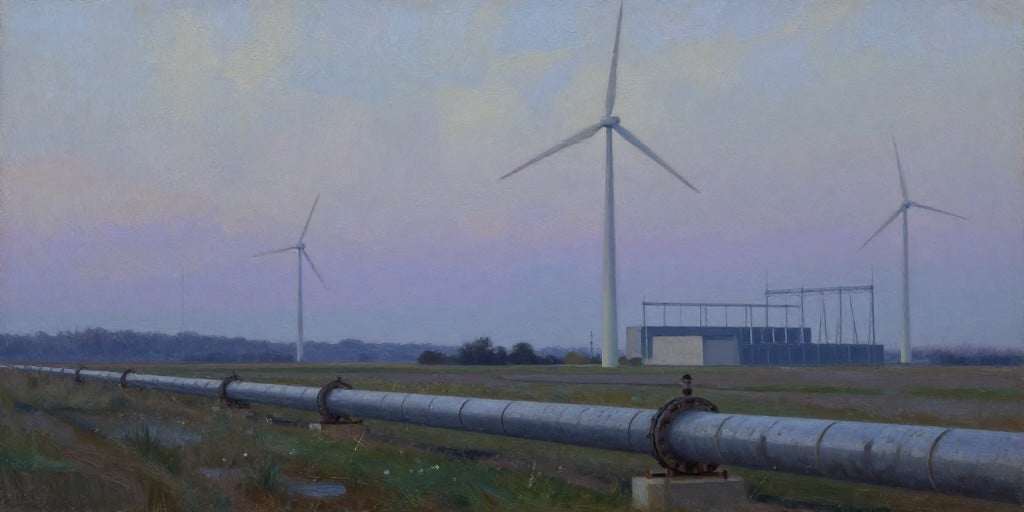
E.ON SE Accelerates Carbon Capture and Strengthens Grid Resilience
E.ON SE is advancing two critical facets of its strategy for a low‑carbon future: expanding carbon‑capture capabilities at its renewable‑energy facilities and addressing the growing threat of cyber‑physical attacks on power‑distribution systems. The company’s latest actions—awarding a feasibility study to Capsol Technologies for a biomass and waste‑to‑energy plant in Norrköping, Sweden, and publicly clarifying the limits of network security—highlight the intertwined technical, regulatory, and economic challenges of modernizing the electric grid.
Carbon Capture Feasibility at Norrköping
On 15 June, E.ON selected Capsol Technologies, a specialist in direct‑air and post‑combustion capture, to conduct a feasibility study on the integration of the company’s scalable capture module. Capsol’s solution is designed to sequester up to 500 000 t CO₂ per year from the plant’s flue gas streams, a figure that aligns with the European Union’s 2030 carbon‑neutrality trajectory and Sweden’s national decarbonisation targets.
The assessment will examine:
| Aspect | Technical Focus |
|---|---|
| Plant Integration | Retrofitting the existing heat‑exchanger network to accommodate the capture unit’s thermal and pressure drop penalties. |
| Energy Penalty | Quantifying the additional electrical load required for solvent regeneration and compression, and its impact on net plant output. |
| CO₂ Transport | Designing a pipeline network to the nearest geological sequestration site or utilization hub, including pressure, diameter, and compressor staging. |
| Operational Flexibility | Assessing how the capture system can be throttled to accommodate variable renewable output and demand response programs. |
E.ON’s engagement with a strategic engineering partner will ensure that the study addresses both plant‑level economics and grid‑level integration. By coupling capture to a biomass and waste‑to‑energy facility—where the fuel source is already renewable—E.ON can potentially achieve a higher carbon‑intensity reduction than at fossil‑fuel plants while maintaining a stable net‑zero electricity supply.
Grid Resilience in an Era of Cyber‑Physical Threats
Chief Executive Officer Leonhard Birnbaum’s remarks underscore the reality that no power‑distribution network can be rendered absolutely immune to attacks. He described resilience as analogous to a fortified building: security measures complicate intrusion and facilitate rapid recovery, but absolute prevention is impossible.
Recent incidents illustrate the operational risks:
- A fire incident that incapacitated a substation in Reutlingen, temporarily disconnecting a key feeder in the central Germany grid.
- Physical sabotage of transmission lines in Berlin, which forced the regional grid operator to re‑route power and engage emergency load‑shedding protocols.
These events highlight three core technical challenges for grid operators:
- Redundancy Design
- Incorporating additional parallel feeders and micro‑grids to isolate faults without affecting load.
- Employing automatic switch‑overs and reconfiguration algorithms that can operate under partial sensor loss.
- Cyber‑Physical Defense Architecture
- Segregating control‑plane and data‑plane networks to limit lateral movement.
- Deploying intrusion detection systems (IDS) with machine‑learning classifiers trained on SCADA traffic patterns.
- Rapid Recovery and Restoration Protocols
- Implementing pre‑defined restoration sequences that can be executed by automated systems within minutes of a disturbance.
- Using distributed energy resources (DERs) to provide localized power during restoration.
Regulatory Context and Rate Structures
In the European Union, the Network Code on Security of Supply (NCSS) mandates member states to adopt resilience standards that consider both physical and cyber risks. E.ON must therefore:
- Maintain a risk‑based inventory of critical assets and update it biannually.
- Conduct cyber‑attack simulation exercises in partnership with national grid operators.
- Submit resilience reports to the national regulator, ensuring compliance with the Grid Code and Transmission System Operator (TSO) requirements.
Rate structures are also evolving. The EU’s Renewable Energy Directive (RED II) incentivises the integration of renewable and carbon‑capture technologies through feed‑in tariffs and tax credits. Simultaneously, the European Energy Taxation policy is exploring mechanisms to internalise the cost of grid maintenance and cyber‑security investments. E.ON’s financial planning must balance:
| Cost Element | Implication for Rates |
|---|---|
| Capital Expenditure (CAPEX) | Infrastructure upgrades (e.g., hardened substations, grid automation) may require higher upfront rates or hedged financing. |
| Operational Expenditure (OPEX) | Cyber‑security services and incident response teams can increase operational budgets, potentially passed on through minor rate increases. |
| Regulatory Fees | Compliance with NCSS and national grid codes may involve additional statutory charges. |
Economic Impact of Modernization
The economic impacts of utility modernization span multiple dimensions:
- Cost of Transition – Capital costs for deploying carbon‑capture modules and upgrading grid assets can run into billions of euros, but economies of scale and technological maturation are expected to reduce per‑unit costs over the next decade.
- Consumer Prices – While the average annual energy bill is projected to rise by 2‑3 % in the short term due to CAPEX amortisation, the long‑term benefits of grid resilience (e.g., fewer outage costs) could offset this increase.
- Market Competitiveness – By integrating carbon capture into renewable plants, E.ON can differentiate its product offerings, potentially securing long‑term power purchase agreements (PPAs) at premium rates.
- Job Creation – Large‑scale grid upgrades and carbon‑capture projects are projected to generate thousands of high‑skill jobs in engineering, construction, and operations.
Engineering Insights into Power System Dynamics
From a systems perspective, the integration of carbon‑capture units introduces a negative power factor and increased reactive power demand due to the capture plant’s compressors. Power system operators must:
- Adjust the voltage profile by installing static VAR compensators (SVCs) or static synchronous compensators (STATCOMs).
- Implement Dynamic Voltage Restorer (DVR) systems to mitigate voltage sags during capture startup.
Simultaneously, renewable integration raises concerns about inverter harmonics and frequency regulation. E.ON can leverage smart inverter controls that provide synthetic inertia and fast frequency response, thereby maintaining grid stability even as conventional generation wanes.
Conclusion
E.ON SE’s dual focus on expanding carbon‑capture capabilities at a renewable‑energy plant and addressing cyber‑physical resilience illustrates a comprehensive approach to the energy transition. By marrying technical innovation with rigorous regulatory compliance and strategic investment, the company is positioning itself to meet climate goals while safeguarding the reliability of the electric grid. The evolving regulatory landscape, coupled with the necessity for substantial infrastructure investment, will shape both the economic outcomes for consumers and the long‑term resilience of the European power system.