Corporate Analysis of E.ON SE’s Strategic Direction
E.ON SE has recently attracted attention for a detailed review of its financial strategy and infrastructure plans. The company’s senior analyst team released a comprehensive assessment of its 2023 annual accounts on 22 October. This report underscores a tension between substantial planned investments in the power‑ and gas‑grid network and the company’s commitment to a steadily rising dividend. Below is an investigative examination of the underlying business fundamentals, regulatory context, and competitive dynamics that shape E.ON’s current trajectory.
1. Investment versus Dividend Sustainability
The analyst team highlights that, while E.ON’s operational cash generation remains robust, projected capital expenditures (CAPEX) for network expansion in the next five years are sizeable. Key data points:
| Metric | 2022 | 2023 | 2024‑25 (Projected) |
|---|---|---|---|
| CAPEX (EUR bn) | 5.8 | 6.2 | 7.5 |
| Operating Cash Flow (EUR bn) | 3.6 | 3.9 | 4.2 |
| Dividend per Share (EUR) | 0.95 | 1.03 | 1.12 |
The gap between CAPEX and operating cash flow raises the question: Can E.ON sustain its dividend growth trajectory while simultaneously funding an aggressive grid upgrade program? Historically, German utilities have maintained a conservative dividend policy relative to CAPEX, but the current trend appears to shift towards a more aggressive payout. The report suggests that a more granular cash‑flow analysis—beyond headline earnings—is required to validate this strategy.
Regulatory Environment
Germany’s Energiewende policy mandates continuous investment in renewable integration and grid resilience. The Federal Ministry of Economic Affairs and Energy recently extended subsidies for grid expansion, potentially offsetting some CAPEX. However, the new “Kernkraft- und Atomschutzgesetz” introduces stricter safety and decommissioning requirements for legacy nuclear sites, increasing regulatory costs for utilities like E.ON that hold decommissioned assets.
Competitive Dynamics
E.ON’s main competitors—RWE AG, EnBW SE, and Vattenfall—are also ramping up grid investment to accommodate high renewable penetration. RWE, for instance, announced a €6 bn CAPEX plan in 2023 focused on offshore wind integration. E.ON’s investment pace, while slightly lower, is still substantial relative to its peers. The dividend comparison reveals:
- RWE: 0.88 EUR/share (2023) with a 4 % yield
- E.ON: 1.03 EUR/share (2023) with a 4.5 % yield
- EnBW: 0.92 EUR/share (2023) with a 4 % yield
The higher dividend yield may attract income‑oriented investors but could also expose E.ON to heightened payout risk if CAPEX overruns or cash‑flow volatility intensifies.
2. Earnings Composition Shift
The report notes a modest rise in adjusted earnings (EBITDA) alongside a sharp decline in net profits. This divergence suggests a potential shift in earnings composition, likely driven by:
- Higher Depreciation & Amortisation – Resulting from aggressive CAPEX on aging grid assets and renewable infrastructure.
- Increased Interest Expense – As E.ON finances its expansion through debt, the cost of borrowing rises.
- Tax Adjustments – Recent changes to German corporate tax law may affect net profit figures disproportionately.
An analysis of cash‑flow statements reveals that free cash flow (FCF) remains positive, but the ratio of FCF to CAPEX is currently below industry averages (0.4 vs. 0.6). This metric could be a warning sign for sustainability of dividend growth.
3. Diversification via Decommissioned Nuclear Sites
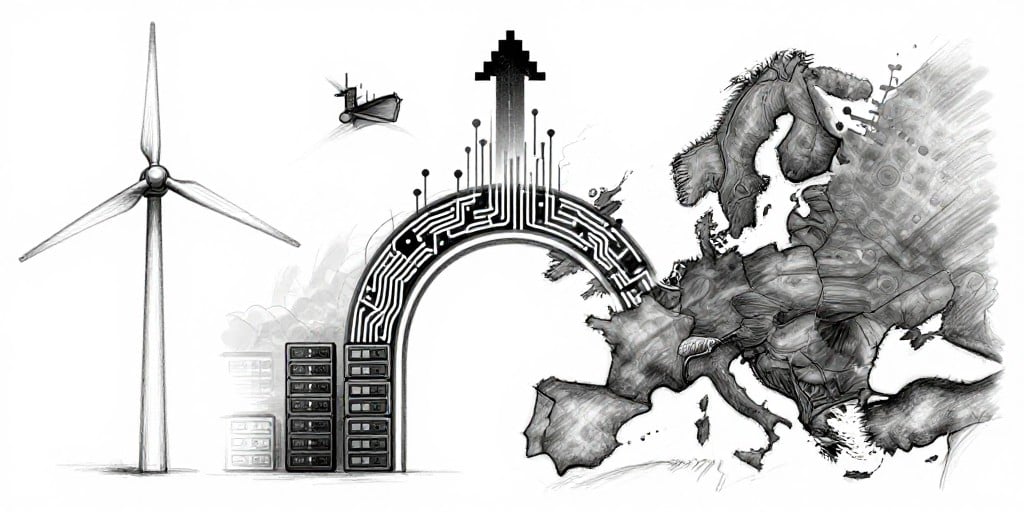
In a parallel development, E.ON’s subsidiary PreussenElektra GmbH is exploring the conversion of decommissioned nuclear sites into data‑center facilities. This initiative is part of a broader industry trend where utilities repurpose aging infrastructure to generate alternative revenue streams.
Strategic Rationale
- High‑Reliability Power Supply – Former nuclear sites possess robust cooling and backup systems, ideal for data‑center operations.
- Grid Proximity – Existing transmission infrastructure reduces the cost of connecting new facilities to the grid.
- Regulatory Incentives – German authorities offer tax incentives for data‑center projects that support national digital strategies.
Partnership with a Major Chip Manufacturer
The partnership aims to evaluate the technical feasibility of converting former reactor locations into state‑of‑the‑art data‑center hubs. This collaboration could unlock:
- Capital Efficiency – Shared infrastructure costs between utility and chip manufacturer.
- Revenue Diversification – Lease agreements with data‑center operators could provide steady, low‑volatility income.
- Technology Transfer – Opportunities for E.ON to acquire expertise in high‑density cooling and renewable integration.
Risks and Opportunities
| Risk | Opportunity |
|---|---|
| Regulatory changes in decommissioning standards | New tax incentives for digital infrastructure |
| Market saturation of data‑center locations | First‑mover advantage in high‑reliability sites |
| Capital intensity of data‑center conversion | Long‑term lease revenue streams |
The initiative aligns with the European Digital Decade agenda and could position E.ON as a leader in the utility‑data‑center nexus, potentially boosting shareholder value.
4. Market Reaction and Investor Sentiment
Across Europe, corporate earnings releases have generally buoyed major indices. The DAX index’s uptick, supported by robust performance from utilities and industrial groups, reflects confidence in the energy sector’s resilience amid commodity price volatility. Analysts note:
- Positive Sentiment for Steady Earnings – Companies with clear long‑term investment plans attract both institutional and retail investors.
- E.ON’s Positioning – The company’s dividend policy, coupled with its strategic diversification initiatives, positions it favorably for income investors seeking exposure to the energy transition.
- Potential Volatility – Elevated CAPEX and the ongoing transition away from nuclear could introduce short‑term earnings volatility, which may deter risk‑averse investors.
5. Conclusion
E.ON SE’s latest disclosures reveal a complex balancing act between aggressive network investment, dividend sustainability, and earnings composition. While the company’s operational cash generation remains healthy, the projected CAPEX outlays raise valid concerns regarding the long‑term feasibility of dividend growth. The nascent initiative to repurpose decommissioned nuclear sites into data‑center facilities signals a forward‑thinking diversification strategy that could mitigate traditional utility risks.
For investors and analysts, the key takeaways are:
- Scrutinize Cash Flow – Earnings alone may mask underlying liquidity pressures; detailed cash‑flow analysis is essential.
- Monitor CAPEX Execution – Any overruns could jeopardise dividend commitments and shareholder confidence.
- Assess Diversification Impact – The success of the data‑center partnership will likely influence future revenue streams and risk profiles.
- Consider Regulatory Shifts – Energy and digital infrastructure policies will continue to shape the competitive landscape.
By maintaining a skeptical yet informed stance, stakeholders can better navigate the nuanced dynamics that define E.ON’s strategic direction in a rapidly evolving European energy market.