Corporate News Report: Strategic Implications for Power Generation, Transmission, and Distribution
European equity markets closed on a broadly positive note, buoyed by falling crude prices, easing bond yields, and strong performance in the German utilities sector. The Stoxx 600, DAX, and CAC 40 all recorded gains, with German power companies—particularly E On—showing notable upside. In the United Kingdom, the FTSE 100 advanced by roughly 0.5 %, driven in part by a renewed focus on the energy sector.
A key development for the sector is the announced acquisition of OVO Energy by E On (via a subsidiary of the German electricity provider). The UK Competition and Markets Authority (CMA) has indicated that its review has reached the final stage, suggesting that regulatory clearance is likely. In parallel, E On has appeared in several regulatory filings concerning short‑selling positions, but these disclosures are routine and do not indicate a shift in the company’s fundamentals.
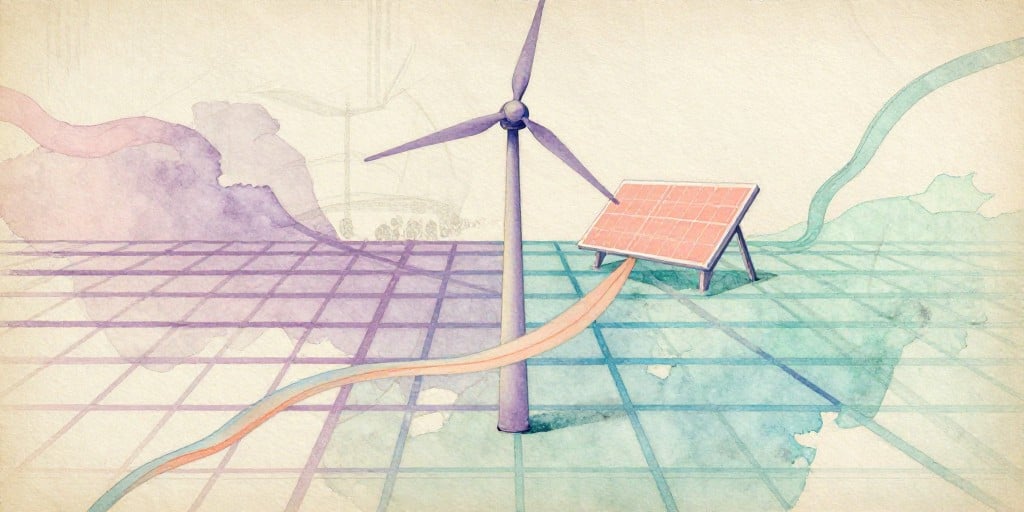
These corporate moves unfold against a backdrop of evolving regulatory frameworks, shifting rate structures, and a pressing need for infrastructure investment to accommodate renewable energy integration and maintain grid stability. The following sections unpack the technical, regulatory, and economic dimensions of these developments.
1. Grid Stability and the Challenge of Renewable Integration
The integration of intermittent renewable generation—wind, solar, and emerging storage technologies—poses acute challenges to the synchronous stability of power grids. The power system must continuously balance supply and demand, while maintaining frequency and voltage within tight limits.
Key dynamics:
| Dynamic | Technical Explanation | Impact on Grid Stability |
|---|---|---|
| Inertia loss | Conventional synchronous generators provide inertia; renewable sources connected via power electronics provide negligible mechanical inertia. | Reduced natural frequency response; greater reliance on fast frequency response from batteries or demand‑side management. |
| Voltage ride‑through | Wind turbines have built‑in voltage ride‑through capabilities, but sudden fluctuations can cause voltage dips. | Requires upgraded voltage control schemes (e.g., STATCOMs, static compensators). |
| Load‑frequency control | Conventional plants adjust output to counteract frequency deviations; renewables lack this capability unless explicitly designed. | Necessitates advanced governor controls and automated demand‑side response. |
To mitigate these issues, grid operators are deploying Synthetic Inertia from wind turbines, expanding Dynamic Line Rating to increase transmission capacity, and integrating High‑Voltage DC (HVDC) links to balance cross‑border flows. Each intervention carries capital and operational cost implications that will eventually be reflected in consumer tariffs.
2. Infrastructure Investment Requirements
Modernizing the grid to handle high renewable penetration demands significant investment in both transmission and distribution assets.
- Transmission Upgrades
- Expansion of HVDC corridors: HVDC offers lower line losses and increased capacity over long distances—critical for linking wind‑rich offshore sites to continental demand centers.
- Smart grid technologies: Real‑time monitoring, automated fault detection, and dynamic re‑configuration reduce outage durations.
- Distribution Enhancements
- Microgrids and Distributed Energy Resources (DERs): Localized storage and generation reduce pressure on the central grid and improve resilience.
- Grid‑forming inverters: Enable renewable sources to provide grid services traditionally reserved for synchronous machines.
A recent German regulatory framework now allows utilities to recover a higher proportion of grid‑upgrade costs through regulated tariffs, aiming to accelerate deployment while preserving consumer affordability. However, the transition period for cost recovery will vary by region, affecting short‑term price volatility.
3. Regulatory Frameworks and Rate Structures
The acquisition of OVO Energy by E On has regulatory implications beyond competition concerns. In the UK, the Office of Gas and Electricity Markets (Ofgem) oversees the structuring of regulated electricity tariffs, which are designed to reflect the cost of generation, transmission, and distribution.
- Cost of Generation (CoG): Renewables have lower marginal costs but higher upfront capital costs. Regulatory mechanisms now allow utilities to capture a portion of these upfront costs over longer tariff terms.
- Network Access Charges (NAC): The rate at which generators pay transmission system operators (TSOs) for network access. Increased renewable penetration can elevate NACs if TSOs upgrade capacity.
- Retail Tariff Adjustments: The UK’s Energy Price Guarantee (EPG) may be revised to accommodate the cost of integrating renewables, potentially leading to modest consumer cost increases in the medium term.
In Germany, the Federal Network Agency (Bundesnetzagentur) has introduced a Grid-Upgrade Fund that permits TSOs to invest in infrastructure using a mix of regulated tariff revenue and public subsidies. The alignment of E On’s expansion plans with this framework is expected to streamline approvals and facilitate a smoother rollout of grid upgrades.
4. Economic Impacts of Utility Modernization
Utility modernization carries both macro‑economic and micro‑economic ramifications.
- Investment‑Driven Economic Growth
- Large‑scale grid upgrades create construction and engineering jobs, boosting regional employment and GDP.
- The deployment of renewable plants attracts additional private investment, further stimulating the economy.
- Consumer Cost Implications
- While renewable generation reduces wholesale electricity prices, the cost of transmission upgrades can be passed on to consumers.
- Regulated tariff structures in both the UK and Germany aim to balance affordability with the need for infrastructure investment.
- Regulatory Cost Pass‑Through
- The European Network Code on Transmission System Operations (TSO) mandates transparent cost allocation, limiting the potential for cost‑shifting to end users.
- The upcoming EU Grid Code 2026 will introduce stricter requirements for grid interconnection and ancillary services, potentially raising capital expenditure for TSOs but also fostering more efficient market operation.
- Cross‑Border Synergies
- The OVO Energy acquisition exemplifies cross‑border integration that can unlock synergies: shared R&D, economies of scale in procurement, and more efficient use of transmission corridors.
- However, differing national regulatory regimes (e.g., UK’s Ofgem vs. Germany’s Bundesnetzagentur) require careful coordination to avoid regulatory arbitrage.
5. Technical Insights into Power System Dynamics
The interplay between renewable penetration and grid stability can be modeled through Power System Stability Analysis (PSSA), employing tools such as:
- Frequency Stability Simulations: Evaluate the system’s response to sudden load changes, factoring in synthetic inertia contributions.
- Voltage Stability Margins: Determine how distributed generation affects voltage profiles, especially during peak demand.
- Dynamic Line Rating Models: Use real‑time meteorological data to optimize transmission capacity, thereby reducing congestion.
Advanced Digital Twins of the grid are increasingly used to simulate these dynamics under various scenarios, enabling utilities to pre‑emptively design mitigation strategies.
6. Conclusion
The positive market sentiment surrounding E On’s performance and the impending OVO Energy acquisition reflects a broader confidence in the energy transition pathway. However, the technical challenges of maintaining grid stability, the substantial capital required for infrastructure upgrades, and the nuanced regulatory landscape underscore the complexity of this transition.
For stakeholders—policy makers, utilities, investors, and consumers—the key lies in aligning regulatory incentives with engineering realities. By fostering transparent cost recovery mechanisms, investing in grid modernization, and embracing innovative renewable integration strategies, the European power sector can navigate the transition while safeguarding grid reliability and consumer affordability.