
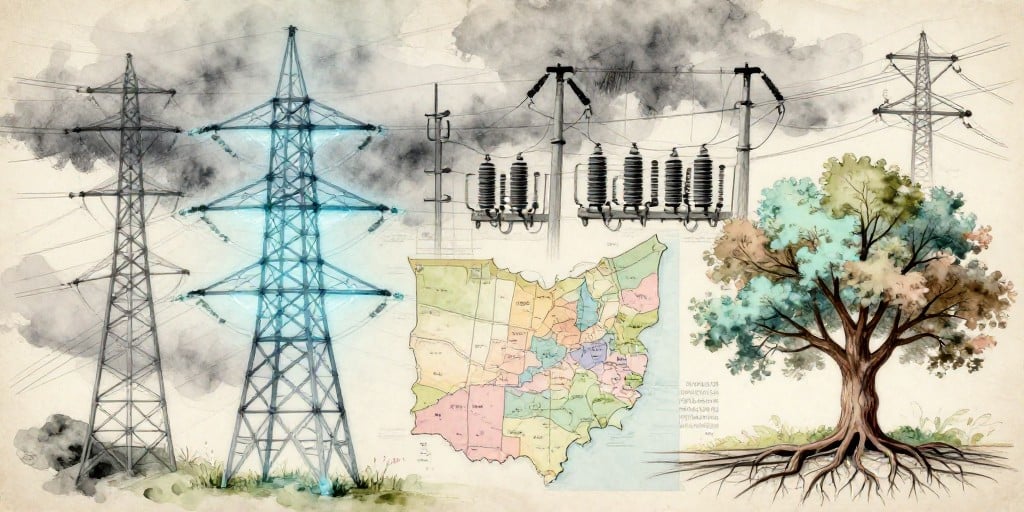
Duke Energy’s Restoration Effort Highlights Critical Infrastructure Challenges
Duke Energy has been mobilizing extensive resources to restore power to more than 180,000 customers in Ohio and Kentucky following the severe storms that began on Tuesday, August 11. By Wednesday evening, 171,000 customers had regained service; however, approximately 102,000 remain without power, primarily in southwest Ohio and northern Kentucky. The company’s response, involving over 1,000 lineworkers, tree trimmers, damage assessors, and self‑healing technology, underscores both the resilience of the grid and the vulnerabilities that arise during extreme weather events.
Technical Overview of the Restoration Operation
Grid Infrastructure Damage and Repair Logistics
- Pole and Conductor Failures: The storms have caused widespread pole failures and conductor damage, necessitating rapid pole replacement and conductor re‑lacing. Engineers are prioritizing critical feeders that supply public health and safety facilities, such as hospitals and emergency response centers.
- Tree Trimming and Debris Removal: Fallen trees and brush are obstructing lines and access roads. Trimming crews are using high‑reach equipment and, where wind conditions permit, specialized tree‑trimming rigs to clear vegetation while minimizing additional damage.
- Self‑Healing Substation Automation: Duke Energy’s automated switching systems have rerouted power through redundant feeders, maintaining service to a subset of customers even when primary lines are compromised. These systems rely on real‑time SCADA data to isolate faults and re‑configure the network, a capability that mitigates outage duration for customers downstream of the fault.
Limitations Imposed by Weather Conditions
High winds and hazardous road conditions have restricted crew movement in certain areas, limiting the ability to conduct elevated work. In some locations, crews are forced to perform repairs at ground level, increasing repair times and potential safety risks. This constraint highlights the need for robust, weather‑resilient infrastructure that can withstand severe meteorological events.
Grid Stability and Renewable Energy Integration
The restoration effort provides a live case study of how grid stability is maintained during widespread outages. Key engineering concepts illustrated include:
- Transient Stability Analysis: When large sections of the network are disconnected, the remaining system must maintain synchronism among generators. Duke Energy’s control center is employing real‑time simulations to predict and prevent oscillatory instability.
- Load Shedding Protocols: In extreme cases, automatic load shedding may be triggered to protect generators from over‑stress. While the current outage does not appear to require this, the system’s capacity to engage such protocols underscores the importance of having layered protection schemes.
- Renewable Penetration Challenges: Ohio and Kentucky have seen increasing wind and solar generation. The variability of these resources complicates the balancing act during outages. The use of battery storage and demand response programs can provide short‑term reliability, but the existing grid must accommodate the intermittent nature of renewables without compromising voltage and frequency stability.
Infrastructure Investment and Economic Implications
The cost of repairing and upgrading grid infrastructure is a major concern for utilities. Key points include:
- Capital Expenditure Requirements: Replacing aging poles, upgrading conductors, and installing advanced monitoring equipment can cost tens of millions of dollars. The company’s current restoration expenditures reflect a broader trend of necessary investment to meet projected climate‑related risk.
- Regulatory Frameworks: The Public Utility Commission of Kentucky and the Ohio Public Service Commission oversee rate approvals and infrastructure investments. Utilities must demonstrate that upgrades are “rate‑payer‑justifiable” and provide cost‑benefit analyses that factor in reliability improvements and reduced outage duration.
- Rate Structures and Customer Costs: The restoration effort emphasizes the importance of transparent rate structures. Utilities may need to consider time‑of‑use rates, critical‑load pricing, or “smart” tariff designs to reflect the true cost of maintaining an increasingly complex grid.
- Economic Impact of Modernization: Modernizing the grid can spur job creation in construction, engineering, and technology sectors. Moreover, improved reliability can reduce economic losses associated with prolonged outages, benefiting local businesses and households alike.
Policy and Consumer Outlook
Consumers are advised to stay clear of downed lines, operate generators safely, and keep roads clear for utility trucks. Duke Energy’s mobile app and outage alert system provide real‑time updates, reinforcing the importance of transparent communication between utilities and customers. The company’s focus on prioritizing facilities that support public health and safety reflects regulatory mandates and industry best practices for critical infrastructure protection.
Conclusion
Duke Energy’s ongoing restoration work in Ohio and Kentucky showcases the technical complexity of maintaining grid stability amid severe weather. The incident highlights the necessity for continued investment in resilient transmission and distribution systems, especially as renewable penetration increases and climate‑related events become more frequent. Through advanced automation, rigorous engineering practices, and strategic infrastructure upgrades, utilities can better safeguard reliable power delivery and protect consumer interests in the evolving energy landscape.