
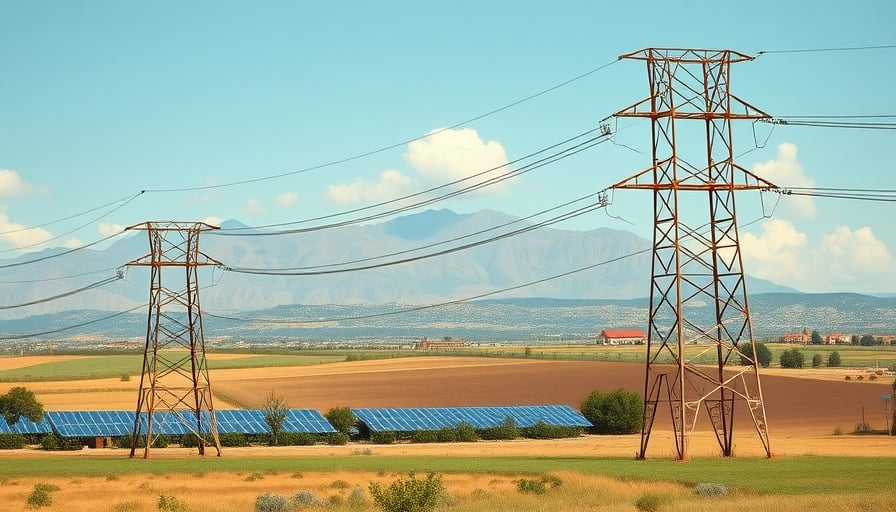
Corporate Analysis: DTE Energy Co. Amid Shifting Demand Dynamics
DTE Energy Co., a diversified utility with operations spanning electricity generation, transmission, and distribution throughout the United States, has attracted divergent commentary from leading equity research firms in recent days. The contrasting views illustrate the broader sectorial transition toward high‑density data‑center activity and renewable‑energy initiatives, both of which are reshaping the competitive landscape for regional utilities.
Analyst Sentiment and Valuation Outlook
- JPMorgan Chase & Co. downgraded its price target for DTE, citing a more cautious outlook on the company’s earnings trajectory. The bank highlighted concerns regarding the utility’s exposure to commodity price volatility, particularly in natural‑gas markets, and the potential erosion of regulated rate base in the face of growing distributed energy resources (DERs).
- Jefferies took a bullish stance, upgrading the stock on the premise that rising demand from data‑center operators could materially elevate transmission and distribution revenues. The brokerage underscored the strategic alignment between DTE’s existing infrastructure in southeastern Michigan and the location of proposed large‑scale data‑center projects.
Core Business Focus and Asset Portfolio
DTE’s operational footprint remains concentrated on:
- Electricity Generation – A mix of coal‑, natural‑gas‑, and renewable‑fuel plants, with an ongoing shift toward cleaner sources to meet state‑mandated emissions targets.
- Transmission and Distribution – A robust network that supports both traditional grid customers and emerging high‑load facilities, such as data centers and industrial hubs.
- Natural‑Gas Pipeline Operations – Ownership and management of pipeline segments that facilitate both conventional and unconventional gas flows, positioning DTE favorably amid the U.S. shale renaissance.
- Unconventional Gas Development – Participation in hydraulic fracturing and associated exploration activities, diversifying revenue streams beyond regulated utilities.
These elements collectively provide DTE with a stable regulated revenue base while offering exposure to growth segments that could yield higher margin opportunities.
Regional Developments and Market Drivers
- Belleville Data‑Center Proposal – A 280‑acre site near Belleville, Michigan, has been earmarked for a large‑scale data‑center development. The proximity to DTE’s transmission corridors is expected to reduce infrastructure costs for the operator, thereby enhancing the attractiveness of the site.
- Ann Arbor Sustainable Energy Utility – Ann Arbor is advancing plans to launch a new utility that could introduce flat‑rate solar billing. This initiative reflects a broader municipal push toward renewable energy and consumer-friendly pricing models, potentially influencing customer behavior in the region.
These local projects exemplify the evolving demand for high‑capacity, low‑latency power supply—attributes that are particularly valuable for data‑center operations. Consequently, DTE’s strategic focus on transmission resilience and grid reliability positions it advantageously to capture a share of this emerging revenue stream.
Cross‑Sector Implications and Economic Context
- Technology and Energy Convergence – The growth of data‑center infrastructure amplifies the demand for reliable, high‑density power, creating a convergence point between information technology and energy utilities.
- Renewable‑Energy Integration – Municipal initiatives like Ann Arbor’s flat‑rate solar billing indicate a trend toward decentralized generation, potentially impacting utility revenue models by accelerating the adoption of DERs.
- Commodity Market Volatility – Fluctuations in natural‑gas prices directly affect both generation costs and pipeline revenues, thereby influencing DTE’s cost structure and profitability.
- Regulatory Landscape – State and federal policies on emissions, grid modernization, and renewable portfolio standards shape the operating environment for utilities, demanding continuous investment in infrastructure and technology.
These dynamics underscore that while DTE’s core utility business remains resilient, its growth prospects hinge on the company’s ability to adapt to the intertwined demands of data‑center operations and renewable‑energy deployment.
Competitive Positioning
- Strengths – Extensive transmission network, diversified generation mix, and strategic geographic positioning in a rapidly growing data‑center hub.
- Challenges – Exposure to commodity price swings, regulatory uncertainties surrounding rate base adjustments, and increased competition from DER aggregators.
- Strategic Opportunities – Leveraging its transmission infrastructure to support data‑center power requirements, investing in grid flexibility solutions, and exploring partnership models with renewable developers to enhance long‑term revenue stability.
Conclusion
DTE Energy Co. stands at a critical juncture where traditional utility operations intersect with emerging high‑density computing demands and renewable‑energy initiatives. Analyst divergence reflects the inherent uncertainty in projecting earnings within this transitional phase. However, the company’s foundational assets and strategic focus on southeastern Michigan’s growing data‑center market provide a platform for potential upside, provided it navigates commodity volatility, regulatory changes, and the acceleration of distributed generation.