
Corporate Impact of Drone Displays in Sports Entertainment
Overview
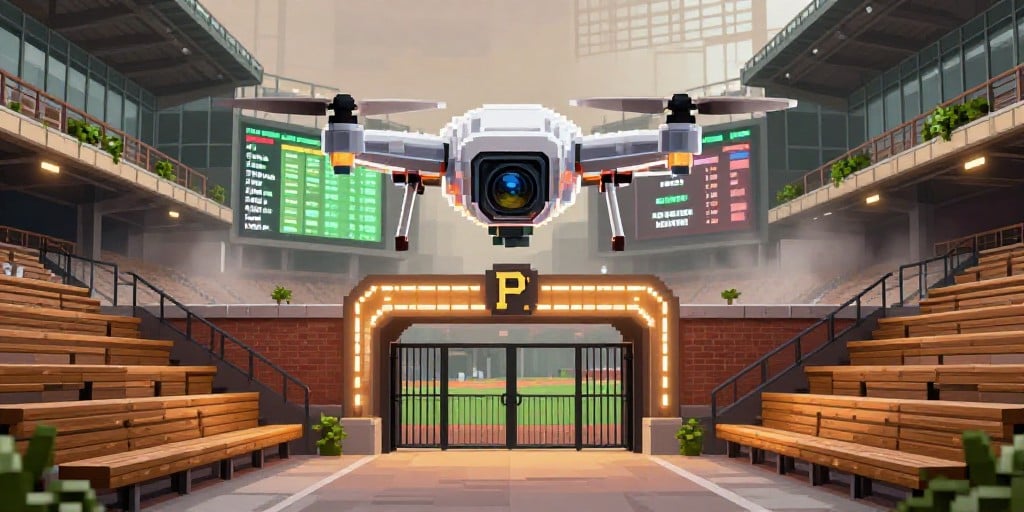
A recent event at PNC Park in Pittsburgh, during which the Pittsburgh Pirates celebrated a milestone anniversary with a coordinated drone display, underscores a broader industry trend: the integration of advanced technology into sports entertainment. The show, staged after a Pirates victory over the Minnesota Twins, served not only as a fan‑engagement highlight but also as a case study in how teams leverage emerging tech to enhance the spectator experience, reduce reliance on traditional fireworks, and create new revenue and branding opportunities.
Technological Adoption in Sports
Innovation Diffusion
Drone technology, once confined to military and hobbyist circles, is now being adopted at scale in sports venues worldwide. The Pirates’ deployment demonstrates a strategic adoption of a low‑cost, high‑impact alternative that mitigates environmental and safety concerns associated with pyrotechnics. This aligns with the diffusion of innovation theory, where early adopters within a high‑visibility industry influence subsequent diffusion among competitors.
Operational Efficiency
From an operational standpoint, drone shows require less logistical overhead than fireworks: no specialized pyrotechnic staff, reduced cleanup, and fewer regulatory hurdles. The Pirates’ use of drones illustrates a shift toward technology that offers both cost savings and enhanced control over the show’s narrative and timing.
Economic Drivers and Market Dynamics
Consumer Demand for Immersive Experiences
Modern sports consumers increasingly seek immersive, technologically driven experiences. According to a 2025 Deloitte survey, 68% of sports fans consider advanced in‑stadium technologies as a key factor in their willingness to attend live events. Drone displays meet this demand by providing visually stunning, interactive spectacles that can be synchronized with game moments, music, and team branding.
Monetization and Sponsorship
While the Pirates’ display was presented as a celebration rather than a commercial venture, the underlying business model for such displays typically involves sponsorship agreements, advertising rights, and data analytics. Teams and venue operators can monetize drone shows through branded content, on‑screen overlays, and post‑event digital marketing. This diversification of revenue streams aligns with the broader trend of sports entities seeking to reduce dependence on ticket sales alone.
Competitive Positioning
Differentiation Strategy
In a crowded market, differentiation is paramount. By adopting drone technology, the Pirates position themselves as innovators within Major League Baseball (MLB), differentiating from teams that continue to rely solely on traditional fireworks. This differentiation can strengthen fan loyalty, attract new demographics, and create a narrative that differentiates the franchise in marketing communications.
Benchmarking against Industry Peers
The use of drones also allows teams to benchmark against peers in related sectors such as entertainment and hospitality. As venues adopt similar technologies, the cost‑benefit analysis shifts: early adopters gain brand prestige, but latecomers risk being perceived as lagging. Consequently, the Pirates’ initiative may compel competitors to accelerate their own technology investments to remain competitive.
Broader Economic and Sectoral Connections
Environmental and Regulatory Trends
Regulatory bodies are tightening restrictions on fireworks due to concerns over air quality, noise pollution, and safety. The shift toward drones aligns with environmental sustainability goals and reflects a broader industry pivot toward greener practices. This cross‑sector influence—linking sports entertainment with environmental policy—creates new compliance requirements that teams must navigate.
Technological Ecosystem Collaboration
The integration of drones into sports venues necessitates collaboration with technology vendors, cybersecurity firms, and data analytics companies. This convergence fosters an ecosystem where sports franchises become hubs for technology deployment, creating opportunities for partnerships across the tech supply chain and opening avenues for joint innovation initiatives.
Conclusion
The Pittsburgh Pirates’ recent drone display, while ostensibly a celebratory spectacle, exemplifies a strategic shift within the sports entertainment industry toward technologically driven, cost‑efficient, and environmentally conscious solutions. This move reflects a broader trend of firms adopting emerging technologies to differentiate, improve operational efficiency, and tap into new revenue streams. As other teams and venues observe the Pirates’ experience, the industry is likely to accelerate the adoption of drone displays, further redefining how sports franchises engage fans and monetize in‑stadium experiences.