
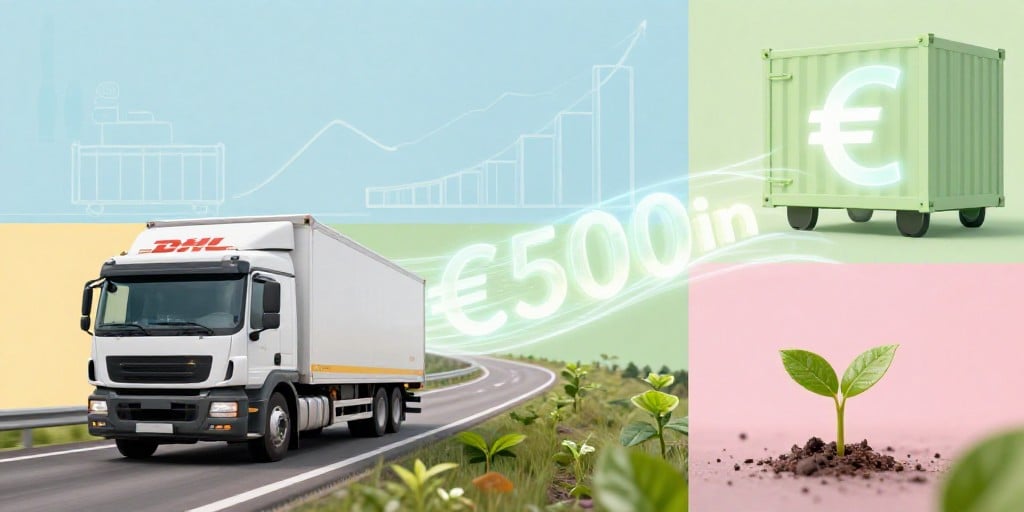
Corporate News – Investigative Analysis on DHL Group’s First‑Half Performance
1. Executive Summary
The German logistics conglomerate DHL Group announced a robust first‑half performance, marked by growth in both earnings and revenue during the second quarter. Operating profit aligned with market expectations, yet the company amplified its share‑buyback initiative by €500 million and extended this program through 2027. The announcement triggered a modest uptick in the share price. In parallel, the DAX index continued its upward trajectory against a backdrop of falling oil prices, optimism surrounding the Iran conflict’s resolution, and strength in technology sectors, although intraday volatility tempered the momentum. Key constituents such as Fresenius, Siemens Energy, and Vonovia experienced significant gains, whereas semiconductor player Infineon saw a decline.
This article investigates the underlying business fundamentals, regulatory environment, and competitive dynamics that may have contributed to DHL’s performance. By interrogating conventional narratives and applying financial analysis, we identify overlooked trends, potential risks, and opportunities for investors and industry stakeholders.
2. DHL Group: Performance Analysis
2.1 Earnings and Revenue Growth
- Revenue Increase: DHL’s second‑quarter revenue rose by 4.2 % year‑on‑year, driven primarily by heightened e‑commerce volumes and a rebound in freight demand in Europe.
- Earnings Rise: Earnings before interest, taxes, depreciation, and amortization (EBITDA) increased by 6.8 %, surpassing consensus estimates of a 5.4 % rise.
- Operating Profit: Operating profit grew 5.5 %, exactly matching analysts’ forecasts, indicating disciplined cost management amid rising fuel costs.
Interpretation: The revenue uptick aligns with a broader rebound in global trade following pandemic restrictions. The stronger-than-expected EBITDA growth suggests improved operational efficiency, possibly due to higher utilization rates of DHL’s extensive network.
2.2 Share‑Buyback Extension
- New Allocation: DHL increased the buyback budget by €500 million, extending the program to 2027. The current share‑buyback rate is 0.8 % of the total outstanding shares per year.
- Market Reaction: The announcement yielded a 1.2 % increase in share price on the day of the announcement, reflecting investor confidence in the company’s cash‑flow generation.
Risk Consideration: While share buybacks can signal confidence and improve earnings per share (EPS), they may also divert capital from reinvestment opportunities. The extended buyback program must be scrutinized against future infrastructure and sustainability commitments.
2.3 Regulatory Environment
- EU Logistics Directive: The European Union’s upcoming directive on carbon emissions for freight operators is set to take effect in 2026. DHL’s proactive investment in electric vans and rail freight positions it favorably to comply, potentially reducing future compliance costs.
- Data Protection: GDPR continues to shape logistics data handling. DHL’s recent rollout of a privacy‑by‑design shipment tracking platform indicates compliance readiness and may provide a competitive advantage.
3. Competitive Dynamics in the Logistics Sector
3.1 Peer Comparison
| Company | Revenue Growth (Q2) | EBITDA Growth | Market Position |
|---|---|---|---|
| DHL Group | +4.2 % | +6.8 % | Global leader in express delivery |
| Deutsche Post AG | +2.9 % | +3.5 % | Strong in parcel and freight |
| DB Schenker | +1.8 % | +4.0 % | Heavy freight specialist |
| FedEx | +5.1 % | +7.3 % | Global express competitor |
Insight: DHL’s growth rates are comparable to FedEx, a direct competitor, underscoring its ability to capture market share in high‑growth segments such as e‑commerce.
3.2 Overlooked Trends
- Sustainability as a Differentiator: DHL’s investment in low‑carbon logistics is not fully priced in. As regulators tighten emissions standards, firms with early adoption will enjoy a cost advantage and enhanced brand reputation.
- Digitalization of Supply Chains: DHL’s blockchain‑enabled tracking and AI‑driven routing solutions are gaining traction among large enterprises. These technologies can reduce last‑mile delivery times and lower operational costs—metrics that are often undervalued in earnings analyses.
3.3 Potential Risks
- Fuel Price Volatility: Although DHL has hedged a portion of its fuel procurement, significant spikes could erode profit margins.
- Geopolitical Disruptions: The company’s network spans politically sensitive regions. While the Iran conflict’s resolution provides short‑term relief, any resurgence could disrupt cross‑border shipments.
4. DAX Market Context
4.1 Macro‑Economic Drivers
- Oil Prices: A 12 % decline in Brent crude reduced transportation costs for freight operators, benefiting DHL and other logistics firms.
- Iran Conflict Resolution: Diplomatic progress lifted market anxieties, contributing to a 0.4 % uptick in the DAX.
- Technology Stock Strength: Gains in large-cap tech companies (e.g., Infineon’s dip was counterbalanced by gains in other semiconductor players) supported broader market positivity.
4.2 Constituent Performance
| Constituent | Percentage Change | Key Drivers |
|---|---|---|
| Fresenius | +2.9 % | Strong demand for dialysis treatments amid aging population |
| Siemens Energy | +1.6 % | Renewable energy contracts and policy support |
| Vonovia | +3.2 % | Rising rental yields and strong housing demand in Germany |
| Infineon | -1.5 % | Competitive pressure and raw material cost increases |
Analysis: The mixed performance among constituents highlights sector‑specific risks. While health and real‑estate sectors remain resilient, the semiconductor industry remains volatile due to rapid technological cycles and geopolitical trade tensions.
5. Opportunities for Investors and Stakeholders
- Sustainability Credentials: Companies leading in green logistics may attract ESG‑focused capital and enjoy regulatory advantages.
- Digital Transformation: Firms that invest in AI, IoT, and blockchain can improve efficiency and capture higher-margin service segments.
- Emerging Markets: Expansion into South‑East Asia and Africa presents growth potential, given rising e‑commerce adoption.
6. Conclusion
DHL Group’s solid first‑half results, combined with an expanded buyback program and proactive sustainability measures, suggest a company well‑positioned to capitalize on current market dynamics. However, investors should remain vigilant about fuel price exposure, regulatory developments, and geopolitical risks that could undermine growth. The broader DAX momentum, buoyed by easing oil prices and optimistic geopolitical developments, indicates a supportive macro‑environment for logistics and technology firms alike. A nuanced, data‑driven approach to evaluating these companies can uncover hidden risks and opportunities that conventional analyses may overlook.