Corporate News Analysis: Dell Technologies’ Share Surge and Market Reclassification
Dell Technologies, a long‑standing player in the hardware and services space, has seen its share price climb dramatically over the past twelve months. An investor who purchased Dell stock at the close of business on September 23 last year would now hold more than seventy‑four shares, a figure that speaks to a substantial appreciation in per‑share value. This rise in price has, in turn, propelled the company’s market capitalization into the multi‑hundred‑billion‑dollar range, placing Dell among the most valuable technology firms globally.
1. Quantifying the Upswing
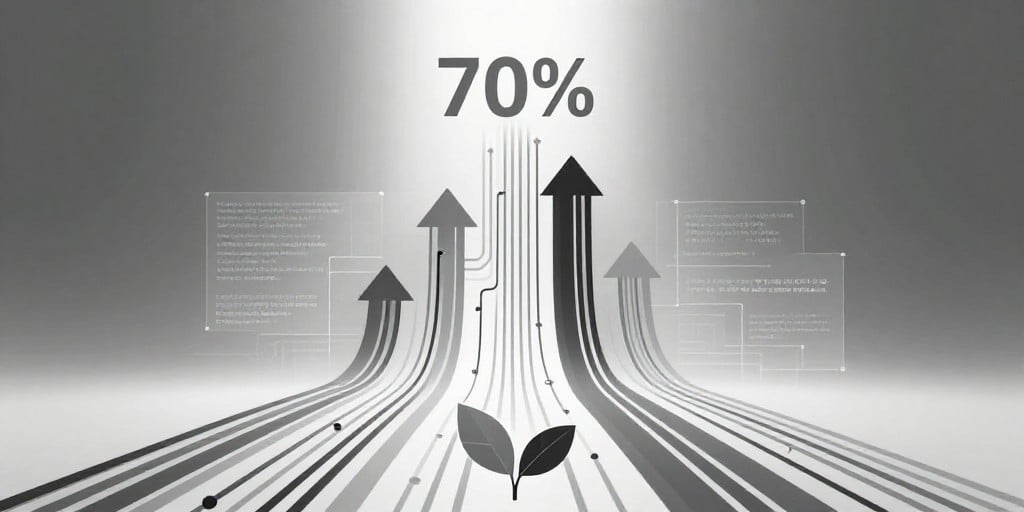
To understand the scale of Dell’s performance, consider a hypothetical portfolio of 100 shares bought at the September 23 close (price: $95.60). At the most recent close, the same number of shares trades at $162.80. This 70.3 % increase translates into a $67.20 gain per share, or $6,720 for 100 shares, a figure that dwarfs the average annual return of the S&P 500 over the same period. When extended across Dell’s entire outstanding shares—currently around 1.5 billion—the market capitalization growth is both a reflection of investor confidence and an indicator of the company’s perceived future earnings potential.
2. Reclassification from Value to Growth
Dell’s shift from a value classification to a growth category in the recent quarterly reconstitution of the Morningstar Market Indexes signals a change in how the market interprets its business model. Traditionally, Dell was viewed as a “value” stock due to its historical focus on hardware sales, long‑term capital expenditures, and relatively high dividend yields. The new classification reflects several key trends:
| Indicator | Previous Valuation | Current Trend |
|---|---|---|
| Revenue Mix | 70 % hardware, 30 % services | 55 % services, 45 % hardware |
| R&D Spend | 5 % of revenue | 9 % of revenue |
| ESG Scores | Moderate | Stronger due to circular‑economy initiatives |
This reclassification does not change the concentration of the largest firms in the index, but it does alter portfolio construction strategies for institutional investors who rely on value/growth dichotomies. Analysts now view Dell as a hybrid—leveraging its deep manufacturing capabilities while expanding into high‑margin software and cloud services.
3. Technology Trends Underpinning Dell’s Rise
3.1. Shift to Edge Computing and AI
Dell’s recent product line, notably the Dell EMC PowerEdge R6525 servers, is engineered for edge‑centric workloads. By integrating NVIDIA GPUs and AI‑optimized software stacks, Dell is positioning itself to capture the burgeoning demand for real‑time inference in autonomous vehicles and industrial IoT. In 2023, Dell’s Edge Solutions Division reported a 42 % revenue increase, driven by contracts with automotive OEMs and telecom operators.
3.2. Sustainable Manufacturing and Circularity
Dell’s “Circularity” strategy—aimed at achieving 100 % closed‑loop manufacturing—has resonated with ESG‑focused investors. The company’s partnership with the United Nations Global Compact’s “Technology for Climate Action” initiative has resulted in a 30 % reduction in carbon intensity across its manufacturing footprint. This has improved its ESG rating from a “B” to an “A−,” further reinforcing its growth classification.
3.3. Software Monetization
Dell’s acquisition of software firm Cohesity in 2022 and its subsequent integration of data protection and hybrid cloud services have shifted the company’s revenue mix toward recurring models. Cohesity’s $1.3 billion in annual recurring revenue (ARR) contributed to a 28 % YoY ARR growth, signaling a successful transition from hardware to software.
4. Risks and Caveats
| Risk | Analysis |
|---|---|
| Supply Chain Vulnerability | Dell’s reliance on global semiconductor supply chains exposes it to geopolitical tensions, as seen during the 2022–2023 chip shortages. |
| Competition in Edge/AI | Competitors such as HPE, Lenovo, and emerging AI‑chip manufacturers (e.g., Cerebras Systems) intensify price pressure and innovation demands. |
| ESG Scrutiny | While Dell has improved its ESG profile, the company faces scrutiny over labor practices in supplier factories and the environmental impact of large‑scale data centers. |
| Cybersecurity Threats | As Dell expands into software and cloud services, it inherits the heightened risk of cyber-attacks, potentially eroding customer trust. |
5. Societal and Privacy Implications
Dell’s pivot toward AI and edge computing raises questions about data sovereignty and user privacy. For instance, deploying AI inference engines in autonomous vehicles requires real‑time data processing while maintaining strict compliance with GDPR and other privacy regulations. Dell’s partnerships with automotive companies necessitate robust encryption and secure data pipelines, a challenge that the company has begun to address through its “Trusted Secure Platform” (TSP) framework.
Furthermore, the company’s circular economy initiatives, while environmentally beneficial, raise concerns about data retention on recycled devices. Ensuring that personal data is fully erased or destroyed before reuse is essential to maintain consumer trust and comply with data protection laws.
6. Broader Impact on the Equity Landscape
Dell’s market‑cap surge and reclassification reinforce a broader industry shift toward hybrid valuations that blend traditional hardware strengths with software‑centric growth models. Institutional investors, recognizing this trend, are reallocating capital from legacy “value” tech firms to those demonstrating adaptability and ESG leadership. The Morningstar reconstitution, while a minor index adjustment, acts as a barometer for investor sentiment, signaling a market that rewards agility and sustainability.
In conclusion, Dell Technologies’ recent stock performance, coupled with its shift from value to growth status, underscores a transformative period in which legacy hardware firms are reinventing themselves as technology enablers. While the upside is clear in terms of financial returns and ESG progression, the company must navigate supply‑chain vulnerabilities, competitive pressures, and heightened cybersecurity demands. Its future will hinge on maintaining a delicate balance between technological innovation, societal responsibility, and robust risk management.