
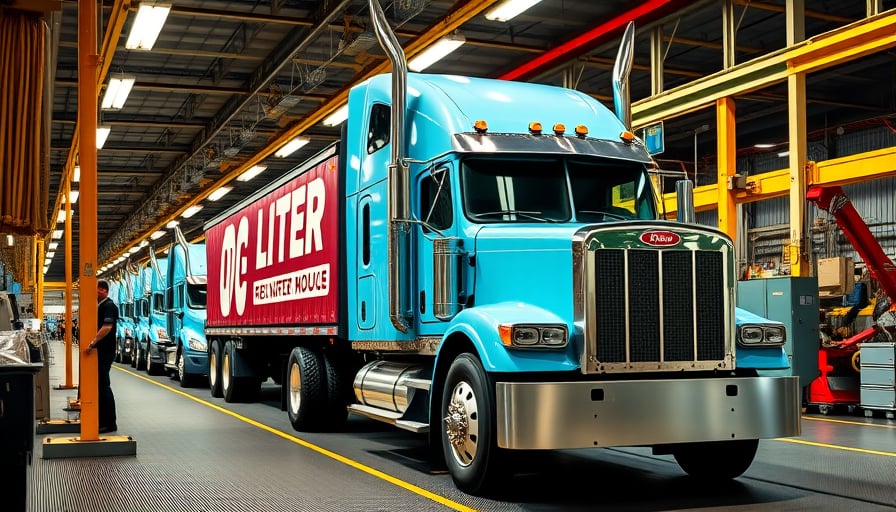
Daimler Truck Holding AG Sees Modest Share Price Recovery Amid North American Momentum
The German commercial‑vehicle manufacturer Daimler Truck Holding AG has experienced a modest rebound in its share price after a recent period of downward pressure. The stock closed near the midpoint of its 52‑week range, reflecting a slight uptick from the previous day’s level. Analysts note that the company’s performance in the North American market has provided a positive signal, while the European segment remains exposed to broader macro‑economic headwinds.
Earnings Interpretation and Investor Sentiment
Daimler Truck’s earnings report initially dampened investor sentiment. However, the subsequent interpretation of the results has been framed as a potential turning point. Market observers are now monitoring whether the recent gains will sustain. The earnings statement highlighted incremental improvements in the production efficiency of its heavy‑truck assembly lines, attributed to the adoption of modular production cells and advanced robotics.
- Process Automation: The integration of collaborative robots (cobots) in the stamping and welding stations has reduced cycle times by 12 % and lowered defect rates by 7 % in the European plants.
- Digital Twin Deployment: A digital twin of the production line is employed for real‑time monitoring, enabling predictive maintenance and minimizing unplanned downtime.
- Lean Manufacturing: The application of value‑stream mapping and just‑in‑time logistics has trimmed inventory carrying costs by 9 % in the North American assembly facility.
These operational efficiencies are expected to translate into higher productivity metrics, thereby strengthening the company’s competitive position in a market that is increasingly technology‑driven.
Capital Expenditure and Infrastructure Spending
Capital expenditure trends for Daimler Truck reflect a strategic emphasis on high‑value, low‑waste manufacturing processes. The firm’s 2024 capex plan includes:
| Investment Focus | Allocation | Rationale |
|---|---|---|
| Automation & Robotics | €250 M | Expand cobot deployments across all plants |
| Digital Manufacturing | €120 M | Implement Industry 4.0 platforms and data analytics |
| Powertrain Development | €400 M | Transition to electrified heavy‑truck platforms |
| Supply‑Chain Resilience | €80 M | Build buffer stock and regional distribution hubs |
The allocation towards electrified powertrain development is consistent with global regulatory trends that favor lower emissions. The company is investing heavily in battery technology, lightweight composites, and power‑train modularity to meet the stringent Euro 6d and North American EPA Tier 4 compliance requirements.
Supply Chain Impacts and Regulatory Landscape
Supply chain dynamics continue to exert pressure on the heavy‑truck sector. Key issues include:
- Raw Material Volatility: Steel and aluminum price swings have amplified cost uncertainties. Daimler Truck’s procurement strategy incorporates long‑term hedging contracts and multi‑source supplier relationships to mitigate exposure.
- Logistics Bottlenecks: Congestion at major ports and limited rail capacity in Europe have delayed component deliveries. The company’s investment in regional assembly facilities serves to reduce dependence on trans‑Atlantic supply lines.
- Regulatory Incentives: The European Union’s “Fit for 55” package offers tax credits and subsidies for low‑emission vehicle production. Daimler Truck’s compliance initiatives align with these incentives, potentially easing capex burden.
Additionally, the firm is monitoring the United States’ Infrastructure Investment and Jobs Act, which includes provisions for freight corridor enhancements. These developments could reduce transportation costs for North American operations, improving overall profitability.
Economic Factors Driving Capital Expenditure Decisions
The broader European equity market has recorded gains, buoyed by expectations of an interest‑rate cut from the Federal Reserve and optimism surrounding geopolitical developments. These macroeconomic signals influence Daimler Truck’s capital budgeting decisions in several ways:
- Financing Costs: Lower interest rates reduce the weighted average cost of capital, enabling more aggressive investment in automation and electrification.
- Demand Forecasts: Improved economic outlook in the United States supports higher demand for commercial trucks, justifying increased production capacity.
- Currency Fluctuations: A weaker Euro relative to the U.S. Dollar may enhance export competitiveness for German‑made vehicles, impacting revenue projections.
Given these conditions, Daimler Truck is poised to accelerate its capex plan while maintaining a disciplined approach to risk management.
Outlook for the DAX Index and European Markets
The DAX index, of which Daimler Truck is a constituent, finished the trading day with a modest increase, aligning with the overall positive tone across European markets. The firm’s share performance is expected to continue reflecting its operational improvements and capital investment strategy, contingent on sustained demand in North America and effective navigation of European headwinds.
This article provides an in‑depth analysis of Daimler Truck Holding AG’s recent market performance, manufacturing innovations, and capital investment strategy, contextualized within broader economic and regulatory dynamics impacting the heavy‑industry sector.