
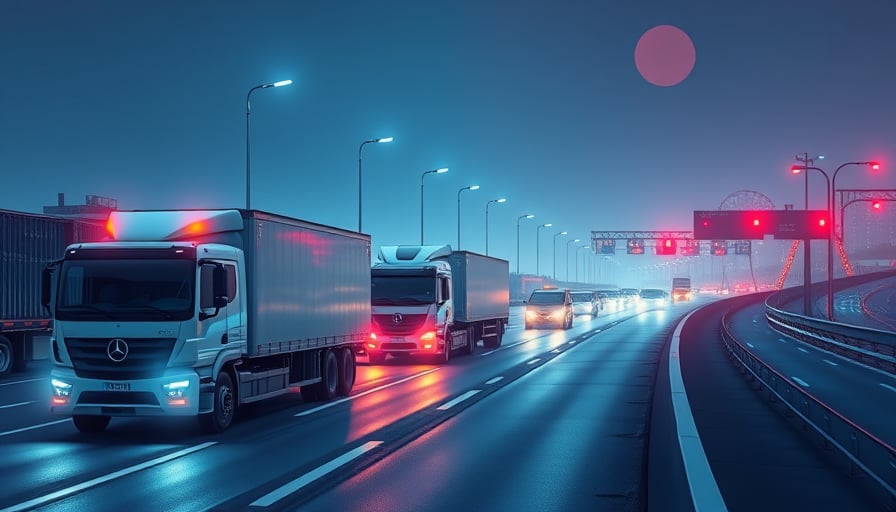
Corporate Update – Daimler Truck Holding AG
Daimler Truck Holding AG has announced two significant developments that reinforce its strategic trajectory toward electrification and autonomous driving. The first pertains to the delivery of a fleet of fully electric Fuso eCanter vans to a major Spanish logistics operator. The second involves a partnership with Innoviz Technologies to supply high‑performance short‑range LiDAR sensors for Level 4 autonomous trucks destined for North American deployment. Both moves exemplify the company’s focus on expanding its presence in the electrification market while simultaneously investing in cutting‑edge autonomous technologies.
1. Electrification: Delivery of 15 Fully Electric Fuso eCanter Vans
1.1 Fleet Composition and Technical Specifications
- Vehicle Variants: Two weight classes are offered—compact (≤ 2.5 t) and heavy‑duty (≤ 4 t)—to accommodate the diverse payload requirements of national postal and logistics services in Spain.
- Powertrain Architecture: Each van employs a 2‑cell Li‑ion battery pack (approx. 120 kWh) coupled with a 150 kW electric motor. The battery chemistry is based on a nickel‑cobalt‑manganese (NCM) composition, delivering an operating range of up to 300 km on a single charge under typical urban conditions.
- Charging Infrastructure: Vehicles are equipped with a 22 kW onboard charger, enabling 80 % state‑of‑charge within 45 minutes. The partner operator will install a network of DC fast chargers (350 kW) at strategic depots to support rapid turnover.
1.2 Productivity Impact
- Operational Efficiency: Electric drivetrains eliminate idling fuel consumption and reduce maintenance intervals by > 30 %, directly translating into lower operating costs per vehicle.
- Payload Optimization: The lighter electrical components compared to internal combustion engines allow an increase in payload capacity, improving the volume of goods transported per trip.
- Turnover Time: The rapid charging capability shortens vehicle downtime, enabling higher utilization rates (estimated increase of 12 % in annual mileage).
1.3 Economic and Regulatory Context
- EU Green Deal and National Incentives: Spain’s 2024 transport decarbonisation policy offers €4,000 per van in procurement subsidies, while a 6 % reduction in road tolls for zero‑emission vehicles further improves the cost‑benefit analysis.
- Infrastructure Spending: European Commission funding under the Horizon Europe programme has accelerated the deployment of charging stations in logistics corridors, aligning with Daimler Truck’s charging network plans.
2. Autonomous Driving: Partnership with Innoviz Technologies
2.1 Sensor Technology Overview
- LiDAR Specification: Innoviz’s short‑range LiDAR units feature a 200 Hz rotational frequency, 120° horizontal field of view, and a maximum range of 140 m, with an angular resolution of 0.1°. The sensors employ a laser‑on‑chip technology that reduces size, weight, and power consumption (SWEPT—Simultaneous Waveform Energy and Position Tracking).
- Integration Architecture: The LiDAR data is fused with high‑definition cameras, radar, and GPS/INS modules in a modular sensor suite. Daimler Truck will embed this stack into its upcoming Level 4 autonomous truck platform, with an end‑to‑end perception‑decision‑action cycle of < 80 ms.
2.2 Production and Deployment
- Series Production: Daimler Truck intends to begin serial production of Level 4 trucks in 2026, with the first deliveries scheduled for 2027 in North America. The collaboration will include a dedicated production line in the U.S. plant, designed to meet the stringent safety and reliability standards set by the Federal Motor Vehicle Safety Standards (FMVSS 144) and the National Highway Traffic Safety Administration (NHTSA).
- Pilot Sites: Initial deployments will occur in controlled freight corridors across Texas and California, selected for their high freight volumes and favorable regulatory environments for autonomous operations.
2.3 Capital Expenditure Dynamics
- Investment Scale: The joint venture will require an estimated €150 million in capital investment over five years, covering sensor manufacturing, integration testing, and regulatory certification.
- ROI Drivers: Autonomous trucks can reduce labor costs by 20–25 % and improve route efficiency by 10–15 %, providing a compelling return on investment in high‑volume freight operations.
- Risk Mitigation: The partnership allows Daimler Truck to share R&D costs and regulatory risk with Innoviz, which holds a portfolio of patents in laser‑on‑chip LiDAR technology.
3. Supply Chain and Infrastructure Considerations
3.1 Supply Chain Resilience
- Component Sourcing: Both the electrified vans and autonomous trucks rely on semiconductor and battery supply chains that are currently under pressure. Daimler Truck is diversifying its supplier base in Asia and Europe to mitigate risk.
- Logistics Integration: The partnership includes a logistics optimisation module that schedules battery swaps and sensor calibration visits, reducing vehicle downtime across the fleet.
3.2 Regulatory and Infrastructure Trends
- Emissions Standards: The EU’s Zero‑Emission Vehicle (ZEV) mandates and the U.S. EPA’s low‑emission freight corridor regulations will accelerate the uptake of electric and autonomous trucks.
- Road Network Upgrades: Funding under the U.S. Infrastructure Investment and Jobs Act (IIJA) will support the installation of smart road sensors and dedicated autonomous lanes, creating an enabling environment for Level 4 deployments.
3.3 Market Implications
- Competitive Landscape: Rivals such as Volvo, Scania, and Freightliner are investing heavily in electric and autonomous technologies. Daimler Truck’s early mover advantage in Europe and strategic North American deployments position it favorably in the high‑margin freight market.
- Customer Adoption: The Spanish postal service’s acceptance of the eCanter vans signals strong market appetite for zero‑emission logistics solutions, encouraging further operator partnerships.
4. Conclusion
Daimler Truck Holding AG’s latest initiatives reinforce its commitment to electrification and autonomous driving, two pillars of its long‑term transformation strategy. By delivering fully electric Fuso eCanter vans to a major European logistics operator and forging a strategic partnership with Innoviz Technologies for Level 4 autonomous trucks, the company is enhancing productivity, reducing operational costs, and aligning with evolving regulatory frameworks. These moves are expected to drive significant capital expenditures in the near term but also position Daimler Truck as a leading contender in the rapidly evolving commercial vehicle sector.