Investigating Daimler Truck Holding AG Amidst Broader European Market Dynamics
European equity markets closed with muted movements, as the German benchmark DAX slipped in tandem with the broader Stoxx 600. The modest decline reflected heightened caution among investors, driven in part by two converging macro‑factors: an uptick in crude oil prices following a Middle‑Eastern pipeline closure, and a sustained rise in bond yields that has exerted downward pressure on corporate valuations across the region. Within this context, Daimler Truck Holding AG registered a modest share‑price decline, positioning it among the lighter‑performing names in both the DAX and LUS‑DAX indices.
A Closer Look at the Share Decline
Daimler Truck’s shares fell by only a few tenths of a percent on the day, a move that may appear negligible at first glance but merits deeper scrutiny when examined against the company’s recent strategic decisions. The decline coincided with the firm’s announcement of a reduction in its ownership stake in the Japanese holding Archion Group—from an unspecified larger percentage to 25 percent. Analysts have highlighted that this divestiture could signal a strategic refocus toward the commercial‑vehicle market, potentially reallocating capital toward electrification initiatives and infrastructure development.
Given Daimler Truck’s core business in heavy‑duty vehicle manufacturing, the decision to scale back in Archion may also reflect an assessment of market synergies. Archion’s portfolio, which includes a range of automotive components and specialty products, has historically provided Daimler with a diversified revenue stream. However, the company’s leadership may perceive diminishing marginal returns from this investment relative to the capital required for electrification programs and the development of hydrogen‑fuelled powertrains.
Market Fundamentals: Electrification and Infrastructure
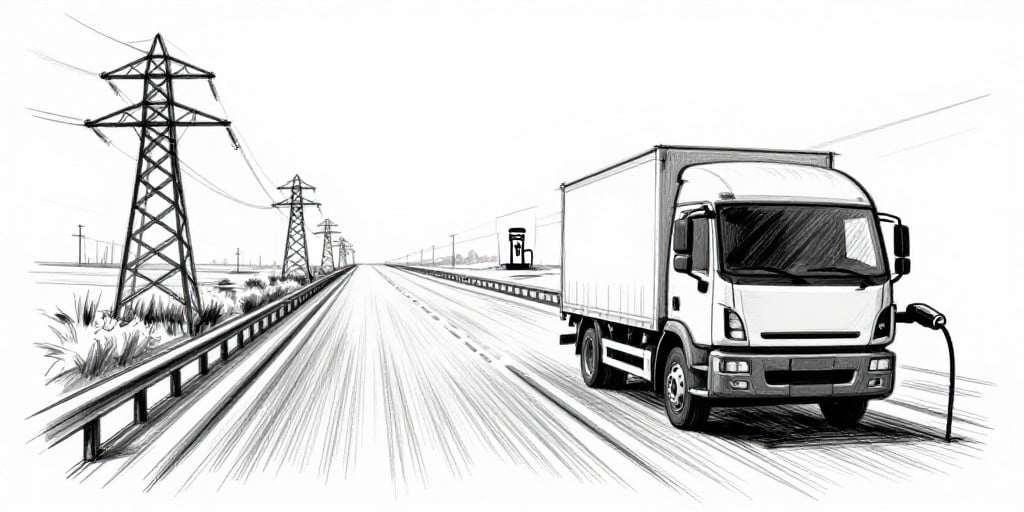
The commercial‑vehicle sector is at a pivotal juncture. Industry leaders and policy makers alike have underscored the necessity of expanding both charging and hydrogen infrastructure to accelerate the adoption of low‑emission trucks. The IAA Transportation trade show in Hannover recently amplified this narrative, with panel discussions focusing on the integration of electric and hydrogen powertrains into existing fleets.
Financially, Daimler Truck’s CEO has articulated the potential cost implications of a slower rollout of electrified vehicles. A delay of just one percentage point in electrification adoption could translate into significant incremental costs, primarily through higher research and development expenditures and the need to maintain parallel production lines for internal combustion engines. This perspective aligns with broader market expectations, wherein investors have become increasingly sensitive to capital allocation efficiency in the context of decarbonisation mandates.
Regulatory Landscape and Competitive Dynamics
Germany’s regulatory framework for commercial‑vehicle emissions has grown more stringent over the past few years, with the Federal Ministry for Economic Affairs and Energy setting ambitious targets for CO₂ reductions. These regulatory pressures are reshaping competitive dynamics: firms that can deliver reliable electric and hydrogen solutions while maintaining cost competitiveness stand to capture market share.
Competing manufacturers such as Volvo Group and Scania have made aggressive commitments to electrification, announcing plans to launch fully electric models by the mid‑2020s. Daimler Truck’s recent strategic shift—particularly the partial divestiture from Archion—may be an attempt to reallocate resources and avoid being eclipsed by peers who are advancing more rapidly in the electrification space.
Risk and Opportunity Assessment
Risks
- Capital Misallocation: If the reduction in Archion stake leads to insufficient capital for electrification initiatives, Daimler Truck could lag behind competitors.
- Supply Chain Disruptions: Transitioning to hydrogen and electric powertrains requires new supply chains, exposing the company to geopolitical and commodity price volatility.
- Regulatory Compliance Costs: Stricter emissions regulations could impose additional compliance costs if the company’s electrification timeline stalls.
Opportunities
- Strategic Focus on Core Competency: By consolidating its holdings, Daimler Truck can sharpen its focus on commercial‑vehicle manufacturing, potentially improving operational efficiency.
- Early Infrastructure Partnerships: Leveraging its scale, Daimler Truck can form strategic alliances with energy providers to accelerate the rollout of charging and hydrogen stations.
- Differentiated Product Portfolio: A focused investment in hybrid solutions could bridge the transition period, appealing to customers wary of fully electric fleets.
Conclusion
The modest decline in Daimler Truck Holding AG’s share price, set against a backdrop of cautious market sentiment and macro‑economic headwinds, masks a more complex strategic recalibration. By reducing its stake in Archion Group, the company is likely reallocating capital toward electrification—a move that could either position it as a leader in the emerging low‑emission commercial‑vehicle market or expose it to significant competitive and regulatory risks. Investors will need to monitor how effectively Daimler Truck translates this strategic shift into tangible product development and market penetration, particularly in the face of intensifying competition and evolving regulatory imperatives.