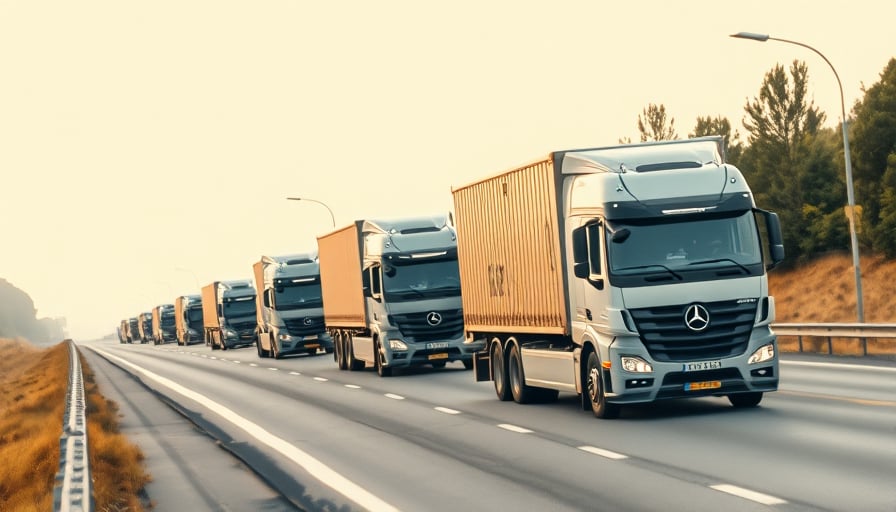
Daimler Truck’s Share‑Buyback Announcement Amid European Market Declines
The European equity market closed lower on Friday, marking the fourth consecutive day of decline. Investors remained wary of geopolitical tensions in the Middle East and of the possibility of further interest‑rate tightening amid persistent inflationary pressures. German equities mirrored the regional trend, with the DAX falling and the automotive‑heavy Daimler Truck Holding AG recording a modest decline after a pattern of subdued downward movement had been observed throughout the week.
Amid this backdrop, Daimler Truck announced the launch of a structured share‑buyback programme, slated to commence on 16 March 2026 and conclude by 15 March 2028. The programme was authorised by a general meeting held in May 2025 and will enable the company to repurchase up to 72 million shares for a total value of up to €2 billion. The initial tranche, limited to €400 million, will be executed over four to six months and will be governed by stringent regulatory conditions, including limits on price and trading volume. The company has committed to disclosing each purchase within seven trading days and will provide ongoing updates via its investor portal.
The move is designed to support the share price and signal confidence in the firm’s long‑term prospects. In the context of broader capital‑expenditure trends, the programme is significant for several reasons:
1. Capital Allocation in Heavy Industry
Heavy‑industry players are increasingly focusing on capital allocation strategies that balance shareholder returns with reinvestment in core operations. Daimler Truck’s buyback programme represents a deliberate effort to return value to shareholders while preserving capital for future growth. By earmarking a €2 billion budget over a two‑year horizon, the company signals its confidence in the resilience of its core truck‑manufacturing business and its ability to generate excess cash flow.
2. Productivity Metrics and Operational Efficiency
Daimler Truck’s share‑buyback initiative coincides with the company’s recent emphasis on productivity improvements. The firm has invested in advanced manufacturing technologies—such as additive‑manufacturing‑enabled lightweight components and automated assembly lines—to reduce cycle times and material waste. By tightening its capital expenditure on plant upgrades and machinery, Daimler Truck is able to sustain high throughput while keeping operating costs under control. The buyback programme, therefore, underscores the company’s capacity to generate cash from efficient production processes, which is a key metric for investors evaluating the sustainability of dividend and share‑buyback payouts.
3. Technological Innovation and Industrial Equipment Upgrades
The automotive‑heavy industry is undergoing a rapid transformation driven by electrification, autonomous driving, and digital twins. Daimler Truck’s manufacturing infrastructure has been updated to accommodate new production lines for electric‑powered trucks, including battery‑pack integration stations and high‑precision welding robots. These upgrades are capital‑intensive and are expected to generate incremental returns through higher product margins and lower life‑cycle costs. By allocating a dedicated buyback budget, Daimler Truck can maintain liquidity while still investing in these high‑return‑potential technologies.
4. Economic Drivers of Capital Expenditure
Several macroeconomic factors influence capital‑expenditure decisions for industrial firms:
- Interest‑Rate Environment: In anticipation of potential tightening, the company has opted to lock in a buyback programme at current valuation levels. This reduces exposure to rising borrowing costs, which would otherwise erode the net present value of future cash flows.
- Inflation Pressures: Elevated input costs—particularly raw materials such as steel and aluminum—have pressured profit margins. The buyback programme can help offset dilution caused by rising production costs.
- Regulatory Compliance: Stringent emissions regulations in the EU, such as the upcoming Euro 7 standards, necessitate costly upgrades to manufacturing lines and product designs. Capital allocation to meet compliance requirements is therefore a critical component of the firm’s long‑term strategy.
5. Supply‑Chain Implications
The programme’s launch occurs during a period of heightened supply‑chain volatility. Disruptions in the availability of critical components (e.g., semiconductor chips) can delay production schedules. By securing a predictable cash outflow for share buybacks, Daimler Truck can better negotiate supplier contracts and maintain favorable payment terms, thereby reducing supply‑chain risk exposure.
6. Regulatory and Market Impact
The buyback programme will be executed under strict regulatory constraints, including limits on price and trading volume. This regulatory oversight ensures that the programme does not artificially inflate the share price or create market distortions. Additionally, the disclosure of each purchase within seven trading days promotes transparency, fostering investor confidence and mitigating potential market volatility.
7. Infrastructure Spending and Market Implications
As Europe invests in infrastructure—such as the expansion of high‑capacity logistics corridors—industrial manufacturers like Daimler Truck stand to benefit from improved supply‑chain connectivity and reduced freight costs. The company’s ability to capitalize on such infrastructure spending, while simultaneously returning capital to shareholders, positions it favorably in a rapidly evolving economic landscape.
Conclusion
Daimler Truck’s €2 billion share‑buyback programme is a strategic move that reflects the company’s commitment to maintaining robust liquidity, supporting share price, and demonstrating confidence in its long‑term growth trajectory. The initiative dovetails with the firm’s emphasis on productivity, technological innovation, and efficient capital allocation amid a challenging macroeconomic environment. By navigating regulatory requirements and supply‑chain complexities, Daimler Truck underscores its status as a resilient player in the heavy‑industry manufacturing sector.