
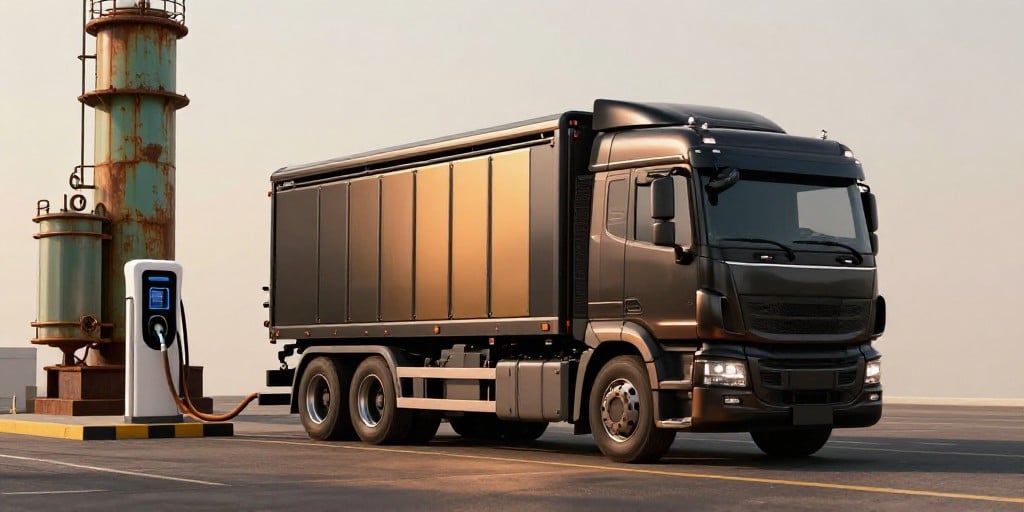
Daimler Truck Holding AG Faces Infrastructure‑Driven Challenges in Europe’s Electric Freight Transition
Daimler Truck Holding AG continues to grapple with a pronounced disconnect between the projected demand for high‑power charging infrastructure and the current supply of suitable public stations across Europe. Recent analyses highlight that only a small fraction of public charging points meet the capacity requirements for heavy‑duty electric trucks, creating a critical bottleneck that threatens the commercial viability of the company’s electric truck portfolio. Prolonged downtime due to insufficient charging options could erode freight operators’ profit margins, a risk that investors and industry analysts are keenly monitoring.
Strategic Response: Vehicle Rollout and Infrastructure Partnerships
In response to the infrastructural shortfall, Daimler Truck’s strategy prioritises the accelerated deployment of its own battery‑electric models while simultaneously engaging in partnerships designed to expand the high‑capacity charging network. The company recognises that the success of electric trucks hinges not only on vehicle performance but also on the reliability of charging solutions across the spectrum of logistics operations—spanning long‑haul routes, regional distribution, and industrial applications.
By investing in proprietary charging infrastructure and collaborating with third‑party providers, Daimler Truck seeks to mitigate the risk of downtime and align its fleet deployment with evolving regulatory requirements. These efforts are intended to create a more resilient supply chain for freight operators, thereby reinforcing confidence in electric truck adoption.
Alternative Approaches and Practical Constraints
Competing initiatives, such as the battery‑swap model pursued by Janus Electric, present an alternative pathway to reduce downtime. However, these solutions impose their own practical constraints. Battery‑swap stations require dedicated infrastructure, and the economic feasibility of frequent battery replacement remains uncertain for many freight operators. While battery‑swap technology may offer advantages for specific freight profiles—particularly those with predictable turnaround times—it does not yet provide a universal remedy for the broader infrastructure shortfall facing the heavy‑duty electric truck market.
Investor Perspectives and Market Outlook
Investors are closely evaluating the trajectory of Daimler Truck’s growth in light of these developments. The company’s capacity to navigate the infrastructural bottleneck, secure additional investment for charging stations, and align its fleet deployment with regulatory and market demands will be pivotal determinants of future performance. Daimler Truck’s ongoing efforts to deepen its presence in the European electric truck market, coupled with its participation in collaborative infrastructure projects, are viewed as key indicators of its ability to sustain momentum amid a rapidly evolving landscape.
In summary, Daimler Truck Holding AG’s future hinges on its ability to bridge the gap between vehicle deployment and charging infrastructure. The company’s dual focus on accelerating electric truck production and expanding high‑capacity charging networks reflects a comprehensive approach aimed at mitigating downtime risks and ensuring long‑term commercial viability in the European freight sector.