
Daimler Truck Holding AG Intensifies Focus on Electrification Challenges and Capital Expenditure Dynamics
Executive Summary
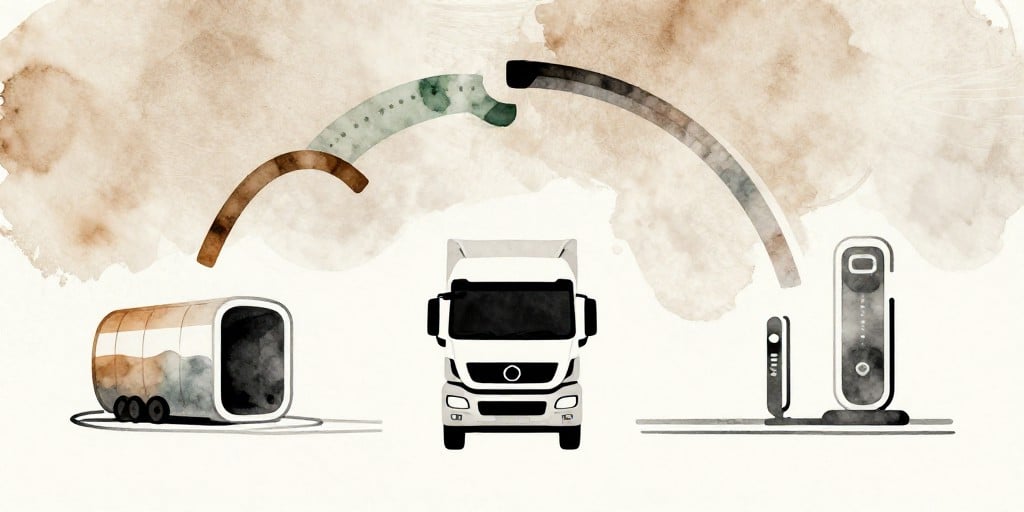
Daimler Truck Holding AG has reiterated the dual imperatives that underpin its electrification roadmap: the expansion of a resilient charging infrastructure and the attainment of cost parity between electric and diesel heavy‑duty trucks. Chief Executive Officer Karin Rådström underscored that fleet operators—whose margins are typically narrow—are highly sensitive to incremental expenditures. The company’s current strategy is therefore a dual‑track approach, combining battery‑electric (BEV) and hydrogen fuel‑cell technologies to deliver differentiated, market‑specific solutions. Concurrently, Daimler is evaluating complementary external initiatives, such as Janus Electric Holdings’ battery‑swap retrofit platform, as potential accelerators for gradual fleet conversion.
1. Technological Constraints and Infrastructure Needs
Charging Power Density Daimler’s eActros 600, which delivers an approximate 500 km full‑load range under optimal conditions, remains contingent upon access to high‑capacity charging stations. Current tests on long‑haul corridors have demonstrated the feasibility of 350 kW DC fast‑charging nodes that can replenish 80 % of the battery capacity within 15 minutes. However, the deployment of such nodes along major freight corridors is limited by the availability of 400 kV grid capacity and the high capital costs associated with substation upgrades.
Battery‑Swap Viability Janus Electric’s modular battery‑swap concept offers a pragmatic alternative that mitigates downtime. By replacing depleted modules rather than charging the entire battery pack, operators could achieve idle times of under five minutes. While the retrofit process introduces upfront equipment costs (estimated at 12–15 % of the original truck value), it aligns with fleet operators’ preference for incremental capital expenditure.
Hydrogen Integration Hydrogen fuel cells present an attractive solution for long‑haul routes where the energy density advantage of gaseous fuels can offset the heavier weight of BEV packs. Daimler’s ongoing pilot projects involve integrating 400 kW fuel‑cell stacks into the existing chassis, which, coupled with on‑board electrolyzers, could achieve end‑to‑end energy efficiencies exceeding 55 % for diesel‑to‑hydrogen conversions.
2. Capital Expenditure and Market Dynamics
Cost Parity Analysis Current life‑cycle cost models project that the total cost of ownership (TCO) for the eActros 600 aligns with that of a comparable diesel truck within 5–7 years, assuming a 15 % annual discount rate and stable electricity prices. However, this projection is highly sensitive to the price volatility of battery cathodes and the rate of economies of scale in BEV production.
Funding Landscape European and national governments continue to offer incentives for heavy‑duty electrification, including tax credits and direct subsidies for charging infrastructure. Nevertheless, the rapid pace of technology development often outstrips policy adjustments, creating uncertainty for long‑term capital budgeting.
Supply Chain Resilience The transition to BEV and hydrogen platforms exposes Daimler to risks associated with raw material supply chains, particularly lithium, cobalt, and rare earth elements. Recent geopolitical tensions have prompted a diversification strategy that includes the procurement of second‑life batteries and the exploration of cobalt‑free cathode chemistries.
3. Regulatory and Infrastructure Implications
EU Emission Standards The European Union’s upcoming 2027 emissions regulation for heavy‑duty vehicles, which imposes a 30 % reduction in CO₂ emissions relative to 2020 levels, directly incentivizes the adoption of electrified propulsion. Daimler’s dual‑track strategy positions it to meet these standards while maintaining a competitive price point.
Infrastructure Grants The European Investment Bank’s Green Transport Initiative is earmarking up to €10 billion for charging stations across major freight corridors. Daimler’s engagement with this program could unlock preferential financing terms, thereby reducing the net present value (NPV) of infrastructure investments.
Standardisation Efforts Harmonisation of plug‑in standards and battery‑swap protocols under the IEC 61851 framework is accelerating, which will facilitate interoperability across fleets and reduce the need for proprietary solutions.
4. Forward‑Looking Assessment
Daimler Truck Holding AG’s continued investment in next‑generation electric and hydrogen platforms reflects a strategic commitment to aligning with evolving market demands and regulatory mandates. By simultaneously pursuing internal R&D for high‑capacity charging and monitoring external innovations such as Janus Electric’s retrofit approach, Daimler is positioning itself to offer a diversified suite of solutions. This dual focus is expected to enhance productivity metrics across the sector—improving utilization rates, reducing downtime, and lowering operating costs—while also addressing the broader economic drivers that shape capital expenditure decisions in the heavy‑industry transport market.