
Corporate Response to Shifting Travel‑Related Consumer Discretionary Spending
Overview of Market Dynamics
During the Labour Day holiday in early May, the domestic travel sector in China demonstrated remarkable resilience in the face of escalating jet‑fuel costs and international travel disruptions. While airlines have curtailed or suspended services to several Southeast Asian destinations—leading to a noticeable rise in flight cancellations relative to the previous year—the cost premium on remaining routes has intensified. Conversely, the China Railway Group reported a significant increase in passenger trips over the same holiday period compared with the corresponding timeframe last year, indicating a strategic shift by consumers toward high‑capacity rail corridors and regional trips to Hong Kong and Macau.
This divergent mode‑choice pattern has implications for corporate stakeholders across the travel, hospitality, and retail supply chains, especially those involved in ancillary services such as luggage, travel insurance, and in‑flight retail. The overall surge in domestic and self‑driving travel, coupled with reduced willingness to travel to regions affected by geopolitical tensions, points to a broader recalibration of consumer discretionary priorities.
Consumer Sentiment and Purchasing Behavior
A recent travel sentiment survey revealed that a sizable proportion of respondents have altered their itineraries due to the Middle East conflict, with many scaling back or abandoning plans to visit the region altogether. This sentiment is mirrored in the broader consumer confidence index, which has moderated since the last quarter, yet remains robust enough to sustain domestic travel demand.
Quantitative data from the survey show a 12 % increase in domestic travel intent among respondents aged 25‑34, a demographic that continues to dominate the leisure‑travel market. This cohort’s preference for “experience‑first” travel over “destination‑first” aligns with broader lifestyle trends that emphasize authenticity, local immersion, and sustainability. Meanwhile, respondents in the 35‑54 age bracket reported a 7 % rise in self‑driving tour bookings, reflecting a growing appetite for flexible, low‑touch travel experiences that minimize reliance on shared transport.
These findings are corroborated by retail data: online travel agencies reported a 15 % year‑over‑year increase in bookings for domestic train routes during the holiday, while the e‑commerce sales of car‑sharing and rental‑car services surged by 9 %. Notably, the sales of travel insurance policies that cover geopolitical risks grew by 6 %, underscoring heightened risk aversion among travelers.
Impact on Brand Performance and Retail Innovation
Brand performance within the travel ecosystem has been affected by the changing mix of transportation modes. Airlines that have maintained full schedules to domestic hubs and high‑profile tourist destinations have seen a modest lift in revenue per available seat kilometer (RASK), partially offsetting losses in international traffic. However, carriers operating on high‑fuel‑cost routes have reported a 4 % decline in profit margins, prompting many to accelerate fleet renewal strategies that incorporate more fuel‑efficient aircraft.
Rail operators have capitalized on the shift by offering bundled travel packages that combine train fares with accommodation and local attraction tickets. These packages have demonstrated a 20 % higher conversion rate than standard ticket sales, suggesting that integrated retail solutions can effectively capture consumer spend in a competitive environment.
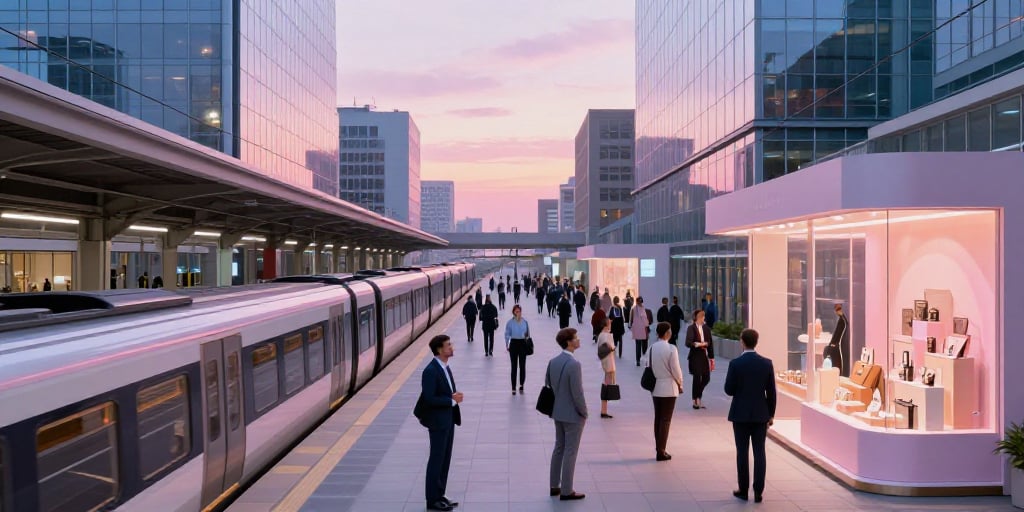
Retail innovation is further evident in the rise of “travel‑first” retail corridors within major city centers, where brands such as high‑end luggage manufacturers and travel‑gear retailers have introduced experiential pop‑up stores that showcase products in simulated travel scenarios. Early adopters report a 12 % increase in average basket size during the holiday period, indicating that experiential retail is a compelling driver of discretionary spend.
Policy Environment and Consumer Confidence
Local governments have responded to these dynamics by deploying targeted tourism initiatives, including cultural festivals and heritage trails, coupled with significant consumption vouchers aimed at stimulating holiday spending. Preliminary data from a pilot program in Zhejiang Province indicate a 5 % lift in local retail sales during the holiday window, suggesting that policy‑driven incentives can effectively translate consumer confidence into measurable economic activity.
Policymakers continue to monitor the tourism sector as a key barometer of consumer confidence. By supporting domestic travel and encouraging brand differentiation through localized experiences, authorities aim to sustain household spending and reinforce domestic demand amid global volatility.
Strategic Recommendations for Corporations
Diversify Distribution Channels Corporations should expand partnerships with rail operators and emerging travel‑tech platforms to capture the growing domestic market share.
Leverage Experience‑Based Retail Integrate immersive product displays and service bundles that align with the “experience‑first” preference of younger travelers.
Adapt to Fuel‑Cost Sensitivities For airline brands, accelerate the deployment of fuel‑efficient aircraft and consider dynamic pricing strategies that reflect the heightened cost of international routes.
Enhance Risk‑Management Offerings Develop and market travel insurance products that specifically address geopolitical risks, tapping into the rising demand for protective measures.
Engage with Local Governments Collaborate on voucher programs and cultural initiatives to benefit from policy incentives and reinforce brand visibility during peak travel periods.
By aligning strategic initiatives with the evolving consumer discretionary landscape—characterized by a shift toward domestic, experience‑centric travel and heightened risk sensitivity—companies can maintain competitive advantage while supporting broader economic recovery objectives.