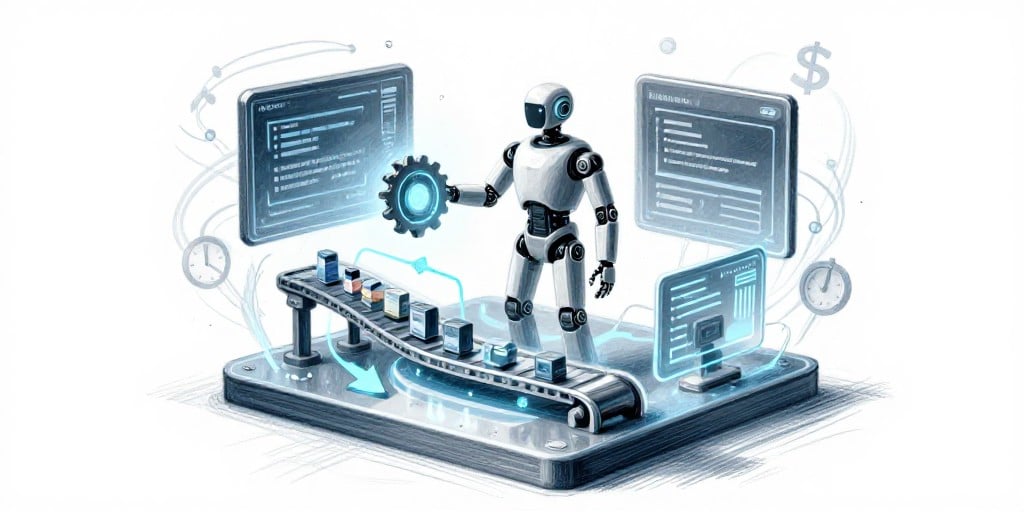
Cognizant Tech Solutions Positions Itself as a Key Enablement Partner in a Maturing Robotics Market
Cognizant Tech Solutions has entered a period of intensified activity as the broader robotics sector shifts from prototype demonstrations toward fully productive, repeatable deployments. Analysts note that this transition is driven by the need for scalable, reliable automation that can be seamlessly integrated into existing manufacturing and logistics workflows. Cognizant’s current focus, rooted in software and digital services, reflects an industry‑wide pivot toward embedding advanced automation into core business processes rather than merely showcasing robotic capabilities.
Industry Context: From Demonstration to Production
- Growth of the Robotics Market Global robotics revenue is projected to reach $90 billion by 2028, up from $60 billion in 2025, according to a 2025 IDC report. The growth is largely fueled by demand for collaborative robots (cobots) in small‑to‑medium enterprises (SMEs) and by automation of warehouse and logistics operations.
- Shift in Value Chain Traditional robotics vendors have focused on hardware design and prototyping. However, the market now requires integrated solutions that encompass software, sensor integration, and real‑time analytics. This trend is prompting service‑based companies to step into the value chain.
Cognizant’s Strategic Response
| Strategic Element | Description | Business Impact |
|---|---|---|
| Consulting‑First Delivery | Leveraging its established digital services portfolio, Cognizant offers bespoke consulting to map robotic solutions onto clients’ existing IT architectures. | Helps clients avoid costly integration failures and accelerates time‑to‑value. |
| System Integration Services | The firm provides end‑to‑end integration, including middleware, data pipelines, and performance monitoring. | Ensures that robots operate reliably at scale, meeting stringent uptime and safety requirements. |
| Partnerships with Manufacturers | Cognizant collaborates directly with robotic hardware vendors to co‑develop deployment blueprints and to co‑test integration scenarios. | Reduces the need for clients to invest in proprietary integration tooling. |
| Supply‑Chain Collaboration | By engaging suppliers and component manufacturers, Cognizant facilitates design‑to‑production handoffs that cut component lead times by up to 25 %. | Lowers capital expenditures and improves inventory turnover for clients. |
Technical Insight: The Role of Middleware and Analytics
Modern robotic deployments rely on robot operating systems (ROS), proprietary middleware, and cloud‑based analytics platforms. Cognizant’s integration services emphasize:
- Real‑Time Data Ingestion – Streaming sensor and actuator data to centralized analytics hubs.
- Predictive Maintenance Models – Applying machine‑learning algorithms to anticipate component wear and schedule proactive service.
- Safety and Compliance Orchestration – Embedding safety‑instrumented zones and fail‑safe logic within the control software to meet ISO 10218 and IEC 61508 standards.
These capabilities allow organizations to transition from isolated robot installations to networked, autonomous production lines that can adapt dynamically to production variability.
Expert Perspectives
Dr. Elena Martinez, Robotics Analyst at Gartner “Service‑centric firms like Cognizant are becoming indispensable because they translate raw robotic hardware into tangible business value. Their ability to weave automation into existing enterprise systems is what differentiates successful implementations from costly missteps.”
Rajiv Patel, VP of Operations at a mid‑size automotive supplier “Our partnership with Cognizant accelerated our cobot rollout by 30 %. Their end‑to‑end integration approach meant we could focus on quality rather than on troubleshooting integration bugs.”
Actionable Takeaways for IT Decision‑Makers
- Prioritize Integration Platforms – Evaluate vendors that can deliver middleware capable of interfacing with legacy ERP, MES, and SCADA systems.
- Invest in Predictive Analytics – Incorporate machine‑learning modules early to reduce unscheduled downtime and extend robot lifespan.
- Adopt a Phased Deployment Model – Start with pilot projects that integrate with existing workflows before scaling to full production lines.
- Leverage Vendor Partnerships – Engage consulting firms that already have established relationships with hardware manufacturers to streamline procurement and support.
- Focus on Supply‑Chain Visibility – Use integrated solutions to track component lead times and to trigger re‑sourcing decisions proactively.
Outlook
As the robotics market expands into new application domains—such as autonomous material handling, warehouse automation, and even retail—Cognizant’s advisory and integration capabilities position the company to capture a growing share of the service‑enablement segment. By providing end‑to‑end solutions that reduce complexity, accelerate deployment, and deliver measurable operational efficiencies, Cognizant is poised to help clients not only adopt automation but also sustain it as a core competitive advantage.