
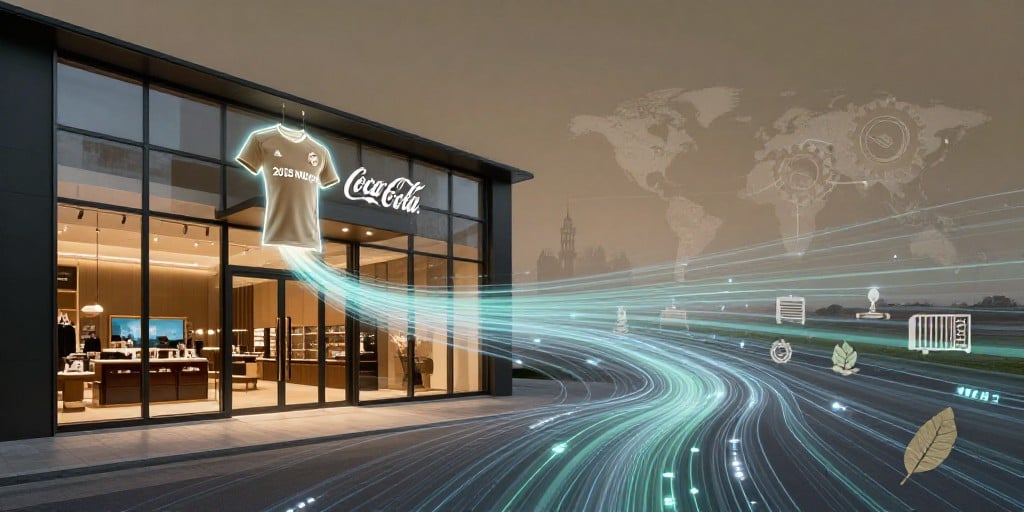
Coca‑Cola’s World Cup Jersey Campaign: A Strategic Play in Omnichannel Brand Building
Coca‑Cola’s participation in a promotional initiative linked to the 2026 FIFA World Cup represents a calculated effort to fuse consumer engagement with data‑driven marketing. By distributing free or low‑cost soccer jerseys to customers who meet specific criteria—such as completing a registration or purchasing a minimum quantity of products—the beverage giant seeks to strengthen brand visibility, create positive fan associations, and harvest valuable consumer data for future targeting.
Omnichannel Synergy and Consumer Touchpoints
The campaign is emblematic of the broader trend in consumer goods whereby brands harness high‑profile sports events to amplify reach across multiple retail channels. In this context, Coca‑Cola leverages:
| Channel | Engagement Mechanism | Expected Outcome |
|---|---|---|
| E‑commerce | Digital registration tied to online purchases | Data capture, conversion tracking |
| Physical retail | In‑store QR codes prompting jersey eligibility | In‑store traffic, immediate sales |
| Social media | Branded hashtag campaigns encouraging photo sharing | Viral reach, user‑generated content |
| Mobile apps | Push notifications about eligibility status | Real‑time engagement, loyalty reinforcement |
By integrating these touchpoints, Coca‑Cola ensures that consumers encounter the brand at each stage of their journey, from discovery to purchase to post‑purchase loyalty. The resulting data—demographic details, purchasing patterns, and engagement metrics—enable the company to refine its advertising mix with a precision that traditional media cannot match.
Cross‑Sector Patterns in Promotional Apparel
Analysts observe that the use of branded apparel as a promotional tool has transcended the beverage sector. In 2024, a leading comparison‑portal platform ran a similar initiative that distributed millions of jerseys, reportedly incurring high costs. While the exact financial outlay of Coca‑Cola’s operation remains undisclosed, the scale can be inferred to be substantial given the global reach of the World Cup.
Patterns across consumer categories reveal:
- Sports‑wear as a high‑value token: The perceived prestige of a soccer jersey, even when not official merchandise, translates into strong brand affinity.
- Data acquisition as a secondary objective: Registrations and purchases tied to the giveaway provide a robust dataset for future retargeting.
- Risk of brand dilution: Excessive distribution of non‑official apparel may erode the perceived exclusivity of genuine team gear, prompting tension with traditional retailers.
The balance between these forces—brand amplification versus potential dilution—constitutes a critical consideration for brands venturing into similar promotional domains.
Supply Chain Innovation and Sustainability Considerations
Behind the consumer‑facing strategy lies a complex supply chain orchestration. Key innovations include:
- Just‑in‑time manufacturing: Partnering with apparel suppliers that can rapidly scale production ensures timely delivery aligned with the event schedule.
- Localized distribution hubs: Deploying micro‑warehousing near high‑traffic retail nodes reduces shipping costs and carbon footprint.
- Data‑enabled inventory management: Real‑time sales and engagement data feed into predictive models that minimize overstock and waste.
Sustainability, increasingly central to consumer expectations, also plays a role. Brands that integrate recyclable materials, transparent sourcing, or carbon‑neutral production into their promotional apparel can enhance goodwill and mitigate the risk of backlash from eco‑conscious shoppers.
Short‑Term Gains and Long‑Term Transformation
Short‑term metrics for this initiative include:
- Engagement rates: Click‑through and conversion rates on registration pages.
- Brand lift studies: Surveys measuring shifts in brand perception and trust.
- Sales velocity: Incremental sales of Coca‑Cola products during the promotion period.
Long‑term implications extend to:
- Portfolio diversification: Brands may expand into branded apparel as a new revenue stream.
- Retail ecosystem evolution: The line between promotional giveaways and standard retail offerings blurs, prompting retailers to rethink inventory strategies.
- Consumer data ecosystems: Accumulated data shapes personalized marketing, predictive analytics, and loyalty program design.
In sum, Coca‑Cola’s World Cup jersey program exemplifies a sophisticated intersection of omnichannel retail innovation, data‑centric marketing, and supply‑chain agility. While the immediate objective is heightened visibility and data capture, the campaign also signals a broader shift in how consumer goods firms engage with sporting events—balancing short‑term promotional success against the integrity of official merchandise and the evolving expectations of a digitally connected consumer base.