
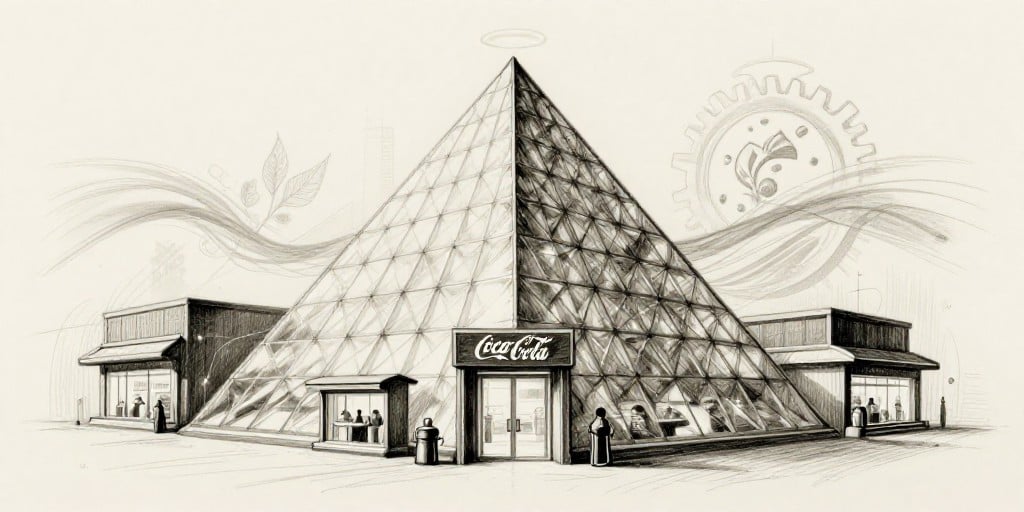
Corporate News Analysis: Coca‑Cola’s Resurgent Share Price and Market Context
Coca‑Cola’s share price has recently recovered from its 52‑week low, posting a gain of roughly one‑quarter while entering a period of consolidation. The stock now trades near a level that aligns with defensive valuation multiples that have tightened in light of higher risk‑free yields. Analysts note that the beverage giant’s core business continues to generate stable earnings, yet the market has adjusted the company’s price‑to‑earnings expectations in line with broader defensive‑sector sentiment.
Technical Outlook
Technical observers point to a bullish Elliott Wave pattern that suggests the stock has entered a higher wave and could approach a $100 support zone. They argue that the current rally is part of a broader up‑trend, and that a corrective pullback within the next wave would provide a potential entry point for traders. The analysis emphasizes that the current upward momentum is expected to continue, with a monthly target above $100, though no recommendation for selling is made.
Market Context
The broader Dow Jones movement has finished the week in positive territory. Coca‑Cola appears on the Dow’s list of weaker performers, with a modest decline relative to its peers. Nevertheless, the company remains a major constituent of the index, and its performance is seen as reflecting the broader defensive tilt of the market.
Corporate disclosures have remained routine, with no significant changes in director holdings reported. Overall, the outlook for Coca‑Cola is cautiously optimistic, driven by a combination of steady fundamentals, supportive technical trends, and a market environment that favors defensive stocks.
Editorial Lens: Digital Transformation, Physical Retail, and Generational Spending
While the raw numbers speak to the company’s health, a deeper look into lifestyle trends, demographic shifts, and cultural movements reveals a landscape rich with opportunity for consumer‑facing businesses. In the same markets that support Coca‑Cola, retailers and brands are navigating the intersection of digital innovation and the enduring allure of the physical store. This synthesis is shaping new consumer experiences and, in turn, redefining growth prospects across the sector.
1. Digital‑First Shoppers Meet Brick‑And‑Mortar
The pandemic accelerated the migration to e‑commerce, yet the post‑COVID world has seen a resurgence of physical retail. Shoppers now expect a seamless blend: online research, in‑store pick‑up, and instant digital payment options. Retailers that integrate augmented reality (AR) try‑on tools, mobile‑first checkout, and loyalty programs that reward both online and in‑store interactions are capturing higher share of wallet. Coca‑Cola’s partnership with grocery‑chain app platforms to push limited‑edition flavors showcases how beverage brands can ride this wave by placing their products at the intersection of digital visibility and physical shelf presence.
2. Generational Spending Patterns
Baby Boomers, Gen X, and Millennials each bring distinct priorities. Boomers favor convenience and trust in legacy brands; Gen X seeks value and authenticity; Millennials and Gen Z are driven by experiences and social‑impact narratives. Beverage companies that tailor packaging, messaging, and distribution to these segments—such as “eco‑friendly” bottles for Gen Z and premium craft lines for Gen X—can create differentiated channels. The rise of subscription boxes and “build‑your‑own” flavor kits is evidence of brands turning generational tastes into recurring revenue streams.
3. Cultural Movements as Market Signals
The growing emphasis on sustainability, wellness, and community engagement has become a market signal. Companies that openly commit to reducing plastic waste, sourcing local ingredients, or supporting community initiatives are rewarded with increased brand loyalty and price‑premium power. Coca‑Cola’s ongoing “World Without Waste” pledge and collaborations with local artisans illustrate how corporate responsibility can be translated into tangible consumer demand. The key is transparency and measurable progress; investors increasingly weigh ESG performance alongside traditional financial metrics.
Forward‑Looking Analysis: Translating Societal Change into Market Opportunities
Omni‑Channel Expansion Retailers must invest in technology that unifies inventory, customer data, and fulfillment. Companies that leverage AI to predict demand patterns and optimize stock levels across channels will see improved margins. For instance, deploying AI‑driven replenishment systems can reduce out‑of‑stock incidents by up to 30%.
Experience‑Centric Store Design Physical locations will evolve into experiential hubs—think pop‑up tasting rooms, interactive displays, and in‑store events that drive foot traffic and social media buzz. Brands that design stores as “living” brands, where customers can co‑create products, are likely to capture the attention of the experience‑oriented Gen Z cohort.
Personalized Digital Engagement Data‑driven personalization—through loyalty apps that recommend products based on purchase history, or AR filters that let users visualize new flavors—creates a higher perceived value. Investing in customer‑relationship management (CRM) platforms that integrate across digital touchpoints will become a prerequisite for sustained growth.
Sustainable Supply Chains ESG mandates are tightening, and companies that proactively overhaul their supply chains—transitioning to renewable energy, reducing carbon footprints, and ensuring fair labor practices—will not only avoid regulatory penalties but also tap into the premium segment of consumers willing to pay more for responsible products.
Flexible Pricing Models Subscription services, “pay‑as‑you‑go” models, and dynamic pricing powered by real‑time analytics will enable brands to capture value across varying consumer willingness to pay. This flexibility is particularly relevant in the beverage sector, where taste trials and seasonal offerings can be priced differently to maximize revenue per consumer segment.
Conclusion
Coca‑Cola’s recent share‑price rebound reflects a convergence of solid fundamentals and a market environment that favors defensive stocks. Yet the broader narrative in consumer retail is one of rapid adaptation to digital innovations, shifting generational priorities, and a cultural pivot toward sustainability. Companies that recognize and act on these interrelated forces—by enhancing omni‑channel capabilities, curating experiential retail, embracing personalization, committing to ESG standards, and deploying flexible pricing—will be positioned to convert societal change into robust market opportunities.