
Corporate News – Analysis of Recent Coca‑Cola Equity Transactions
The latest filings by The Coca‑Cola Company reveal a routine yet strategically significant shift in the ownership profile of its senior leadership. On August 6 and 7, 2026, the company filed a Form 4 and a Form 144 with the U.S. Securities and Exchange Commission, respectively. These documents provide a granular view of the trading activity of senior executive Luisa Ortega and illustrate how executive equity management can serve as a barometer for broader market and consumer trends.
Executive Equity Management as a Market Indicator
Executive stock transactions are often perceived as purely internal matters, but they can signal the confidence of a company’s leadership in its long‑term prospects. In Ortega’s case, the Form 4 shows a net increase in her ownership stake through the exercise of stock options and subsequent trades that remain within a narrow price band. This pattern reflects a balanced approach—executives are securing liquidity while preserving long‑term alignment with shareholders. The concurrent Form 144 documents a planned sale of 55,755 shares, again at market‑congruent levels. Together, these filings confirm that Coca‑Cola’s compensation framework is functioning as intended, offering both immediate remuneration and future upside.
Linking Equity Transactions to Consumer‑Facing Strategies
Coca‑Cola’s leadership has been guiding the company through a digital‑first retail transformation. The firm’s push to blend e‑commerce, mobile ordering, and experiential pop‑up stores is designed to capture the evolving habits of Generation Z and Millennials—segments that prioritize convenience, personalization, and social proof. Executives who hold and actively manage equity are likely to advocate for investments that enhance consumer engagement, especially in hybrid retail environments where digital touchpoints coexist with physical storefronts.
The timing of Ortega’s equity trades coincides with the launch of several new product‑experience initiatives:
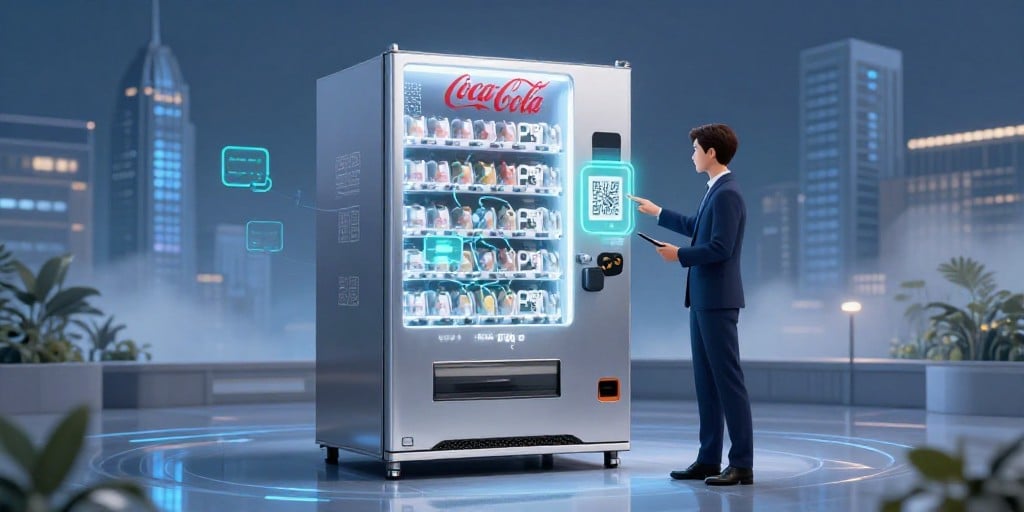
- Digital‑First Packaging – QR‑enabled labels that unlock interactive content and loyalty rewards.
- Pop‑Up Experience Hubs – Temporary stores that fuse VR sampling stations with social media‑ready backdrops.
- Subscription‑Based Delivery – Tiered plans that leverage data analytics to recommend personalized beverage bundles.
These initiatives tap into the same consumer currents that shape executive compensation: a desire for immediacy, a willingness to invest in curated experiences, and an appetite for brand‑driven narratives that extend beyond the product itself.
Generational Spending Patterns and Market Opportunities
The current cohort of consumers—spanning Gen X, Millennials, and Generation Z—is increasingly shifting their discretionary budgets toward lifestyle experiences rather than purely functional goods. According to recent market research, Millennials now allocate more than 30 % of their discretionary spend to experiential categories such as food & beverage events, while Gen Z prioritizes authenticity and brand alignment with social causes.
Coca‑Cola’s emphasis on experiential retail—pop‑ups, digital activations, and personalized subscription models—directly addresses these spending patterns. By allowing consumers to interact with the brand in immersive, socially shareable settings, the company not only drives sales but also strengthens brand affinity and loyalty. Executive equity holdings that rise alongside these strategic initiatives underscore a commitment to sustaining long‑term value creation.
The Digital‑Physical Retail Convergence
One of the most compelling opportunities emerging from Coca‑Cola’s current strategy is the seamless integration of digital commerce with physical retail experiences. The rise of “phygital” (physical + digital) concepts means that consumers expect real‑time data, personalized offers, and instant fulfillment, whether they are shopping in a mall or online. Executives who hold equity stakes are incentivized to champion technology investments that reduce friction across this continuum.
Examples of potential growth vectors include:
- AI‑Powered Personalization – Using purchase history and social media signals to recommend beverage pairings in real time.
- Augmented Reality (AR) Sampling – Enabling consumers to visualize product variants and packaging designs before purchase.
- Blockchain‑Based Traceability – Offering transparent provenance of ingredients, appealing to ethically minded consumers.
Each of these innovations requires significant capital outlay, but the alignment between executive equity and company strategy mitigates risk by ensuring that leaders are financially motivated to see these investments succeed.
Forward‑Looking Outlook
The recent equity transactions by Luisa Ortega illustrate a broader pattern: senior leaders are actively managing their holdings in ways that reflect confidence in the company’s trajectory. For investors and market observers, this provides reassurance that Coca‑Cola’s leadership is not only compliant with regulatory requirements but also strategically aligned with emerging consumer dynamics.
As the company continues to blend digital and physical touchpoints, capitalize on generational spending shifts, and expand experiential retail offerings, the intersection of executive equity management and consumer‑centric strategy will remain a key driver of value creation. Stakeholders should monitor subsequent filings, product launches, and sales metrics to gauge the effectiveness of these initiatives and the continued alignment of executive incentives with long‑term shareholder value.