
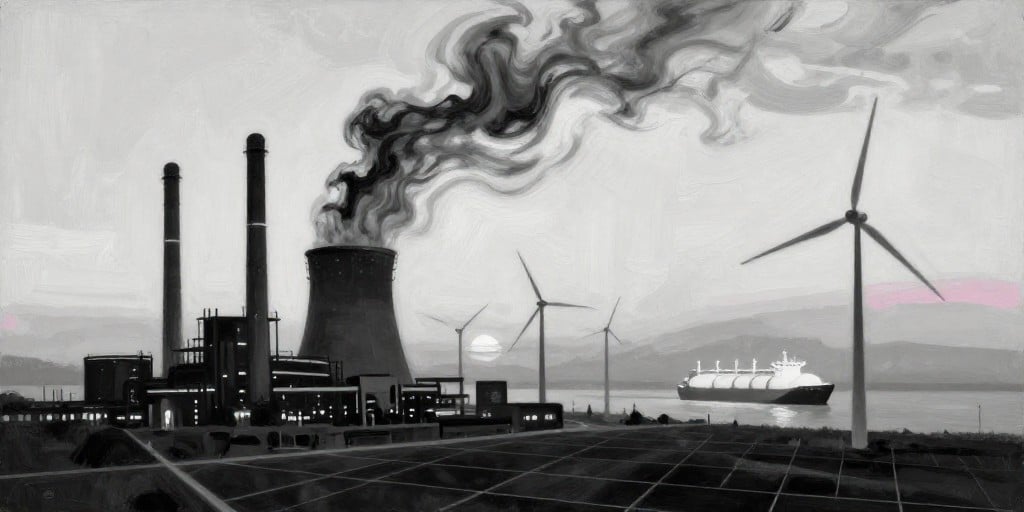
Corporate Development in the Energy Sector: Centrica Plc’s Strategic Expansion into U.S. LNG Procurement
Centrica Plc, a prominent British energy retailer, has announced its intention to broaden its liquefied natural gas (LNG) purchasing portfolio in the United States. This initiative reflects the company’s assessment of LNG as a persistent element of the global energy mix, particularly in an era where geopolitical tensions heighten the imperative for diversified supply chains. Although the company did not disclose financial specifics or performance metrics, the strategic move signals a concerted effort to reinforce trading capabilities and lock in long‑term fuel sources.
1. Implications for Power Generation
1.1. LNG as a Flexible Generation Asset
LNG‑fuelled combined cycle gas turbines (CCGTs) and open cycle gas turbines (OCGTs) provide rapid ramp‑up and down capabilities, enabling operators to respond to fluctuating renewable output. By securing a stable LNG supply, Centrica can support the integration of variable renewable resources (VRE) such as wind and solar without compromising reliability.
1.2. Capacity Factor Considerations
The capacity factor of LNG‑based plants can exceed 70 % when used as a peaking or load‑following asset, thereby improving overall plant utilization. Moreover, LNG plants can be strategically sited near renewable hubs, reducing transmission losses and enhancing dispatchability.
2. Grid Stability and Renewable Integration
2.1. Curtailment Reduction
One of the principal challenges in integrating high shares of VRE is curtailment due to overgeneration. LNG plants, with their rapid response, can absorb excess renewable power, thereby minimizing curtailment and improving the effective capacity of renewable assets.
2.2. Frequency Regulation and Ancillary Services
The grid’s frequency stability hinges on maintaining a balance between supply and demand within a narrow margin. LNG turbines can provide frequency containment reserve (FCR) and frequency restoration reserve (FRR), compensating for the inherent variability of wind and solar generation.
2.3. Voltage Support and Reactive Power Management
Modern LNG plants can be equipped with static var compensators (SVCs) and voltage source converters (VSCs) to supply reactive power, thereby supporting voltage levels across the network and reducing losses in long‑distance transmission corridors.
3. Infrastructure Investment Requirements
3.1. Pipeline and Storage Enhancements
Expanding LNG procurement necessitates additional offshore and onshore pipeline infrastructure, as well as underground storage facilities. These assets serve as critical buffers against supply disruptions and enable time‑shifting of LNG deliveries to match grid demand cycles.
3.2. Transmission Upgrades
Higher penetration of LNG‑powered peaking units may demand upgrades to regional transmission systems to accommodate bidirectional power flows, especially in areas where VRE output is high and traditional load centers are remote. Investments in high‑voltage DC (HVDC) links can mitigate congestion and enhance the overall resilience of the grid.
3.3. Distribution Network Reinforcement
The integration of LNG plants near urban centers may require reinforcement of sub‑station equipment and feeder lines to manage increased peak loads and to accommodate the dynamic nature of peaking generation. Smart grid technologies, such as advanced distribution management systems (ADMS), can provide real‑time monitoring and control.
4. Regulatory Frameworks and Rate Structures
4.1. Transmission and Distribution (T&D) Tariffs
Regulators often use cost‑of‑service (COS) models to set T&D rates. The addition of LNG infrastructure can influence the capital cost base, potentially leading to adjustments in tariffs to recover the expanded investment. Transparent methodology for cost allocation between transmission, distribution, and generation is essential to avoid over‑charging consumers.
4.2. Capacity Market Participation
In markets with a capacity mechanism, LNG plants may bid into the capacity market, influencing the overall price of capacity and the allocation of resources. Regulators must ensure that such participation does not distort competition or create undue market power.
4.3. Renewable Portfolio Standards (RPS) and Clean Energy Credits
While LNG is not a renewable source, its lower carbon intensity compared to coal and oil positions it favorably within certain RPS frameworks that allow for carbon‑intensity weighting. Policy mechanisms such as green certificates or emissions trading schemes can affect the economic viability of LNG assets.
5. Economic Impacts and Consumer Costs
5.1. Cost of Fuel vs. Grid Reliability
Securing long‑term LNG contracts can mitigate fuel price volatility, potentially leading to more predictable electricity rates for consumers. However, the capital costs of LNG infrastructure may be reflected in long‑term tariff adjustments, particularly if the investment is recouped through regulated rates.
5.2. Value of Grid Services
The ancillary services supplied by LNG plants (frequency regulation, voltage support, load following) provide essential grid services that might otherwise require more expensive or less efficient alternatives. The economic value of these services should be captured in market pricing to ensure adequate compensation for providers without imposing disproportionate costs on end‑users.
5.3. Consumer Electrification and Decarbonization Goals
The deployment of LNG assets can serve as a bridge technology, allowing for the continued use of low‑carbon fuel while renewable penetration increases. This transitional role may help maintain consumer confidence and avoid abrupt price spikes associated with sudden shifts in generation mix.
6. Utility Modernization and Future Outlook
6.1. Integrated Asset Management
Modern utilities increasingly employ integrated asset management systems that combine data from generation, transmission, distribution, and consumption points. LNG facilities can be integrated into such systems to provide real‑time data on fuel consumption, emission metrics, and operational performance, enhancing decision‑making across the value chain.
6.2. Digital Twin Applications
Digital twins of LNG plants and associated grid segments allow utilities to simulate operational scenarios, assess risk, and optimize dispatch strategies. These models are invaluable in planning for extreme events, such as supply disruptions or extreme weather conditions affecting renewable output.
6.3. Alignment with Decarbonization Targets
While LNG is a cleaner fossil fuel, its role in the energy transition must be aligned with long‑term decarbonization targets. Utilities should adopt a horizon view, treating LNG as part of a diversified portfolio that includes renewables, energy storage, and possibly carbon capture and storage (CCS) solutions.
7. Conclusion
Centrica Plc’s decision to augment its U.S. LNG procurement portfolio underscores the evolving dynamics of the global energy market, where geopolitical uncertainty, renewable integration, and regulatory frameworks intersect. From a technical perspective, LNG assets can provide the flexibility and reliability necessary to support high renewable penetration, but they also demand substantial infrastructure investment and careful regulatory oversight to safeguard consumer interests. Ultimately, the successful integration of LNG into the broader grid will hinge on a balanced approach that marries engineering excellence with prudent economic and policy considerations.