
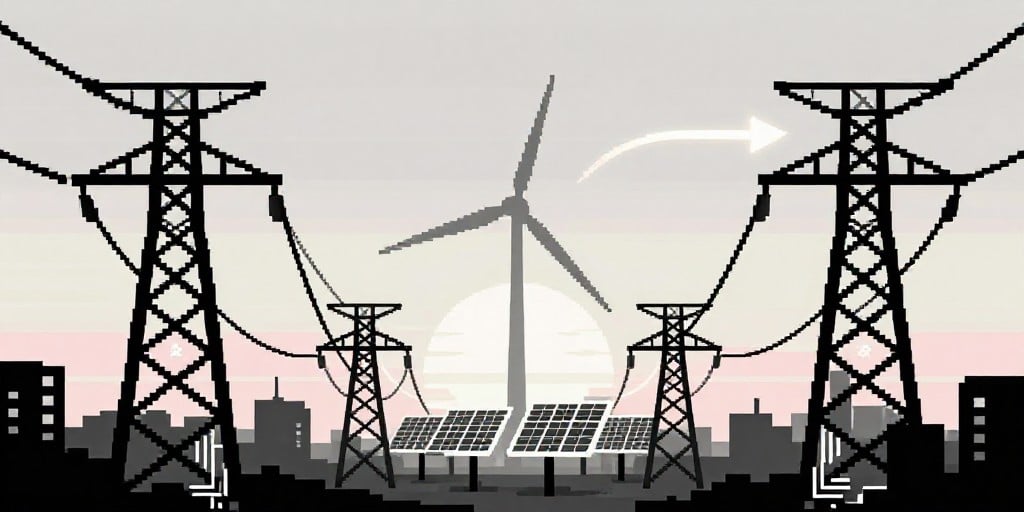
Corporate Developments in Power Generation and Transmission
Centrica PLC, a leading player in the UK energy market, has recently been cited in a broader market commentary that examines the intersection of technology investment, macroeconomic trends, and utility strategy. While the original commentary concentrated on technology‑sector dynamics—particularly the high‑cost buildout of artificial‑intelligence and cloud‑infrastructure assets—Centrica’s positioning within this evolving landscape warrants a focused examination of its power‑generation, transmission, and distribution operations.
Grid Stability Amid Rapid Renewable Adoption
Centric’s integrated network of gas‑fired power stations, combined-cycle plants, and emerging renewable assets illustrates a strategic mix designed to preserve grid stability in the face of intermittent solar and wind generation. The company’s Distributed Energy Resource (DER) portfolio, including small‑scale solar farms and battery storage installations, has been deployed to smooth load curves and provide ancillary services such as frequency regulation and voltage support.
Engineers note that maintaining a frequency deviation within ±0.05 Hz requires rapid response capabilities; Centrica’s real‑time dispatch algorithms, powered by advanced phasor measurement units (PMUs), enable sub‑second corrective actions. This capability is critical for preventing cascading outages in a high‑penetration renewable environment where conventional generation margins shrink.
Renewable Integration Challenges
The integration of renewable resources introduces several technical challenges:
Curtailment Risk: Excess wind output during low‑load periods can force curtailment, undermining the economic viability of wind farms. Centrica is addressing this through dynamic curtailment agreements that preserve revenue streams while supporting grid stability.
Power Quality Variability: Solar photovoltaic (PV) output fluctuates with irradiance, inducing voltage sags and harmonics. The company’s deployment of power‑electronic converters—specifically static synchronous compensators (STATCOMs)—helps mitigate these effects and maintain power quality within IEEE 1547 standards.
Demand‑Side Management: Centrica’s smart‑metering infrastructure, coupled with automated load‑shifting protocols, allows the company to align consumption with renewable generation peaks, reducing the need for peaking plants.
Infrastructure Investment Requirements
Modernizing the grid to support an aggressive renewable transition demands capital outlays in the range of £5–10 billion over the next decade. Key investment priorities include:
- High‑Voltage Direct Current (HVDC) Links: Connecting offshore wind farms to mainland substations to minimize transmission losses.
- Wide‑Area Measurement Systems (WAMS): Enhancing situational awareness across the network.
- Energy Storage Expansion: Increasing battery capacity to 3 GW‑days for long‑duration dispatch.
Centrica’s Capital Expenditure (CAPEX) allocation reflects a balanced approach, funding both conventional and renewable generation while prioritizing grid resilience projects.
Regulatory Frameworks and Rate Structures
The regulatory environment, governed by the Office of Gas and Electricity Markets (Ofgem), imposes price control mechanisms that directly influence Centrica’s revenue model. Notably:
- Regulatory Price Controls (RPCs) cap the average price per megawatt‑hour (MWh) over a rolling period, necessitating cost‑efficiency to preserve profitability.
- Dynamic Tariff Models—including time‑of‑use (TOU) rates—encourage end‑user consumption patterns that align with renewable generation windows, thereby reducing the need for costly peaking generation.
The impending Transmission Congestion Charges (TCCs) will require Centrica to invest in grid upgrades that alleviate bottlenecks, with the potential to increase transmission tariffs passed on to consumers.
Economic Impacts on Utility Modernization
Investments in grid modernization carry both direct and indirect economic implications:
- Capital Cost Allocation: Upgrades are typically reflected in regulated asset bases (RABs), influencing the rate base and, consequently, consumer charges.
- Operational Efficiency: Reduced transmission losses (estimated at 3–5 % of total consumption) translate into lower supply costs, which can be partially passed through lower retail tariffs.
- Job Creation: Large‑scale projects generate employment, stimulating local economies and supporting policy objectives related to green jobs.
A cost‑benefit analysis suggests that for every £1 invested in grid resilience, the UK economy can gain up to £1.5 in avoided losses and welfare gains, reinforcing the economic rationale for Centrica’s investment strategy.
Conclusion
Centrica PLC’s role within the broader technology‑driven energy sector underscores a critical shift from capital‑intensive growth narratives toward operational resilience and regulatory compliance. By leveraging advanced grid‑management technologies, pursuing strategic infrastructure investments, and navigating complex regulatory frameworks, Centrica positions itself to deliver stable, low‑carbon power while maintaining profitability in a rapidly changing market environment.