
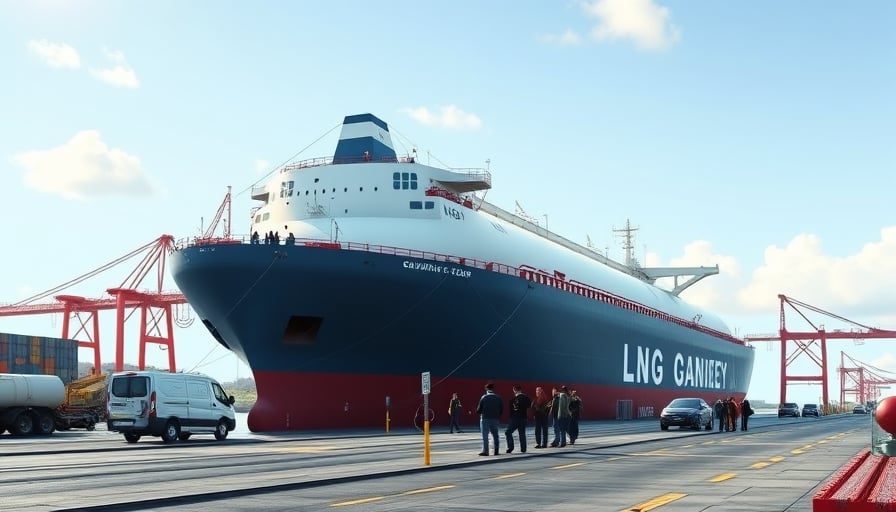
Corporate News: Centrica PLC Expands LNG Portfolio to Strengthen Energy Logistics
Centrica PLC, headquartered in Windsor and listed on the London Stock Exchange, completed a strategic expansion of its liquefied natural gas (LNG) portfolio in late November. In partnership with Energy Capital Partners, the company has acquired the Grain LNG terminal and secured a 50 % equity stake in the National Grid gas import facility at Thamesport. The transaction enhances Centrica’s supply‑chain footprint and broadens its service capabilities for residential and commercial customers across the United Kingdom.
1. Strategic Implications for the UK Energy System
1.1 Grid Stability and Flexibility
The integration of large‑scale LNG importation facilities provides Centrica with increased dispatchable gas supply, which can be rapidly mobilised to support the electricity network during peak demand or renewable intermittency events. By owning the Grain terminal, Centrica gains direct access to the UK LNG market, reducing procurement risk and allowing the company to supply gas to the National Grid’s balancing reserves. This capability is critical for maintaining voltage stability, managing frequency deviations, and ensuring the reliability of the high‑voltage transmission system.
1.2 Renewable Energy Integration Challenges
While gas continues to serve as a flexible bridge fuel, the UK’s aggressive net‑zero target requires a rapid shift toward low‑carbon generation. LNG imports enable Centrica to support the variable output of wind and solar farms by providing a clean, lower‑carbon alternative to coal‑fired baseload plants. However, the reliance on LNG also introduces supply‑chain complexity, as the gas must be liquefied, transported, and regasified—a process that is energy intensive and subject to geopolitical and market pressures. The new assets will require sophisticated control systems to optimise gas‑to‑power conversion, ensuring that renewable curtailment is minimised and that the grid operates within its stability margins.
1.3 Infrastructure Investment Requirements
The acquisition of the Grain terminal and the Thamesport stake necessitates continued investment in both physical assets and digital infrastructure. Key investment areas include:
- Regenerative refrigeration and regasification units – to improve energy efficiency and reduce the carbon footprint of LNG handling.
- High‑voltage interconnectors – linking the LNG supply chain to the national transmission network, enabling rapid gas dispatch to the electricity grid.
- Advanced SCADA and EMS systems – providing real‑time monitoring of gas flows, temperature, and pressure, and enabling predictive maintenance to reduce downtime.
These investments also position Centrica to participate in emerging market opportunities such as carbon capture and storage (CCS) integration with LNG plants, further supporting the UK’s decarbonisation roadmap.
2. Regulatory and Economic Context
2.1 Regulatory Frameworks
The UK’s Department for Business, Energy & Industrial Strategy (BEIS) regulates LNG import licensing under the Gas Act 2006. Centrica’s acquisitions must comply with the Regulatory Reform (Utilities) Act 2014, which mandates transparency in gas supply contracts and adherence to the Network Code on Gas (NCC) for interconnectivity. Additionally, the Energy Act 2003 governs the operational safety standards for LNG terminals, requiring rigorous risk assessments and emergency response protocols.
The Network Code on Power (NCC Power) now includes provisions for grid integration of flexible generation, which will influence how Centrica can dispatch gas‑based power plants to support the electricity system. The upcoming Integrated System Operator (ISO) model will further streamline coordination between gas and electric networks, potentially impacting Centrica’s operational planning.
2.2 Rate Structures and Consumer Impact
Centrica’s expansion allows the company to offer bundled gas–electricity contracts with a more stable supply base. The Consumer Duty framework, effective from 2024, requires utilities to deliver value to customers, which may translate into more competitive pricing or improved service guarantees. The additional LNG capacity can mitigate price volatility associated with natural gas, potentially lowering wholesale costs. However, the capital investment required for LNG terminals could be passed to consumers through a cost‑of‑investments mechanism, influencing tariff structures under the Energy Markets Commission’s oversight.
2.3 Economic Impacts
From an economic perspective, the acquisition is expected to generate:
- Short‑term job creation – during terminal refurbishment and integration projects.
- Long‑term employment – in operations, maintenance, and supply‑chain management.
- Regional economic stimulus – particularly in the Thamesport area, through enhanced energy infrastructure.
Moreover, the LNG assets contribute to the UK’s trade balance by reducing the need to import more expensive high‑pressure gas or relying on less efficient onshore gas projects. This can improve the national energy security posture and reduce exposure to volatile global LNG pricing dynamics.
3. Technical Insights into Power System Dynamics
3.1 Balancing Gas and Electricity Supply
The UK’s high‑penetration renewable mix poses significant frequency stability challenges. Gas turbines powered by LNG provide fast ramp‑up capabilities, enabling rapid response to sudden changes in wind or solar output. The integration of Centrica’s LNG facilities with the National Grid’s System Operator (ESO) can help maintain a 50 Hz operating frequency by injecting or withdrawing power within a few seconds, thus stabilising the grid during load‑frequency disturbances.
3.2 Voltage Control and Reactive Power Support
Large LNG import terminals are typically connected to the grid via high‑voltage pylons and can supply reactive power (Q) to support voltage regulation. Centrica can employ static synchronous compensators (STATCOMs) at the terminal site to deliver fast reactive power compensation, reducing voltage dips and improving power factor across the transmission network. This is especially vital during peak demand periods when the load curve is steep, and voltage support is critical for preventing equipment overheating and maintaining system integrity.
3.3 Impact on Renewable Curtailment
The ability to dispatch LNG‑powered generation on demand reduces the likelihood of renewable curtailment. By matching gas supply to excess renewable generation, Centrica can enhance the overall utilisation of wind and solar assets, improving the return on investment for renewable projects and accelerating the energy transition. The LNG assets also allow the company to participate in capacity markets, guaranteeing a minimum level of output that can be used to balance grid deficits and support ancillary services such as spinning reserve provision.
4. Conclusion
Centrica’s acquisition of the Grain LNG terminal and a stake in the Thamesport facility marks a decisive step toward a more resilient and flexible energy supply chain. The expanded LNG portfolio not only strengthens Centrica’s position in the UK gas market but also provides a critical bridge fuel that supports grid stability and the integration of renewable generation. By aligning with evolving regulatory frameworks, investing in advanced infrastructure, and addressing the economic implications for consumers, Centrica is positioning itself as a key player in the UK’s transition toward a low‑carbon, secure energy future.