Corporate News Analysis: Centrica plc’s Potential Entry into the German Gas Transmission Landscape
1. Executive Summary
In late November, the German government opened a formal bidding process for a 75 % stake in Uniper, the country’s largest gas transmission operator. The invitation to submit binding offers was extended to a consortium comprising Brookfield, Equinor, and Centrica plc. While the consortium’s participation is not yet confirmed, the very fact of Centrica’s inclusion underscores the firm’s strategic intent to expand its footprint beyond the United Kingdom and into the heart of Europe’s gas infrastructure. This development occurs against a backdrop of shifting regulatory priorities, rising renewable penetration, and an urgent need for grid modernization to maintain system stability.
2. Technical Context: Power Generation, Transmission, and Distribution
Uniper operates a vast network of high‑voltage gas pipelines and associated compression stations that transport natural gas across Germany and to neighboring countries. The company’s assets are tightly integrated with the broader European transmission system operators (TSOs) that manage the flow of electricity and gas through interconnected markets.
- Grid Stability: The transition to a higher share of variable renewable generation (wind and solar) imposes significant challenges on the transmission network. Gas pipelines can provide rapid response to fluctuations in demand, acting as a balancing resource that mitigates frequency deviations and voltage instability.
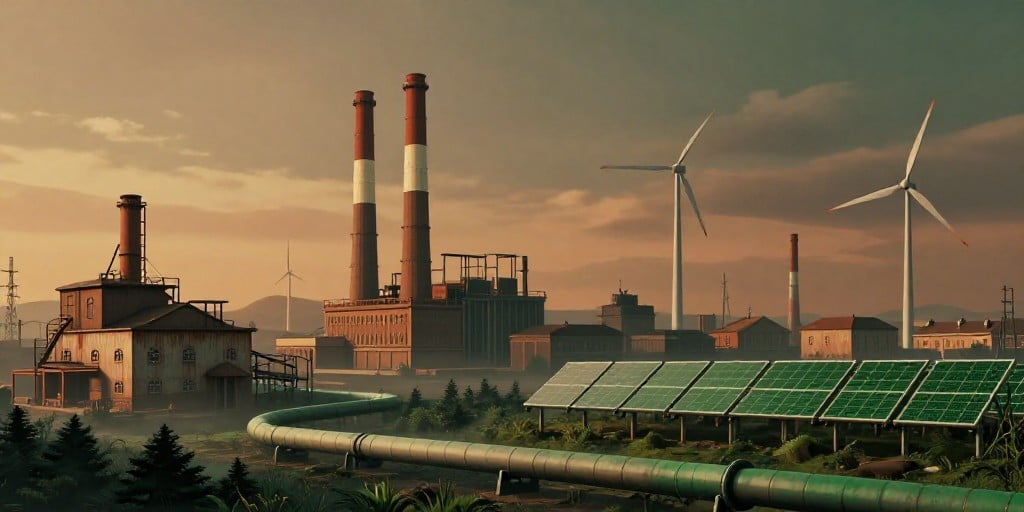
- Renewable Integration Challenges: As wind and solar penetration rises, the gas network must adapt to new dispatch patterns. Peak demand periods are increasingly shifting to daytime hours, coinciding with high solar output, while low‑wind periods may trigger sudden gas consumption spikes. These dynamics demand sophisticated real‑time control algorithms and investment in compressor stations capable of rapid ramping.
- Infrastructure Investment Requirements: Modernizing the gas transmission system to support the energy transition involves upgrading compressors, installing advanced SCADA (Supervisory Control and Data Acquisition) systems, and integrating digital twins for predictive maintenance. Such upgrades are capital‑intensive, typically running into billions of euros over the next decade.
3. Regulatory Frameworks and Rate Structures
Germany’s energy policy framework is characterized by a dual emphasis on market liberalization and public ownership safeguards. By retaining a minority stake in Uniper, the federal government maintains a veto right over critical strategic decisions, ensuring alignment with national energy security objectives.
- Rate Structures: The German tariff system for gas transmission is governed by the “Kraftfahrzeugsteuergesetz” and the “Energiewirtschaftsgesetz,” which prescribe how costs are recovered from end users. The introduction of a gas network operator that can provide ancillary services will likely influence the tariff formula, potentially leading to a shift from cost‑plus to performance‑based pricing.
- Regulatory Impact on Investment: The presence of a government minority stake can accelerate the approval process for capital projects, but it also introduces additional regulatory oversight, requiring adherence to stringent environmental and safety standards.
4. Economic Implications of Utility Modernization
The modernization of gas transmission infrastructure directly translates to broader economic benefits and cost implications for consumers.
- System Resilience and Energy Security: Enhanced grid flexibility reduces the risk of blackouts and supply disruptions, which in turn stabilizes wholesale prices.
- Capital Expenditure vs. Consumer Rates: While infrastructure upgrades represent significant capital outlays, a well‑structured tariff regime can spread these costs over the lifespan of the assets, mitigating short‑term rate hikes. However, the integration of digital infrastructure may require upfront consumer charges to fund system upgrades.
- Competitive Positioning: For Centrica, acquiring a stake in Uniper could diversify its revenue streams and provide a foothold in the European market, potentially offsetting lower profit margins in the UK gas transmission sector. The company’s technical expertise in gas compression and pipeline operation would be leveraged to optimize Uniper’s asset performance.
5. Engineering Insights into Power System Dynamics
The interplay between gas and electricity grids is becoming increasingly intricate:
- Frequency Support: Gas turbines can supply inertial support and synthetic inertia to the electrical grid, improving frequency response during sudden load changes.
- Voltage Regulation: By controlling gas flow, operators can indirectly influence reactive power flows, aiding voltage regulation across the network.
- Demand Response: Advanced digital control systems enable real‑time demand‑side management, allowing gas consumption to be modulated in response to grid conditions, thereby enhancing overall stability.
These dynamics underscore the necessity for integrated, data‑driven control platforms that can harmonize gas and electric system operations—an area where Centrica’s technology portfolio could prove transformative.
6. Conclusion
Centrica’s potential bid for a significant stake in Uniper represents a strategic pivot toward deeper engagement in Europe’s gas transmission arena. The move aligns with the broader European objective of enhancing grid resilience amid a rapid shift toward renewables, while also positioning Centrica as a key player capable of bridging the technical and regulatory gaps that define today’s energy transition. Stakeholders across the industry will closely monitor the forthcoming negotiations, as the outcome will shape not only Centrica’s corporate trajectory but also the evolution of Germany’s energy infrastructure and its impact on consumer costs.