
Corporate News – Energy Sector Update
Background
Cenovus Energy Inc. is a key participant in the Oil Sands Alliance, a consortium that has entered into a memorandum of understanding (MoU) with the provincial government of Alberta and the federal government of Canada. The MoU focuses on the development of a carbon capture and storage (CCS) system in the Cold Lake region, with the objective of sequestering several million tonnes of CO₂ annually by 2035 and achieving further emissions reductions through 2045. Concurrently, the alliance is working to secure approval for a new high‑capacity pipeline to the Pacific, which is expected to expand Canada’s crude exports to Asian markets. In exchange for meeting the agreed carbon‑reduction targets, Alberta has agreed to relax certain emissions‑intensity regulations, creating a more favorable operating environment for the participating firms.
Supply‑Demand Fundamentals
The Canadian oil‑sand sector remains one of the world’s largest sources of petroleum production. As of Q2 2024, on‑shore production in the Athabasca region averaged 1.2 million barrels per day (b/d), a 5 % decline from the previous year, largely due to a combination of high capital‑intensity costs and tightening environmental policies. The introduction of the CCS project is projected to offset 2 % of the sector’s total emissions, thereby improving the net‑carbon profile of Canadian crude and making it more attractive to buyers in jurisdictions with stringent carbon pricing.
On the demand side, global crude oil consumption is expected to rise modestly in 2025, driven by continued growth in Asia, particularly in China and India. The anticipated Pacific pipeline will tap into this demand by providing a direct route for Canadian crude to Japanese and South Korean refineries, thus reducing transit times and associated costs.
Technological Innovations in Production and Storage
The Cold Lake CCS initiative will employ a combination of amine‑based solvent absorption and pressure‑vacuum swing adsorption (PVSA) to capture CO₂ from the tail‑gas of Cenovus and other partner facilities. Captured CO₂ will then be compressed and transported via dedicated pipelines to geological storage sites in the Peace River region, where pre‑existing depleted oil reservoirs and deep saline aquifers provide secure storage capacities of up to 10 million tonnes by 2035.
In addition to CCS, the consortium is investing in advanced water‑less extraction techniques, such as solvent‑less CO₂‑driven processes, which can reduce water consumption by up to 30 % and lower associated brine disposal costs. These technologies are expected to improve the economic viability of the oil‑sand sector by reducing both CAPEX and OPEX.
Regulatory Impacts
Alberta’s relaxation of emissions‑intensity regulations, conditional on meeting CCS targets, represents a significant shift in provincial policy. By lowering the permissible CO₂ intensity benchmark from 6.5 gCO₂/kWh to 4.0 gCO₂/kWh for new projects, the province is effectively providing a 3‑year window for companies to re‑evaluate their investment strategies. This policy change is likely to spur increased capital deployment in low‑carbon projects, while also setting a precedent for other jurisdictions to adopt similar incentive mechanisms.
At the federal level, Canada’s Net Zero 2050 framework mandates the integration of CCS in the oil‑sand sector, with a target of 3 GtCO₂e sequestration by 2030. The Cenovus partnership aligns with this objective and positions the company as a key player in Canada’s climate strategy, potentially unlocking future tax credits and subsidies.
Commodity Price Analysis
Crude oil futures on the New York Mercantile Exchange (NYMEX) traded at $82.50 / bbl in June 2024, reflecting a 3 % uptick from the prior month. The upward trend is attributed to supply constraints in the Middle East and increased demand from China’s industrial sector. The potential expansion of Canadian crude exports to Asia via the Pacific pipeline is expected to support mid‑term price stability, as it mitigates regional supply bottlenecks.
Natural gas prices have remained relatively stable, trading around $4.20 /MMBtu, but volatility has increased due to weather‑induced demand spikes in the northern United States. CCS projects in the oil‑sand sector indirectly influence gas markets by providing an alternative pathway for gas utilization in hydrogen production, a growing component of the clean energy mix.
Infrastructure Developments
The planned high‑capacity pipeline, estimated to be 1,800 km long and capable of transporting 800,000 b/d, is currently in the permitting phase. The pipeline will connect the Cold Lake region to the Pacific coast near Prince Rupert, British Columbia. Its completion will reduce transportation costs by an estimated 10 % per barrel compared to current rail and road routes.
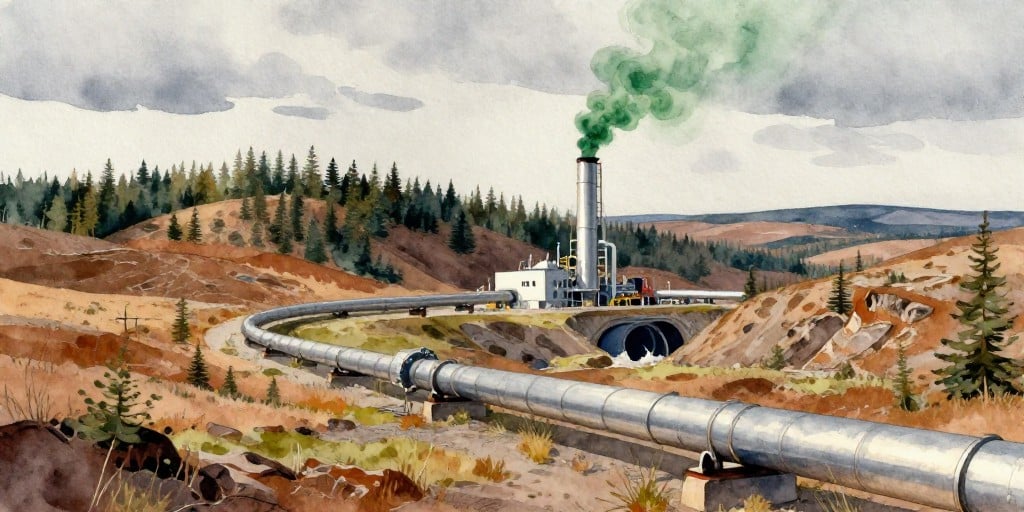
In addition, the consortium has secured funding for the construction of a dedicated CO₂ transport pipeline, which will link the CCS capture facilities to storage sites and a potential hydrogen export terminal. This integrated infrastructure approach is designed to maximize carbon sequestration while simultaneously creating a new revenue stream from green hydrogen exports.
Balancing Short‑Term and Long‑Term Trends
From a short‑term perspective, the relaxation of emissions regulations and the anticipated pipeline construction are likely to provide immediate market advantages, including lower compliance costs and improved logistics for crude exportation. These developments should translate into higher net operating margins for Cenovus and its partners in the next 12–18 months.
In the long term, the investment in CCS and low‑carbon production technologies positions the company to meet evolving regulatory requirements and investor expectations for sustainable operations. The alignment with Canada’s Net Zero 2050 ambition enhances Cenovus’s credibility as a climate‑conscious company, potentially attracting green investment and favorable financing terms.
Conclusion
The Cenovus–Oil Sands Alliance memorandum, coupled with the relaxed regulatory regime in Alberta, marks a strategic pivot that balances immediate commercial gains with the imperative of climate compliance. By leveraging technological innovations in carbon capture, enhancing supply chain infrastructure, and aligning with global supply‑demand dynamics, the consortium is poised to strengthen Canada’s oil‑sand sector’s competitiveness while advancing the broader energy transition.