
Corporate News: Capital Structure Shift and Market Dynamics in the Industrial Chemicals Sector
Ownership Consolidation and Shareholder Influence
Brenntag SE, the German chemical trading and distribution firm listed on the Frankfurt Stock Exchange, has experienced a notable adjustment in its ownership architecture. In early December, Klaus‑Michael Kühne’s logistics‑focused investment vehicle increased its holding from approximately 15 % to around 20 %, thereby becoming the company’s largest shareholder. This concentration of equity has attracted attention from market commentators, as a dominant shareholder can accelerate strategic alignment across supply‑chain networks and influence capital‑allocation decisions in a sector where scale and network efficiency are decisive drivers of profitability.
Market Reaction to Earnings and Analyst Commentary
Despite the ownership realignment, the firm’s stock has exhibited only modest intraday volatility in the days following the announcement. On 8 December, the share price opened slightly above the prior close, dipped marginally during the session, and then rebounded to near its pre‑announcement average by the close. A brokerage firm’s “Underperform” rating was issued when the share was trading marginally below its previous close, reflecting cautious sentiment amid broader sector headwinds.
During the third‑quarter earnings release, Brenntag reported revenue and earnings figures that fell short of guidance. Nevertheless, the share price rose on the day of the earnings release, indicating that investors have largely assimilated the earnings miss without triggering a pronounced sell‑off. This resilience points to confidence in Brenntag’s underlying distribution network and its role as a logistics integrator in a market that is projected to experience subdued production and falling commodity prices, as noted by the VCI (Verband der Chemischen Industrie).
Capital Expenditure Trends in Heavy Industry
The industrial chemicals sector is undergoing a structural shift toward higher capital intensity in the pursuit of productivity gains. Firms are increasingly investing in advanced process‑control systems, modular reactor platforms, and digital twins that allow for real‑time monitoring of material flows and predictive maintenance of critical equipment. These investments are designed to reduce cycle times, lower energy consumption, and improve yield‑to‑loss ratios, thereby enhancing overall throughput efficiency.
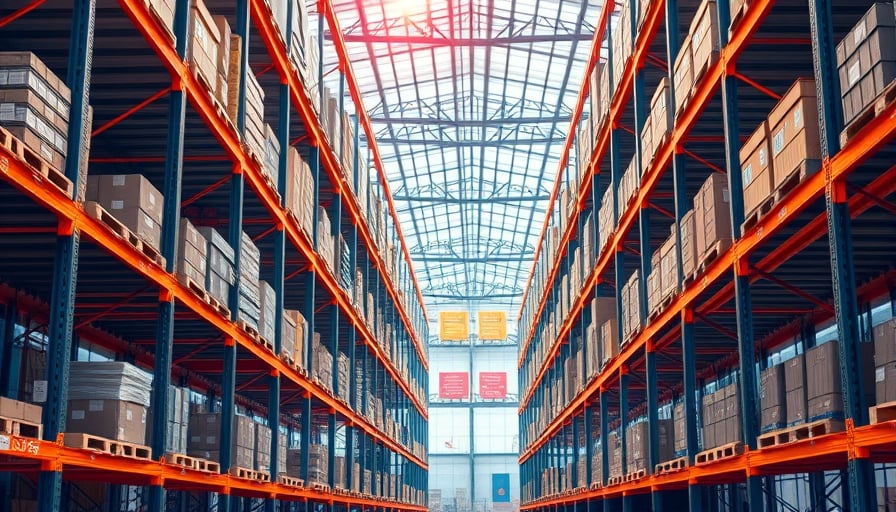
In the context of Brenntag’s operations, capital outlays are likely to target the expansion of automated warehouse facilities, the deployment of advanced material‑handling equipment, and the integration of Internet‑of‑Things (IoT) sensors across the distribution network. Such measures not only elevate productivity metrics (e.g., order‑to‑delivery cycle) but also reduce the need for manual labor, aligning with broader automation trends in heavy industry.
Economic Drivers of Capital Expenditure
Macroeconomic variables—such as interest‑rate policies, commodity price volatility, and fiscal stimulus—continue to shape investment decisions. The German government’s ongoing infrastructure spending, particularly in the logistics and energy sectors, creates a conducive environment for companies like Brenntag to secure favorable financing terms and leverage synergies with public‑private partnership projects. Additionally, regulatory developments, including tightening environmental standards and carbon‑pricing mechanisms, incentivize the adoption of greener technologies and the retrofitting of existing facilities to meet stricter emissions targets.
The current backdrop of a tightening credit market, coupled with the anticipation of lower demand in the chemical and pharmaceutical markets, pressures firms to optimize capital allocation. This scenario has accelerated the shift toward lean manufacturing and just‑in‑time inventory management, further underscoring the importance of robust, flexible supply chains.
Supply‑Chain Implications
Brenntag’s role as a logistics integrator places it at the nexus of raw‑material sourcing, intermediate‑product distribution, and finished‑product delivery. The ownership concentration by Kühne Holding may enable deeper integration of freight networks, reducing lead times and freight costs. From an engineering perspective, this translates into improved logistical routing algorithms, higher asset utilization rates for transportation fleets, and more effective load‑balancing across distribution centers.
The sector’s anticipated downturn in production volumes necessitates a focus on capacity optimization. Advanced analytics and machine‑learning models can forecast demand patterns, allowing Brenntag to adjust inventory levels proactively and minimize holding costs. Moreover, the adoption of blockchain‑based traceability systems can enhance transparency across the supply chain, meeting regulatory requirements and consumer expectations for sustainability and provenance.
Regulatory Landscape and Infrastructure Spending
The European Union’s Green Deal and the German “Bodenbatterie” initiative emphasize decarbonization and circularity in chemical manufacturing. Compliance with these frameworks requires significant capital investment in renewable energy sources, waste‑to‑energy conversion plants, and high‑efficiency equipment. The resultant regulatory burden, while costly, presents opportunities for firms that can embed sustainability into their core processes.
Simultaneously, infrastructure spending in Germany—particularly in the development of high‑speed rail and digital fiber‑optic networks—enhances the logistical backbone that supports chemical distribution. These investments improve network reliability, reduce transit times, and enable the seamless integration of real‑time data streams from distributed sensors and control systems.
Market Implications
Brenntag’s recent ownership consolidation and its ability to weather earnings shortfalls suggest that investors view the company as a resilient player amid industry turbulence. The firm’s strategic focus on automation, digitalization, and supply‑chain optimization positions it to capitalize on the evolving capital‑expenditure landscape. However, sustained economic pressures and regulatory demands may compress margins, reinforcing the need for continuous productivity enhancements and cost discipline.
In summary, Brenntag’s corporate actions—both structural and operational—reflect the broader trends shaping the industrial chemicals sector: heightened capital intensity, a shift toward data‑driven manufacturing, and an intensified focus on sustainability. The company’s trajectory will be closely watched by stakeholders assessing the balance between short‑term earnings volatility and long‑term value creation in a rapidly transforming industrial environment.