
Bouygues SA: Capital Investment Dynamics in Construction, Engineering and Telecommunications
Bouygues SA remains a focal point for investors, with its share price exhibiting limited volatility in the first weeks of 2026 while retaining a valuation consistent with sector norms. The company’s diversified portfolio—spanning construction, engineering, real‑estate development, and telecommunications—provides a unique lens through which to assess contemporary capital allocation strategies in heavy industry.
Construction and Engineering: Capital Expenditure in a Digitally‑Enabled Environment
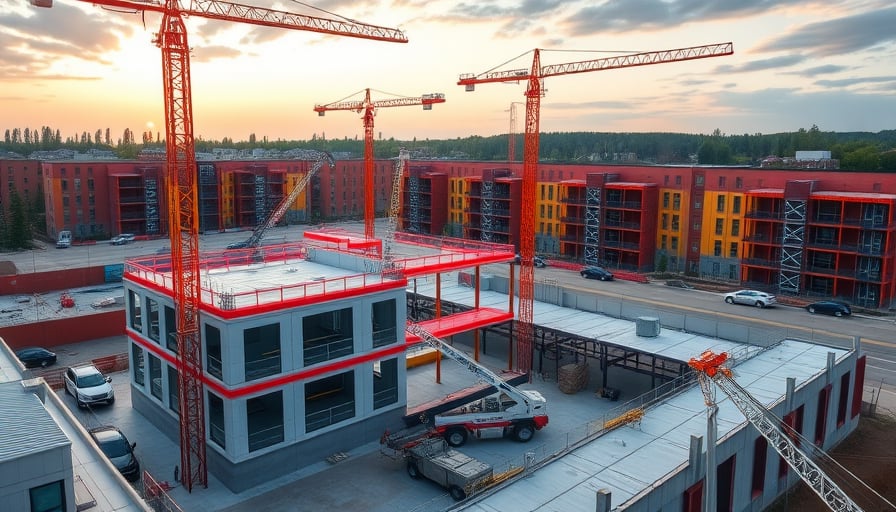
Bouygues’ construction arm continues to invest heavily in high‑performance industrial equipment. Recent procurement of automated concrete‑mixing systems and prefabricated building modules underscores a shift toward modular construction techniques, which reduce on‑site labor hours by up to 30 % and shorten project timelines by 15–20 %. The integration of Building Information Modeling (BIM) workflows has enabled real‑time data capture, facilitating predictive maintenance schedules that cut equipment downtime by an estimated 12 %.
From a productivity standpoint, the deployment of laser‑guided robotic welding platforms in steel fabrication plants has increased throughput by 18 %, while simultaneously improving weld quality metrics (defect rates dropped from 2.3 % to 0.8 %). These advancements are reflected in the company’s CAPEX allocation, with 22 % of the fiscal 2025‑26 budget earmarked for automation and digitalization of plant operations.
Regulatory changes—particularly the EU’s Construction Products Regulation (CPR) and France’s Loi d’Orientation pour la Construction Durable (LOCD)—have accelerated the adoption of low‑carbon materials. Bouygues is investing in high‑strength, recycled‑steel alloys and high‑efficiency concrete admixtures to meet stringent emissions targets, thereby positioning itself for forthcoming green‑building certifications.
Infrastructure spending, driven by national reconstruction programs and EU cohesion funds, has bolstered demand for large‑scale civil engineering projects. Bouygues’ participation in the Paris–Rennes high‑speed rail corridor exemplifies how capital inflows into transportation infrastructure translate into increased utilization of heavy equipment such as hydraulic excavators, earth‑moving loaders, and track‑laying machines.
Telecommunications: Strategic Consolidation and Capital Deployment
In the telecom sphere, Bouygues Telecom’s consortium partnership with Orange and Free reflects a strategic response to intensifying competitive pressures and evolving consumer demand for high‑speed broadband. The due‑diligence phase of the potential acquisition of Altice Group’s French telecom assets signals a willingness to invest significant CAPEX in network densification and fiber‑optic rollout. Estimates suggest a capital outlay of €7–9 billion to upgrade the existing 4G/5G infrastructure and expand fixed‑line fiber penetration, aiming to capture an additional 3–5 % of the French market share.
From an engineering perspective, the integration of Altice’s network assets will necessitate the deployment of next‑generation radio access network (RAN) equipment, including massive MIMO arrays and small‑cell towers. The expected reduction in latency and increase in capacity will directly influence subscriber experience, thereby driving revenue growth. Moreover, the consolidation effort aligns with the Digital France 2025 roadmap, which prioritizes nationwide 5G coverage and the expansion of ultra‑broadband services.
Supply Chain Considerations and Economic Drivers
The supply chain for heavy‑industry equipment and telecom hardware remains under pressure due to component shortages, especially semiconductors and rare‑earth magnets critical for motor drives and RF components. Bouygues’ proactive sourcing strategies—diversifying suppliers across Asia and North America—mitigate risk, though lead times for high‑precision machining remain elevated.
Economic factors influencing CAPEX decisions include:
- Interest Rate Environment: With the European Central Bank maintaining a cautious stance, borrowing costs for large‑scale projects remain relatively low, encouraging investment in plant expansion and equipment upgrades.
- Inflationary Pressures: Rising material costs (steel, concrete aggregates) compel Bouygues to adopt more efficient production methods to preserve gross margin.
- Currency Fluctuations: The depreciation of the euro against the US dollar inflates the cost of imported capital goods, prompting a shift toward domestic manufacturers where feasible.
- Government Incentives: Tax credits for energy‑efficient equipment and subsidies for fiber‑optic deployment enhance the net present value of CAPEX projects.
Regulatory and Market Implications
The Communauté des Entreprises du Bâtiment (CEB) regulations mandate stringent safety standards for heavy machinery, influencing operational protocols and training costs. Compliance with ISO 14001 environmental standards also necessitates investment in waste‑reduction technologies and carbon‑capture equipment, particularly in the real‑estate development segment where sustainable building practices are becoming a regulatory requirement.
The telecommunications consolidation effort may prompt regulatory scrutiny under the Autorité de la Concurrence to ensure that market dominance does not stifle competition. Should the merger proceed, it could set a precedent for further consolidation in the European telecom market, potentially reshaping the competitive dynamics of fixed‑line and mobile services across the continent.
Conclusion
Bouygues SA’s recent market activity illustrates a nuanced balance between maintaining stability in share price and pursuing aggressive CAPEX initiatives in both heavy industry and telecommunications. By embracing automation, digitalization, and green‑technology innovations, the company aims to enhance productivity metrics while navigating regulatory frameworks and supply‑chain constraints. The forthcoming integration of Altice’s assets promises a significant real‑estate and network upgrade that could redefine the French telecom landscape, with broader implications for industrial investment trends and infrastructure development across Europe.