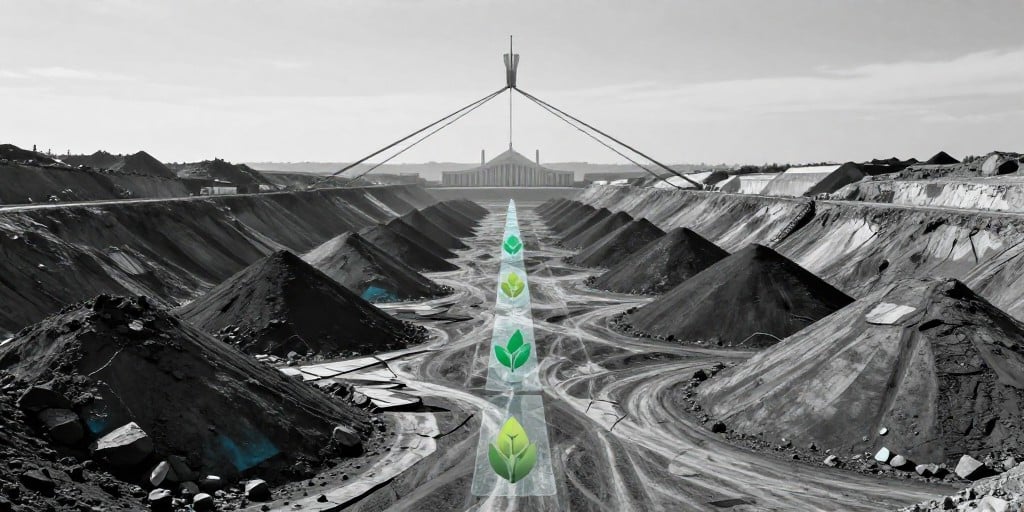
BHP Group and the Australian Mining Landscape: A Deep‑Dive Analysis
1. Market Context and Share Performance
BHP Group’s share price in the Australian market registered a modest uptick during the opening session of the week. This movement mirrored a sector‑wide lift across the ASX 200, where the mining benchmark exhibited a slight gain. BHP’s price action was largely in line with contemporaries such as Rio Tinto, suggesting that the rally was driven more by macro‑sector momentum than company‑specific catalysts.
While the ascent was small, it warrants scrutiny. A gradual rise can signal confidence among institutional investors, yet it also indicates a lack of decisive catalysts that might propel the stock into a stronger trend. Analysts must therefore assess whether this drift is merely a “breadth” effect—wherein the entire sector lifts together—or if it reflects underlying fundamentals that may differentiate BHP from its peers.
2. Commodities Outlook: Iron‑Ore Prices at Two‑Year Low
Iron‑ore spot prices reached their lowest point in two years on both the Singapore exchange and the Dalian Commodity Exchange (DCE). The decline is a clear indicator of a softer demand outlook, coupled with an increase in supply that is expected to persist for the remainder of the calendar year.
The sustained pressure on iron‑ore prices is driven by several factors:
| Factor | Impact | Evidence |
|---|---|---|
| Seasonal steel‑production trough | Downward pressure | Historical demand data shows lower output during Q4 in Asia |
| Rising global energy costs | Higher production cost, lower margins | Energy price indices trend upward, squeezing steel manufacturers |
| Macro‑economic uncertainty | Reduced capital spending | Inflation data, central‑bank rate hikes in major economies |
Analysts forecast that the subdued outlook will continue into November, with the potential for further price declines. The convergence of reduced demand and heightened costs could erode profit margins for miners that rely heavily on iron‑ore, prompting a reevaluation of production strategies and cost‑management initiatives.
3. Regulatory and Competitive Dynamics
3.1 Regulatory Environment
Australia’s mining regulatory framework has recently undergone several amendments aimed at streamlining project approvals while bolstering environmental safeguards. The introduction of a more rigorous environmental impact assessment (EIA) protocol has increased compliance costs for developers, potentially dampening investment in new exploration projects.
Additionally, the Australian government’s commitment to reducing carbon emissions has accelerated the adoption of low‑carbon mining technologies. While this positions Australian miners as leaders in sustainability, the upfront capital requirements may strain smaller operators and reduce their competitiveness against large, diversified multinationals.
3.2 Competitive Landscape
The competitive dynamics within the Australian mining sector are intensifying. Major players, including BHP, Rio Tinto, and Fortescue Metals, are consolidating their market positions through strategic acquisitions and joint‑venture agreements. Meanwhile, smaller firms are focusing on niche commodities and innovative extraction technologies to differentiate themselves.
A key trend is the shift toward integrated supply chains. Companies are moving upstream to secure feedstock supplies and downstream to control value‑add processes, thereby improving margin resilience amid commodity price volatility. BHP’s recent exploration and development updates—though not detailed in the market summary—suggest an emphasis on high‑grade iron‑ore projects that could provide a competitive edge if executed efficiently.
4. Potential Risks and Opportunities
| Risk | Description | Mitigation | Opportunity |
|---|---|---|---|
| Commodity price volatility | Iron‑ore price slump could compress margins | Cost‑efficiency initiatives, hedging strategies | Diversification into higher‑margin base metals |
| Regulatory tightening | Increased compliance costs may reduce profitability | Early adoption of ESG standards, lobbying | Positioning as a sustainability leader attracts ESG funds |
| Capital‑intensity of exploration | High upfront costs with uncertain returns | Phased development, partnerships | First‑mover advantage in emerging deposit zones |
| Macroeconomic uncertainty | Global demand slowdown reduces ore demand | Flexible production scheduling | Cost discipline enhances long‑term viability |
Investors should pay close attention to BHP’s exploration pipeline and its ability to bring new projects into production at cost‑effective rates. Moreover, the company’s track record in ESG compliance could become a differentiator as institutional capital increasingly favors companies with robust sustainability credentials.
5. Market Sentiment and Outlook
The Australian stock market, as reflected by the S&P/ASX 200, continued its modest upward trajectory for the week. Growth was supported by a slight improvement in mining and technology shares, while financial stocks provided necessary balance. Yet, sentiment remains cautious ahead of upcoming central‑bank policy decisions and inflation data releases.
Given these dynamics, BHP’s modest gains should be interpreted as a baseline rather than a bullish signal. The company’s future trajectory will depend heavily on its capacity to navigate a volatile commodity environment, adapt to regulatory changes, and maintain a competitive advantage through operational excellence and strategic investments.
6. Conclusion
A comprehensive assessment of BHP Group and the Australian mining sector reveals a complex interplay between macro‑economic forces, commodity price dynamics, regulatory developments, and competitive strategies. While the market’s short‑term sentiment appears neutral to mildly positive, a deeper investigation into cost structures, ESG positioning, and project pipelines is essential to gauge the long‑term resilience of BHP and its peers. Investors and stakeholders would do well to monitor these variables closely as the sector continues to evolve in an increasingly uncertain global landscape.