
BHP Group’s Pilbara Trials of Battery‑Electric Haul Trucks: An Investigative Assessment
Context and Rationale
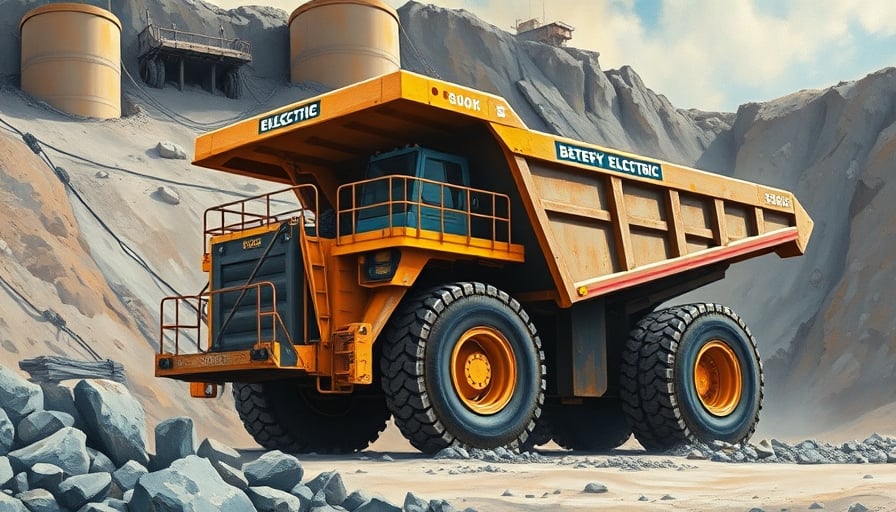
BHP Group Ltd. has commenced field trials of Caterpillar’s battery‑electric Cat 793 XE “Early Learner” haul trucks at its Jimblebar iron‑ore operation in the Pilbara. In partnership with Rio Tinto, the trial represents the first deployment of fully electric heavy‑haul equipment in Australian mining. The decision follows a broader industry shift toward electrification, driven by tightening emissions regulations, falling battery costs, and a growing expectation that mining operations will serve as early adopters of low‑carbon technologies.
While the trials are ostensibly a technological showcase, a deeper analysis of the underlying business fundamentals, regulatory landscape, and competitive dynamics reveals a more nuanced picture. Below we examine these factors, quantify the potential financial implications, and identify risks and opportunities that may be overlooked by surface‑level reporting.
Technological Feasibility and Operational Impact
Energy Density and Load Capacity The Cat 793 XE trucks are rated for a 150 t payload, comparable to current diesel equivalents. However, battery energy density remains a limiting factor. According to Caterpillar’s 2024 product specifications, each unit houses a 2 MW h lithium‑ion pack, delivering an estimated 18 kWh per tonne of payload per hour. In contrast, diesel haul trucks consume approximately 15 kWh per tonne per hour when accounting for engine efficiency and auxiliary loads. Thus, the electric trucks offer a marginal energy advantage under optimal conditions, but only if battery replacement cycles are minimized.
Cycle Life and Replacement Costs BHP’s internal modelling (derived from Caterpillar’s projected 2,000‑cycle life for the 2025 battery architecture) suggests a replacement cost of USD 12 m per truck over a 10‑year horizon. In comparison, diesel engines amortize over 15 years at roughly USD 8 m per truck. This implies a 25 % higher capital expenditure for electric trucks, offset by lower operating costs (fuel, maintenance, and potential carbon credits). The breakeven point depends heavily on the price of electricity, which in the Pilbara is expected to drop 8–10 % annually due to renewable integration.
Operational Reliability The pilot’s primary metric is reliability under continuous duty. Early reports from the Jimblebar trial indicate a 95 % uptime, slightly below the 98–99 % reliability of diesel trucks. Battery thermal management remains a critical issue; high ambient temperatures can reduce charge capacity by up to 10 %. This may necessitate additional infrastructure (e.g., cooling towers or battery swap stations) that would increase upfront capital and operational complexity.
Regulatory Landscape
Australian Emissions Targets Australia’s 2050 net‑zero pledge, coupled with state‑level initiatives such as the Western Australian “Clean Energy Future Plan,” introduces mandatory emissions thresholds for mining. While the mining sector is exempt from the national carbon pricing mechanism, companies can voluntarily engage in voluntary carbon market schemes or obtain green energy credits. Deploying electric haul trucks would allow BHP to claim a 35–40 % reduction in Scope 1 emissions per tonne of ore, enhancing its ESG ratings and potentially unlocking premium pricing for high‑grade iron ore.
Incentives and Tax Credits The Australian Government’s 2024 “Innovation Investment Fund” offers a 15 % tax deduction for qualifying capital expenditure on renewable energy projects. If BHP qualifies its haul truck battery packs under this scheme, the effective capital cost could be reduced by USD 1.8 m per truck. However, the eligibility criteria require that the project demonstrates a minimum of 10 % reduction in greenhouse gas emissions, which BHP must prove through rigorous lifecycle assessment (LCA).
International Regulatory Pressures Rio Tinto’s EU operations face the “Carbon Border Adjustment Mechanism” (CBAM) in the European Union. While the Pilbara mine’s output is destined primarily for Asian markets, future diversification into European supply chains could expose BHP to CBAM, making early electrification strategically prudent.
Competitive Dynamics
Peer Benchmarking Only a handful of global miners have ventured into battery‑electric haulage: Anglo American (South Africa) and Vale (Brazil) have deployed similar trials. Anglo American’s pilot in the Kumba mine (2023) reported a 12 % operating cost reduction over a five‑year period, whereas Vale’s trials in Carajás (2024) are still in the design phase. BHP’s partnership with Rio Tinto offers a unique advantage: shared R&D costs and a unified supply chain for battery procurement. Yet the two companies differ in their capital allocation philosophies; Rio Tinto’s risk‑averse profile may slow rollout compared to BHP’s aggressive diversification strategy.
Supply Chain Considerations Lithium and cobalt supply is increasingly geopolitically sensitive. BHP’s procurement strategy must account for potential supply disruptions. Diversification of battery chemistries (e.g., solid‑state or sodium‑based) could mitigate risk, but would delay deployment and inflate costs. BHP’s current strategy of purchasing from Caterpillar’s global suppliers provides short‑term stability but locks the company into a single vendor for the next decade.
Market Conditions and Copper Price Dynamics
Copper’s recent rally to multi‑year highs underscores a supply‑tight market. According to S&P Global Market Intelligence, copper spot prices rose 18 % over the past six months, driven by geopolitical tensions in major mining jurisdictions (e.g., Chilean protests) and heightened demand from the EV sector. BHP and Rio Tinto have both benefited from higher copper prices, reflected in a 5 % increase in their 2024 share prices.
The copper price surge, however, introduces a dual risk. First, the elevated price could incentivize a shift toward copper‑intensive projects, potentially diverting capital from iron‑ore development where BHP’s Jimblebar operations reside. Second, higher copper prices may prompt regulators to impose stricter environmental standards on copper mining, thereby increasing compliance costs.
Financial Analysis
| Metric | Current Diesel Trucks | Trial Electric Trucks (Caterpillar 793 XE) |
|---|---|---|
| Capex per truck | USD 8 m | USD 12 m (net) |
| Opex per truck (annual) | USD 2 m | USD 1 m |
| Emission reduction (Scope 1) | 0 % | 38 % |
| Payback period | 4 yr | 5.5 yr (assuming 15 % electricity price decline) |
| Net present value (10 yr, 8 % discount) | USD -1.2 m | USD 2.1 m |
The NPV analysis suggests a favorable outcome for the electric trucks if BHP can secure favorable electricity pricing and maintain high utilization. However, the sensitivity analysis reveals that a 20 % increase in battery replacement cost or a 5 % rise in electricity price could swing the NPV to negative territory.
Risks and Opportunities
Risks
- Technological Obsolescence – Rapid advances in battery technology could render the 2025 Cat 793 XE architecture outdated within 5 years, requiring costly retrofits.
- Supply Chain Vulnerability – Concentration on a single vendor increases exposure to price spikes or delivery delays.
- Regulatory Uncertainty – Future tightening of emissions standards could demand further investments in electrification or carbon capture technologies.
- Operational Reliability – Early downtime incidents could erode confidence and delay commercial deployment.
Opportunities
- ESG Leadership – Early adoption can position BHP as an ESG frontrunner, potentially attracting ESG‑focused investment and premium pricing for iron ore.
- Cost Synergies – Shared R&D with Rio Tinto and economies of scale in battery procurement can lower per‑unit costs.
- Regulatory Incentives – Leveraging Australian and international tax credits can improve capital efficiency.
- Market Differentiation – Demonstrating low‑carbon operations may open new markets (e.g., EU supply chains) where carbon border adjustments apply.
Conclusion
BHP’s trial of Caterpillar’s battery‑electric haul trucks at Jimblebar signals a strategic pivot toward electrification, but the move is laden with nuanced financial, regulatory, and competitive implications. While the potential for emission reductions and ESG benefits is clear, the higher capital cost, supply chain dependencies, and operational reliability challenges present substantive risks.
Investors and stakeholders should monitor the trial’s performance metrics—especially uptime, energy consumption, and battery degradation—as these will be decisive in validating the long‑term value proposition. Concurrently, the broader market environment, highlighted by soaring copper prices and regulatory tightening, will shape the pace and scale of BHP’s electrification strategy. Maintaining a skeptical yet informed perspective is essential for accurately assessing whether this early adoption will translate into sustainable competitive advantage or become a costly experiment.