BHP Group Ltd. Faces Labor Dispute and Commodity Headwinds
BHP Group Ltd. is currently navigating a confluence of operational and market‑related challenges that threaten to erode its short‑term earnings trajectory. An investigation into the company’s copper production at the Escondida mine, coupled with an analysis of sector‑wide commodity dynamics, reveals a scenario in which conventional wisdom may underestimate the risks posed by labor unrest and commodity price volatility.
Labor Unrest at Escondida
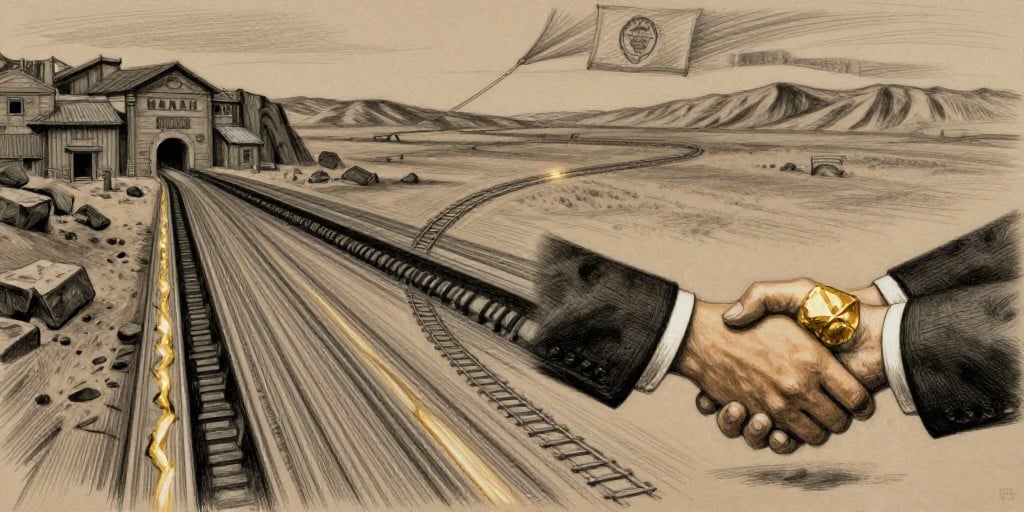
The Escondida copper mine—BHP’s flagship operation—has seen its output pressure mount as a labor dispute escalates. Union members, citing discrepancies in pay and benefits, have initiated a hunger strike that underscores deeper grievances. In an attempt to defuse the situation, BHP has offered a modest wage increase and a cash bonus. Management maintains that this intervention will avert a widespread walk‑out, thereby safeguarding short‑term production levels.
However, union representatives warn that a protracted stoppage could result in a significant erosion of copper output. This potential loss has immediate implications for BHP’s earnings, given that copper remains a core revenue driver. The company’s short‑term resilience therefore hinges on the speed and effectiveness of its labor negotiations, a factor that analysts may underestimate in their earnings forecasts.
Market‑Side Dynamics
BHP’s share performance mirrors broader sector movements, reflecting the intertwined nature of commodity prices and mining valuations. While the Australian S&P/ASX 200 index has posted modest gains after a period of decline, the mining segment has trended lower. BHP’s share price has fallen alongside peers such as Mineral Resources and Fortescue, a trend that aligns with the following market conditions:
| Factor | Impact | Evidence |
|---|---|---|
| Falling iron‑ore prices | Negative | Iron‑ore futures have suffered a series of weekly losses driven by excess supply and subdued demand. |
| Concerns over steel demand | Negative | Decreased steel production demand dampens the price trajectory for iron‑ore, an essential input for BHP’s diversified portfolio. |
| Investor sentiment | Cautious | Declining share prices across the mining segment indicate heightened risk aversion. |
These dynamics suggest that commodity price volatility will continue to weigh on investor sentiment and BHP’s valuation in the near term.
Financial Reporting Cycle
BHP’s upcoming annual report and general meeting will provide shareholders with updated financial statements and an operational performance review. While long‑term projects remain on track, short‑term operational disruptions—such as the Escondida labor dispute—and commodity price volatility are likely to persist as influential factors in investor sentiment.
Key takeaways for stakeholders:
- Labor Risk Amplification – The hunger strike signals that BHP’s workforce is a critical lever for output. Management’s modest wage and bonus package may be insufficient to prevent a prolonged stoppage, which could materially impact earnings.
- Commodity Price Sensitivity – Falling iron‑ore futures and dampened steel demand expose BHP to revenue volatility, underscoring the need for hedging or diversification strategies.
- Investor Perception – The continued decline in share prices across mining peers reflects market anxiety that may be magnified by BHP’s operational uncertainties.
- Strategic Opportunities – If BHP can negotiate a more comprehensive resolution to the labor dispute, the company could stabilize output and potentially leverage its commodity position to regain investor confidence.
Conclusion
BHP Group Ltd. stands at a critical juncture where labor disputes, commodity price fluctuations, and investor sentiment intersect. An investigative lens that scrutinizes underlying business fundamentals, regulatory environments, and competitive dynamics reveals a risk landscape that may be underestimated by conventional analyses. Stakeholders should monitor the company’s labor negotiations, commodity exposure, and forthcoming financial disclosures to gauge whether BHP can navigate these challenges without compromising its long‑term trajectory.