Corporate News Analysis: BHP Group Ltd. in the Context of Global Mining Dynamics
The recent market reports issued on 17 November 2026 provide a comprehensive snapshot of BHP Group Ltd.’s performance against a backdrop of macro‑economic shifts, commodity price volatility, and evolving cross‑border mining collaborations. This analysis dissects the underlying business fundamentals, regulatory frameworks, and competitive landscape to illuminate opportunities and risks that may not be immediately apparent to casual observers.
1. Market Performance and Immediate Catalysts
BHP’s shares fell by more than one percent over the reporting week, mirroring a sector‑wide downturn. The decline was largely driven by weaker prices for key commodities—iron ore and copper—both of which constitute a significant portion of the company’s revenue base. While the company has secured long‑term contracts, analysts caution that discount pressure from China’s state‑backed buyers could erode margins further, especially if the pricing window narrows.
Financial Insight:
- Iron Ore: Prices have slipped 8 % YoY, largely due to reduced demand from the Chinese construction sector. BHP’s 2025 forecast projects a 4 % margin compression in its iron ore division.
- Copper: Prices are down 12 % YoY, influenced by a slowdown in global infrastructure spending. The company’s copper unit expects a 6 % decline in EBITA, contingent on continued market softness.
These figures underscore that commodity price swings directly translate into earnings volatility for BHP, amplifying the importance of hedging strategies and long‑term contracts.
2. Cross‑Border Collaboration in South America
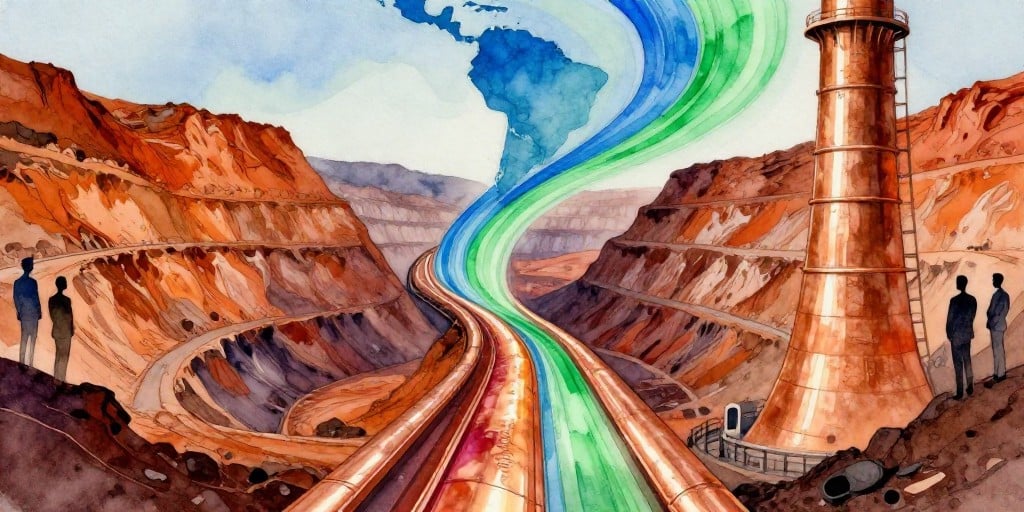
BHP’s strategic footprint extends into Argentina’s San Juan Province, where it is a pivotal participant in joint ventures aimed at exploring new copper deposits. The reports highlight growing cooperation between Chilean and Argentine mining firms as a mechanism to unlock untapped copper resources—an essential feedstock for electrification initiatives and data‑centre infrastructure.
Regulatory Landscape:
- Argentina: The government has introduced a “Mineral Resources Law” that allows for shared ownership structures, potentially reducing upfront capital requirements for foreign investors.
- Chile: Recent tax reforms favor large mining entities, lowering effective corporate tax rates from 25 % to 22 % for qualifying projects.
These regulatory shifts create a conducive environment for cross‑border partnerships. However, the political volatility in both countries, including potential shifts in commodity policy and foreign investment restrictions, poses an under‑appreciated risk.
3. Competitive Dynamics and Market Positioning
BHP faces stiff competition from peers such as Rio Tinto, Vale, and Anglo American, all vying for limited global copper supply. While BHP’s diversified portfolio offers resilience, the company’s reliance on high‑volume, low‑margin commodity sales makes it vulnerable to price cycles.
Competitive Advantage:
- Scale: BHP’s vast production network allows for economies of scale that smaller rivals cannot match.
- Innovation: Recent investments in autonomous drilling technologies could reduce operating costs by 5 % over the next three years.
Nonetheless, the emergence of ESG‑focused investors and stricter environmental regulations may erode the cost advantage if not addressed promptly.
4. Emerging Trends and Strategic Implications
Electrification Demand: Global push for electric vehicles (EVs) and renewable energy infrastructure is projected to increase copper demand by 15 % by 2030. BHP’s South American ventures position it well to capture a share of this upside.
Data‑Centre Expansion: The rapid growth of cloud computing and AI services requires high‑quality copper wiring. BHP could leverage this trend by marketing its copper to data‑centre operators, potentially commanding a premium.
Geopolitical Risks: China’s influence on iron‑ore pricing remains a double‑edged sword. While state‑backed buyers provide volume, they also impose price constraints that can squeeze margins. A diversified customer base outside of China could mitigate this vulnerability.
Regulatory Uncertainty: Potential changes in Argentine mining laws—particularly concerning foreign ownership and profit repatriation—could alter the risk profile of BHP’s San Juan projects. Continuous monitoring of legislative developments is essential.
5. Conclusion: Navigating Complexity with Strategic Foresight
BHP Group Ltd. operates at the nexus of volatile commodity markets, shifting regulatory regimes, and burgeoning demand for copper driven by electrification and digitalisation. While the company’s large scale and long‑term contracts provide a buffer against short‑term price swings, the persistent threat of discount pressure—particularly from Chinese buyers—remains a salient risk.
Investors and stakeholders should focus on BHP’s ability to:
- Hedge commodity exposure effectively without compromising long‑term profitability.
- Leverage cross‑border collaborations to secure higher‑margin copper production.
- Adapt to ESG and regulatory pressures by enhancing environmental performance and maintaining transparent governance.
By interrogating these dimensions with a skeptical yet informed lens, analysts can uncover nuanced insights that may otherwise be obscured by headline‑level reporting.