
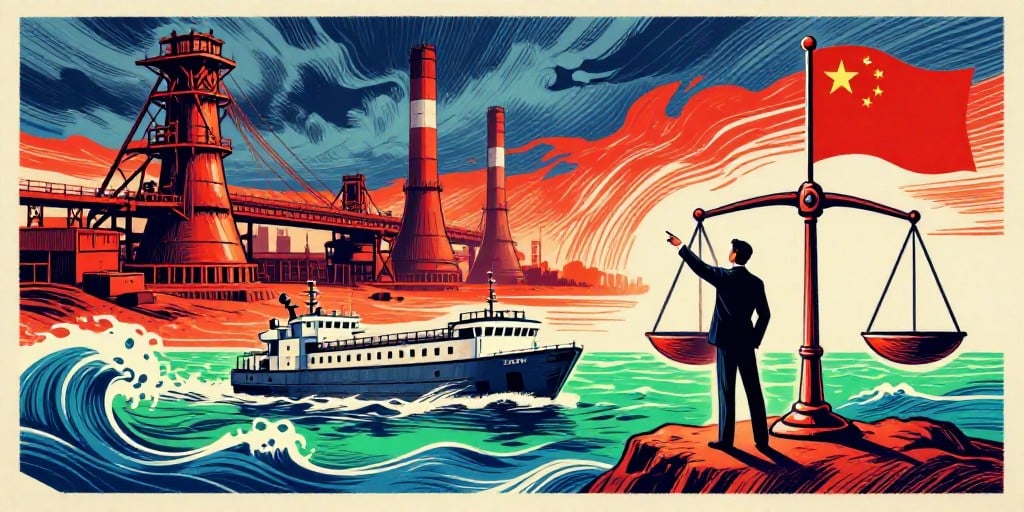
BHP Group Limited Navigates Supply‑Chain and Market‑Volatility Challenges
BHP Group Limited experienced a mixed performance in the broader Australian market, with its shares moving modestly higher in line with the broader ASX 200. The company’s trajectory reflects a confluence of operational, geopolitical, and financial factors that underscore the intricate dynamics of the global iron‑ore market.
Iron‑Ore Sector Pressures at Port Hedland
A potential strike at the Port Hedland export hub has injected uncertainty into BHP’s iron‑ore supply chain. Union representatives have signalled a series of 24‑hour stoppages that could impair the loading of cargoes destined largely for China, a key customer for BHP’s iron‑ore output. The company has communicated that it has contingency plans to maintain safe operations should the dispute intensify.
The Port Hedland strike illustrates a broader pattern in the mining sector where labor disputes can ripple through global supply networks, especially in commodities with a narrow distribution base. In the case of iron ore, any disruption at a major export terminal can lead to immediate price volatility on both commodity exchanges and corporate earnings forecasts.
Tension with China Mineral Resources Group
Simultaneously, China Mineral Resources Group (CMRG), a state‑backed buyer of iron ore, has tightened its purchasing terms. This shift reflects China’s broader strategy to secure supply at more favourable prices while simultaneously managing domestic demand and environmental targets. BHP’s own negotiations with CMRG have not yet reached a resolution, leaving the company’s market outlook sensitive to the outcome of these talks.
The tightening of terms by CMRG is part of a wider trend in which China, the world’s largest iron‑ore importer, is exerting greater control over pricing and supply conditions. This has precipitated supply‑side friction across the industry, as other producers grapple with balancing the need for competitive pricing against the risk of eroding profit margins.
Option Activity and Investor Sentiment
From a financial perspective, BHP’s stock has seen notable option activity, with a surge in put trades suggesting heightened interest in downside protection among investors. Despite this, the company’s share price has remained relatively stable, reflecting a balance between the market’s expectations of operational resilience and the underlying supply‑chain uncertainties.
The increase in put volume indicates that investors are hedging against potential declines in commodity prices or operational disruptions, yet the limited impact on the stock’s price signals confidence in BHP’s risk‑management framework and its ability to navigate short‑term volatility.
Broader Economic Context
BHP’s situation is emblematic of the intersection between commodity markets and macro‑economic forces. Global demand for iron ore is tightly coupled to infrastructure investment, particularly in China’s manufacturing and construction sectors. When supply disruptions occur—whether through labor disputes, regulatory changes, or geopolitical tensions—price spikes can occur, benefiting producers. However, the cost of maintaining operations and securing alternative supply routes can erode profitability.
Moreover, the tightening of purchasing terms by a major buyer like CMRG underscores how state‑backed entities can influence market dynamics, prompting producers to reassess their customer relationships and pricing strategies. The resulting pressure is felt across the industry, creating a feedback loop that can either accelerate consolidation or foster innovation in logistics and production efficiencies.
BHP’s Strategic Response
BHP continues to monitor the situation at Port Hedland while maintaining engagement with key customers and suppliers. The company’s contingency plans, coupled with its diversified portfolio across metals and energy, provide a buffer against short‑term shocks. In addition, BHP’s proactive approach to negotiating with CMRG suggests an emphasis on long‑term partnership stability, even as it navigates the evolving landscape of global trade policies and environmental regulations.
Conclusion
BHP Group Limited’s performance in the recent trading session illustrates how a leading mining firm must balance operational resilience against market‑driven uncertainties. The convergence of labor disputes, buyer‑side negotiations, and investor hedging activity highlights the complex, multi‑layered nature of the global iron‑ore market. As the company continues to adapt, its ability to integrate sector‑specific insights with broader economic trends will be pivotal in sustaining shareholder value and maintaining a competitive edge in a rapidly shifting industry environment.