
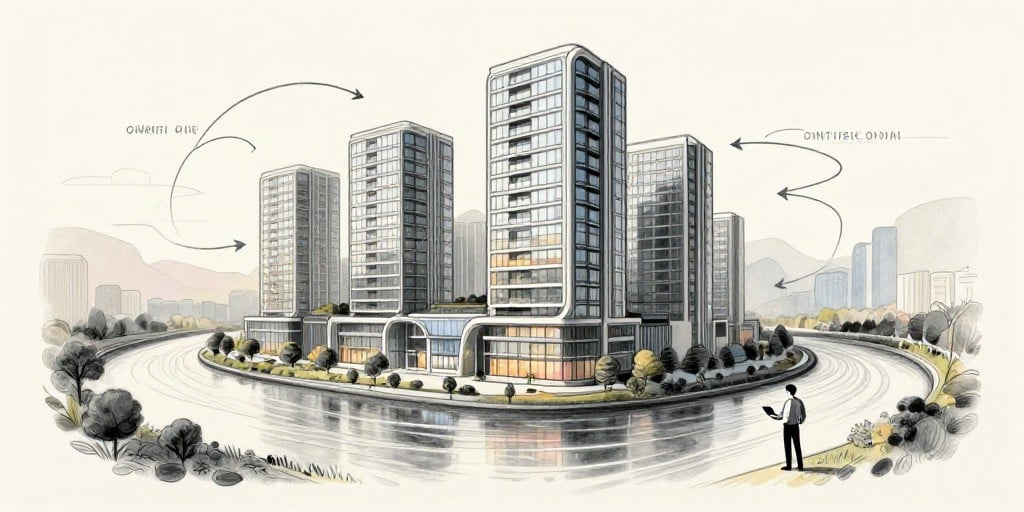
Berkshire Hathaway’s Strategic Expansion into Residential Real Estate
Berkshire Hathaway’s acquisition of Taylor Morrison Home Corp., a multi‑billion‑dollar cash transaction, signals a decisive shift in the conglomerate’s portfolio strategy. By integrating Taylor Morrison’s nationwide home‑building operations with Berkshire’s existing subsidiaries—Clayton Homes, and various building‑product enterprises—the company is poised to create a unified platform that can capitalize on current consumer trends, supply‑chain innovations, and the evolving omnichannel retail landscape.
Consumer Goods Trends and Home‑Building Demand
| Consumer Category | Current Trend | Impact on Housing Demand |
|---|---|---|
| Millennial Homebuyers | Preference for flexible, tech‑enabled living spaces | Drives demand for modular and smart‑home features in new builds |
| Sustainable Living | Rising emphasis on energy efficiency | Increases demand for green-certified homes and eco‑friendly building materials |
| Urban‑Suburban Migration | Post‑pandemic shift toward larger, multi‑unit developments | Encourages builders to offer a range of entry‑level to resort‑style properties |
The acquisition aligns with these trends by providing Berkshire with a platform to scale technology‑integrated, sustainable homes across diverse market segments. Taylor Morrison’s existing portfolio—spanning entry‑level to resort‑style properties—offers an immediate breadth of product that can be tailored to the shifting preferences of contemporary buyers.
Retail Innovation and Omnichannel Strategy
Modern homebuyers increasingly engage across digital and physical touchpoints, from virtual tours to in‑person showrooms. Berkshire’s plan to unify its building‑product subsidiaries under a single operational umbrella supports the development of:
- Integrated e‑commerce portals for pre‑construction customization and post‑purchase services.
- Data‑driven sales funnels that capture buyer intent and personalize marketing communications.
- Cross‑channel inventory management that synchronizes on‑site construction progress with digital supply‑chain dashboards.
By deploying a coherent omnichannel approach, Berkshire can enhance customer experience, shorten sales cycles, and improve inventory turnover—critical metrics in the highly competitive residential market.
Brand Positioning Across Multiple Consumer Segments
Taylor Morrison’s brand equity is complemented by Berkshire’s reputation for long‑term value creation. The partnership allows for:
- Co‑branding initiatives that emphasize reliability and innovation, appealing to cost‑conscious first‑time buyers and luxury clientele alike.
- Targeted marketing campaigns that leverage data analytics from Berkshire’s insurance and financial subsidiaries to identify cross‑segment opportunities.
- Strategic community development projects that showcase social responsibility and strengthen local brand presence.
Maintaining Sheryl Palmer as CEO ensures operational continuity, while the backing of Berkshire’s capital enables strategic brand repositioning and the adoption of advanced construction technologies.
Supply Chain Innovations and Operational Synergies
The consolidation creates opportunities for:
- Vertical integration of raw material sourcing, reducing dependence on external suppliers and mitigating price volatility.
- Automated logistics platforms that synchronize procurement, delivery, and on‑site installation.
- Collaborative R&D between Berkshire’s building‑product divisions and Taylor Morrison’s design teams to accelerate the adoption of modular construction and prefabricated components.
These supply‑chain enhancements are expected to lower production costs, improve build quality, and accelerate project timelines—factors that resonate with price‑sensitive and quality‑seeking consumers alike.
Short‑Term Market Movements Versus Long‑Term Transformation
In the short term, the announcement has generated a premium over Taylor Morrison’s recent trading levels, reflecting investor confidence in the combined entity’s growth prospects. Market analysts anticipate the deal’s completion in late 2026, contingent on shareholder and regulatory approvals.
Long‑term, the acquisition positions Berkshire as a dominant player capable of driving industry transformation through:
- Technological integration that sets new standards for smart, sustainable living.
- Customer‑centric retail models that redefine how homes are marketed and sold.
- Robust supply‑chain frameworks that enhance resilience in the face of economic shocks.
By bridging immediate market gains with a strategic vision for the future of residential real estate, Berkshire Hathaway demonstrates a forward‑looking approach that aligns with evolving consumer preferences and industry dynamics.