
European Industrial Markets Confront Environmental and Regulatory Headwinds
The week’s trading session in Europe concluded with a muted performance, reflecting a confluence of geopolitical uncertainties and climatic pressures that are already reshaping key industrial nodes. The German equity market, in particular, slipped modestly as investors weighed the immediate operational risks against longer‑term strategic imperatives.
BASF’s Adaptive Response to Rhine Drought
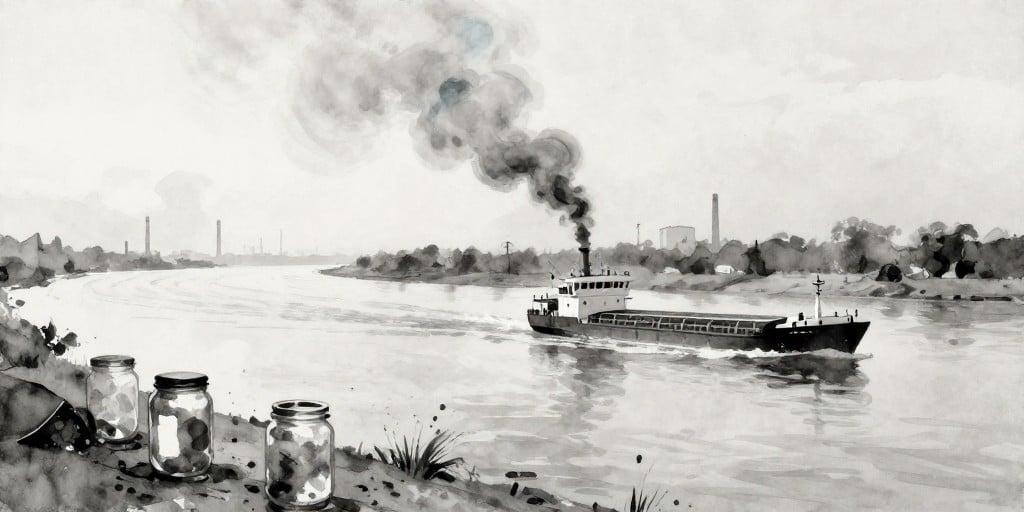
In the German capital, BASF’s listed shares edged lower, a microcosm of broader concerns about supply‑chain fragility triggered by the unprecedented low water levels in the Rhine River. The company’s Ludwigshafen facility, a critical hub for the production of petrochemicals and fertilizers, has been exposed to this drought, compelling BASF to deploy specialized low‑draft vessels. These vessels, engineered with a wider, lighter hull and electric propulsion, enable the transport of raw materials even when the river’s depth falls below the conventional threshold required for standard barge traffic.
The deployment of these vessels illustrates BASF’s commitment to sustaining production during environmental stressors. By maintaining the integrity of the supply chain, the company seeks to uphold its medium‑term production targets, a stance that aligns with the broader industry trend of bolstering resilience in the face of climate‑induced disruptions. However, the operational cost of this adaptation—particularly the capital outlay for electric propulsion systems and the potential for increased fuel consumption in more complex routing—remains a critical variable in assessing the long‑term financial viability of the strategy.
Regulatory Pressures and the European Emissions‑Trading Framework
Simultaneously, Berlin’s policymakers have intensified discussions around the European Union’s emissions‑trading system (ETS), emphasizing the need for industrial resilience without encouraging off‑shoring of production. The ETS, which imposes a price on carbon emissions, has been lauded for its role in driving decarbonisation. Yet, the policy debate is shifting toward ensuring that climate measures do not inadvertently catalyze a relocation of manufacturing away from Germany, potentially eroding the country’s industrial base.
For BASF and its peers, compliance with the ETS translates into additional operational costs—through the purchase of emission allowances or investment in carbon‑reducing technologies. The company’s current strategy appears to balance these regulatory obligations by leveraging its low‑draft vessel program to maintain production volumes, thereby mitigating the risk of capacity reductions that could elevate unit costs. Nonetheless, investors may question whether this approach adequately addresses the long‑term cost implications of the ETS, especially as allowance prices are projected to rise in the coming years.
Financial Market Reactions and Sectoral Dynamics
The German equity market’s modest decline mirrors a continental pattern of cautious sentiment. Energy and commodity stocks broadly retreated, reflecting a broader global pullback on commodity prices, while the chemical sector displayed relative resilience. This stability can be attributed to sustained demand for industrial inputs—particularly in sectors such as automotive, construction, and consumer goods—whose supply chains remain heavily reliant on German chemical outputs.
From a financial perspective, the market’s reaction to river level data and the persistently low volatility in oil prices suggests that investors are balancing short‑term operational disruptions against longer‑term strategic positioning. The valuation of chemical stocks, therefore, hinges on their ability to navigate both environmental contingencies and evolving regulatory landscapes. Analysts point out that firms with robust risk‑management frameworks, such as BASF’s low‑draft vessel initiative, may enjoy a competitive advantage in maintaining supply chain continuity and avoiding costly production downtimes.
Uncovering Overlooked Trends and Potential Risks
An investigative lens reveals several underappreciated dynamics:
Supply‑Chain Bottlenecks as a Catalyst for Innovation – The Rhine drought has accelerated investment in alternative transport solutions. Companies that fail to adapt may face increased logistical costs, whereas early adopters can secure market share through reliability.
Regulatory Arbitrage Risks – While the ETS is designed to be uniform across the EU, varying national implementation strategies may create arbitrage opportunities. Firms operating near borders could exploit differential allowance prices or tax incentives, potentially undermining a level playing field.
Capital Allocation Trade‑Offs – The deployment of electric‑powered low‑draft vessels requires significant upfront capital. Companies must evaluate whether the return on this investment surpasses alternative uses of capital, such as R&D in greener chemical processes or expansion into emerging markets.
Long‑Term Demand Shifts – Climate‑driven policy changes may shift demand toward lower‑carbon chemical products. Firms that maintain a narrow product portfolio risk obsolescence if market preferences evolve faster than their innovation cycles.
Geopolitical Uncertainties – Trade tensions, sanctions, and geopolitical instability can compound supply‑chain vulnerabilities. Companies heavily reliant on cross‑border logistics, like those serviced by the Rhine, need contingency plans that encompass both physical and digital logistics layers.
Conclusion
European industrial markets are navigating a complex intersection of environmental shocks, regulatory evolution, and shifting investor sentiment. BASF’s proactive adaptation to Rhine drought conditions exemplifies a broader industry pivot toward resilience, yet the long‑term cost‑benefit profile of such measures remains uncertain. Regulators must ensure that climate policy does not inadvertently erode domestic manufacturing capacity, while companies should rigorously assess capital allocation against evolving demand for low‑carbon products. Investors, therefore, should maintain a skeptical yet informed stance, recognizing that the immediate operational challenges may conceal both significant risks and hidden opportunities in the post‑climate‑change industrial economy.