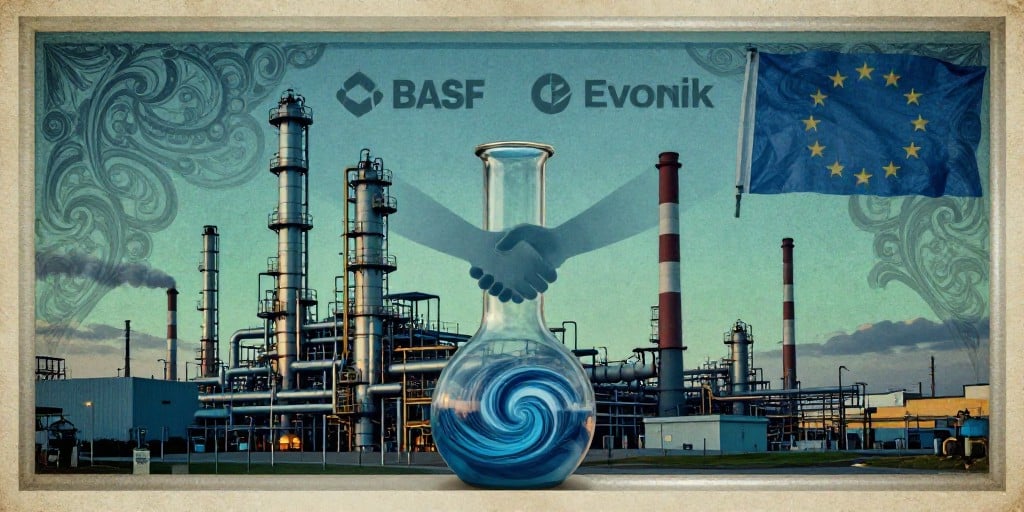
Corporate Dynamics in the German Chemical Sector
BASF, the world’s largest chemical producer, is set to host a second‑day Capital Markets Day on Thursday, 27 November. The event comes at a critical juncture, as the company continues to negotiate a potential takeover of Evonik Industries. The discussion is shaping the narrative within the broader German chemical market and, by extension, the European industrial landscape.
The Evonik Deal: Current Status and Market Perception
BASF’s latest public bid values each Evonik share at 24 €—a figure that market observers consider below the threshold required to secure approval. Internal intelligence suggests that a revised offer in the 26–28 € range would be necessary to shift the deal toward completion. This assessment aligns with the strategic calculations of several key stakeholders:
- BASF’s Positioning: The German chemical giant is pursuing a strategy of consolidation to reinforce its market share in specialty chemicals, polymers, and agro‑chemicals. Integrating Evonik’s portfolio—particularly its strengths in high‑performance materials—would enhance BASF’s competitive positioning against global peers.
- Political Resistance: North‑West German authorities, spearheaded by Minister Hendrik Wüst, have vocally opposed the takeover. Their stance underscores the importance of maintaining an independent industrial base in the region, reflecting concerns about job security and regional economic resilience.
- Investor Sentiment: Following the public disclosure of the negotiations, BASF’s share price has dipped modestly. Investors appear wary of potential regulatory hurdles, cultural integration challenges, and the valuation risk inherent in cross‑border acquisitions.
Broader Market Context
German equity indices have posted modest gains, buoyed by technology sector momentum and a decline in oil prices. Nevertheless, persistent inflationary pressures within the eurozone continue to dampen investor confidence. In this environment, the chemical sector’s performance is viewed through a lens of both opportunity and risk:
- Commodity Dynamics: Lower oil prices reduce feedstock costs for chemical producers, potentially improving profit margins. However, volatile crude markets can still ripple through supply chains, affecting raw material procurement.
- Technological Integration: The convergence of digital technologies—such as AI‑driven process optimization and predictive maintenance—offers competitive advantages for firms that can harness these tools. BASF’s ongoing investments in digital chemistry are likely to be a key differentiator in the post‑merger landscape.
- Regulatory Landscape: European Union directives on sustainability, such as the Circular Economy Action Plan and the EU Emissions Trading System, impose compliance costs that can influence strategic decisions. A larger, integrated entity may be better positioned to absorb these regulatory demands.
Cross‑Sector Implications
The BASF–Evonik negotiations illustrate a broader trend of consolidation across traditionally distinct industrial sectors. Similar dynamics are observable in:
- Energy and Chemicals: As renewable energy technologies mature, chemical manufacturers are repositioning themselves as suppliers of specialty materials for batteries and solar cells. Mergers can accelerate R&D capabilities and scale production.
- Technology and Manufacturing: The rise of Industry 4.0 is prompting manufacturers to acquire tech firms for data analytics and IoT solutions, mirroring BASF’s approach to augment its core business with advanced capabilities.
- Financial Services and Industrial Assets: Financial institutions are increasingly valuing industrial assets through a lens that incorporates sustainability metrics, leading to higher valuation multiples for companies that demonstrate ESG leadership.
Conclusion
BASF’s forthcoming Capital Markets Day will be pivotal in determining the trajectory of its bid for Evonik. The company’s strategic rationale—centered on enhancing its core competencies and expanding its global footprint—must be balanced against regulatory scrutiny, regional political concerns, and market volatility. The unfolding of this transaction will offer valuable insights into how large chemical firms navigate mergers within a rapidly evolving economic and regulatory environment.