Corporate Development in the Chemical Sector: BASF’s Strategic Expansion in Southern China
BASF SE has announced the inauguration of its largest single‑site industrial complex to date, situated in Zhanjiang, Guangdong. The investment of €8.7 billion represents a milestone in the company’s growth trajectory and underscores its “Made in China” strategy, which prioritises local production for the domestic market over export.
Scope and Capacity of the New Facility
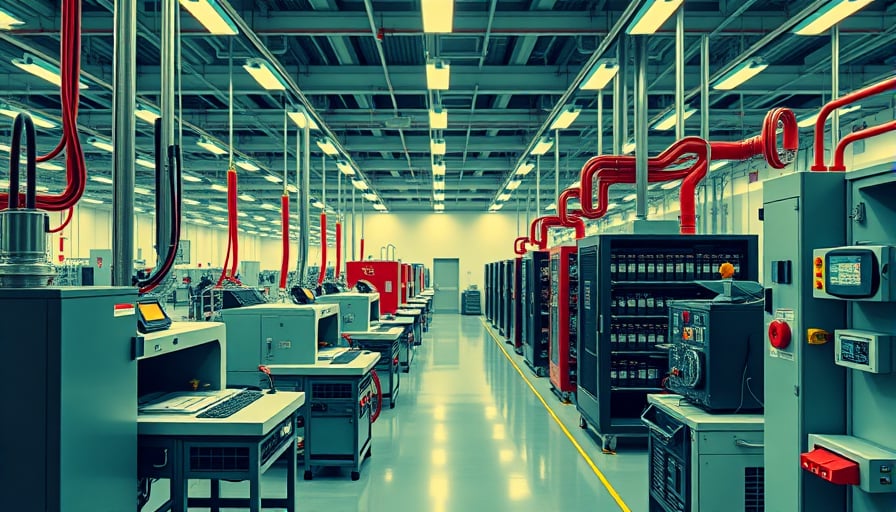
Covering approximately four square kilometres, the Zhanjiang complex contains more than 30 production lines and accommodates around 70 distinct products. Its output portfolio spans basic chemicals, intermediates, and specialty materials, with a primary focus on the automotive, electronics, and consumer goods sectors. The scale and breadth of production lines are designed to satisfy both local demand and the broader global portfolio of BASF’s products.
Strategic Rationale Behind the Expansion
Alignment with Global Supply‑Chain Trends
The decision to build a major facility in China aligns with a broader trend among German chemical producers. German companies are increasingly investing in overseas sites to secure supply chains, reduce exposure to geopolitical risks, and respond to the rising demand for specialty chemicals in emerging markets. The Zhanjiang complex is a concrete illustration of this shift, enabling BASF to produce high‑value products closer to its largest customer base.
Balancing Growth and Consolidation
While the Chinese investment signals a commitment to growth in high‑growth regions, BASF is simultaneously consolidating its European operations. The company is trimming its operational footprint in Germany and other EU countries, reducing costs, and tightening its supply‑chain network. This dual strategy reflects the need to manage capital allocation in a context of tightening margins and evolving production‑integration models.
Upcoming Divisional Spin‑Off
The opening of the Zhanjiang complex comes at a time when BASF is preparing to spin off its coatings division. The separation is expected to allow both units to concentrate on their core competencies, streamline decision‑making, and optimise resource allocation. By reducing cross‑divisional friction, BASF can better respond to market dynamics that favour integrated production sites and cost‑effective product development.
Financial Implications and Expected Pay‑back
Analysts project that the €8.7 billion investment will be amortised over several years, with the initial operational phase expected to generate a stable cash‑flow contribution. The focus on high‑margin specialty chemicals and the proximity to key end‑users in automotive and electronics are likely to accelerate the pay‑back period. In parallel, the reduced exposure to transportation costs and tariffs should enhance overall profitability.
Cross‑Sector Connections and Economic Context
The chemicals industry is increasingly intertwined with technology, automotive, and consumer goods sectors. As vehicle electrification and electronics miniaturisation accelerate, the demand for advanced polymers, high‑purity solvents, and surface‑active agents continues to rise. BASF’s production capabilities in Zhanjiang position the company to supply these evolving needs directly within China, a market that is rapidly advancing its own manufacturing capabilities.
Furthermore, the investment dovetails with global economic trends such as the shift towards sustainable manufacturing and the push for lower carbon footprints. By localising production, BASF can reduce its carbon intensity associated with transportation, potentially improving its environmental metrics—a critical factor for investors and regulators alike.
Conclusion
BASF’s €8.7 billion expansion in Zhanjiang exemplifies a strategic realignment that marries growth in emerging markets with operational consolidation in mature economies. The move is grounded in a thorough understanding of sector‑specific dynamics, competitive positioning, and macroeconomic drivers. By investing in a high‑capacity, multi‑product facility and planning a focused spin‑off of its coatings unit, BASF is poised to enhance its resilience, optimise margins, and sustain long‑term competitiveness across a range of high‑growth industries.