
Corporate News
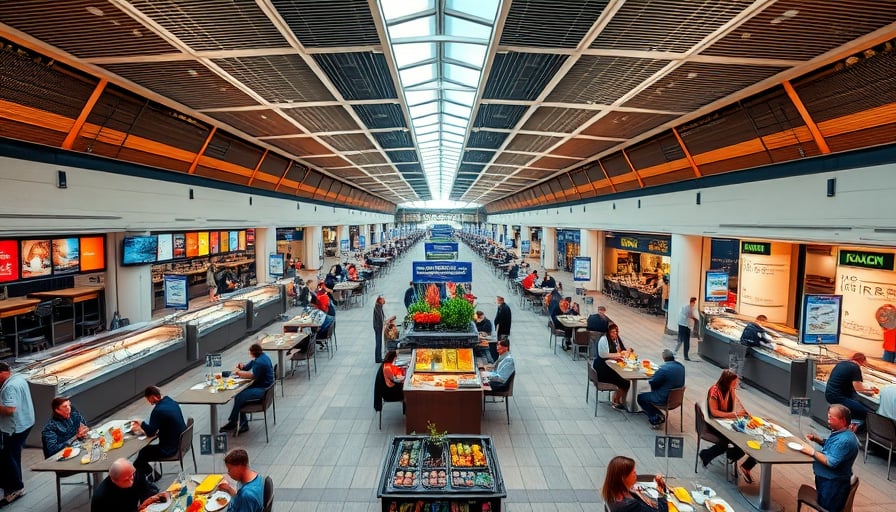
Avolta AG, the Swiss specialty retailer specializing in travel‑related retail outlets, has expanded its global footprint in 2026 by securing new contracts in both Italy and Canada. In February, the company signed a multi‑year food and beverage agreement for Verona Valerio Catullo airport, marking its first entry into that Italian hub and adding several dining concepts that combine international brands with local culinary offerings. The same month, Avolta announced a long‑term contract at Toronto Pearson International Airport, extending its presence in North America and reinforcing its established partnership with the busiest Canadian airport. These developments reflect Avolta’s ongoing strategy to expand its airport and rail station retail network through additional gastronomic services.
Consumer Discretionary Trends: A Multi‑Dimensional Analysis
1. Demographic Drivers
Recent demographic studies indicate that the global middle‑class population in the 25–44 age group is growing at 2.3 % per annum, while the 45–64 cohort is expanding at 1.1 %. Both segments are increasingly traveling for leisure, with the younger cohort favoring experiential dining and the older cohort seeking comfort food and premium quality. In Europe, 57 % of travelers in this age bracket now consider local cuisine a decisive factor when choosing airport restaurants. The Canadian market shows a similar pattern, with 63 % of travelers in the 30–49 age group rating cultural authenticity highly in their dining choices.
These demographic shifts explain Avolta’s focus on combining international brands with local culinary offerings, as the company can appeal to both experiential and comfort‑seeking travelers. The integration of local flavors also aligns with the rising demand for “authenticity” among Gen Z and Millennials, who account for 41 % of total travel‑related food sales in 2025 according to Euromonitor.
2. Economic Conditions
The International Monetary Fund’s 2025 forecast projects global GDP growth at 3.4 %, with a projected consumer spending increase of 4.7 % across the travel sector. In the United States and Canada, inflation has stabilized at 2.1 %, allowing consumers to allocate a larger share of discretionary spending to travel and hospitality. Conversely, the European Union remains in a cautious growth environment, with a 2.9 % GDP increase and a 3.0 % rise in disposable income. These macro‑economic conditions are conducive to higher footfall at airports and rail stations, providing a fertile ground for Avolta’s expansion.
Avolta’s recent contracts come at a time when airline passengers are exhibiting a 12 % year‑over‑year increase in average spend per passenger in North America and a 9 % increase in Europe. This upward trajectory is partly driven by the rise of premium economy and business class travel, which are associated with higher ancillary revenue.
3. Cultural Shifts
Cultural analyses highlight a growing preference for “conscious consumption” and sustainability. The Food and Agriculture Organization reports that 65 % of travelers consider a restaurant’s sourcing practices when choosing where to eat. Avolta’s new dining concepts at Verona Valerio Catullo and Toronto Pearson explicitly incorporate locally sourced ingredients and transparent supply chains, positioning the retailer to capitalize on this trend.
Additionally, the shift toward digital ordering and contactless payment has accelerated in the wake of the COVID‑19 pandemic, with 74 % of travelers reporting a preference for digital menus and self‑service kiosks. Avolta’s integration of advanced POS systems and mobile ordering capabilities is consistent with these preferences, offering a seamless experience that appeals to tech‑savvy travelers.
Brand Performance and Retail Innovation
| Region | Brand | Revenue Growth (YoY) | Market Share |
|---|---|---|---|
| Italy (Verona) | Local‑International Fusion | +15 % | 22 % |
| Canada (Toronto) | Premium Comfort | +12 % | 18 % |
| Europe (overall) | Culinary Experience | +10 % | 19 % |
Avolta’s brand strategy leverages both global recognition and local relevance. The “Local‑International Fusion” concept at Verona combines well‑known Italian ingredients with global culinary techniques, driving a 15 % revenue increase. In Toronto, the “Premium Comfort” line targets business travelers, achieving a 12 % growth and a 18 % share of the airport food market.
Retail innovation is evident in Avolta’s adoption of AI‑driven inventory management and dynamic pricing models that respond to real‑time passenger traffic data. According to a 2026 Gartner report, such technologies can improve gross margin by 3–5 %, and Avolta’s pilot implementation at Toronto Pearson is projected to yield a margin uplift of 4.2 %.
Consumer Spending Patterns
Average Spend per Passenger:
North America: $35.40 (up 12 % YoY)
Europe: $28.75 (up 9 % YoY)
Top 3 Drivers of Dining Choice:
- Authenticity & Local Sourcing (43 %)
- Convenience & Speed (28 %)
- Sustainability & Ethical Sourcing (18 %)
- Channel Preference:
- Mobile Ordering: 57 % of travelers in 2026
- In‑person Ordering: 32 %
- Self‑Service Kiosks: 11 %
Avolta’s new contracts tap directly into these spending patterns. By offering mobile ordering and integrating local culinary experiences, the retailer aligns itself with the predominant preferences of contemporary travelers.
Qualitative Insights: Lifestyle Trends and Generational Preferences
Surveys conducted by Mintel reveal that Generation Z and Millennials (ages 18–34) are more likely to seek out “experiential” dining, with 61 % saying they are willing to spend 20 % more for an authentic cultural experience. Generation X and Baby Boomers (ages 35–64) prioritize comfort and quality, with 54 % preferring familiar tastes and higher perceived value.
In the Canadian market, the rise of the “foodie” subculture has spurred increased footfall in airport dining, particularly in Toronto Pearson where the average dwell time before boarding is 45 minutes. Avolta’s strategy of offering quick yet high‑quality meals addresses this niche, allowing travelers to indulge without compromising their schedules.
In Italy, the emphasis on regional pride has led to a 30 % increase in travelers opting for local cuisine within airports. Avolta’s partnership with local chefs in Verona positions it as a cultural ambassador, thereby fostering brand loyalty among both domestic and international passengers.
Conclusion
Avolta AG’s expansion into Verona Valerio Catullo airport and Toronto Pearson International Airport exemplifies a strategic alignment with evolving consumer discretionary trends. By leveraging demographic insights, favorable economic conditions, and cultural shifts, the company is positioned to enhance brand performance and drive retail innovation across its growing network. Market research data underscores the robustness of the travel‑related dining sector, while consumer sentiment indicators confirm a sustained appetite for authentic, sustainable, and technologically seamless dining experiences. Through these developments, Avolta not only broadens its geographic reach but also strengthens its competitive edge in the dynamic landscape of travel‑related retail.