
Corporate News
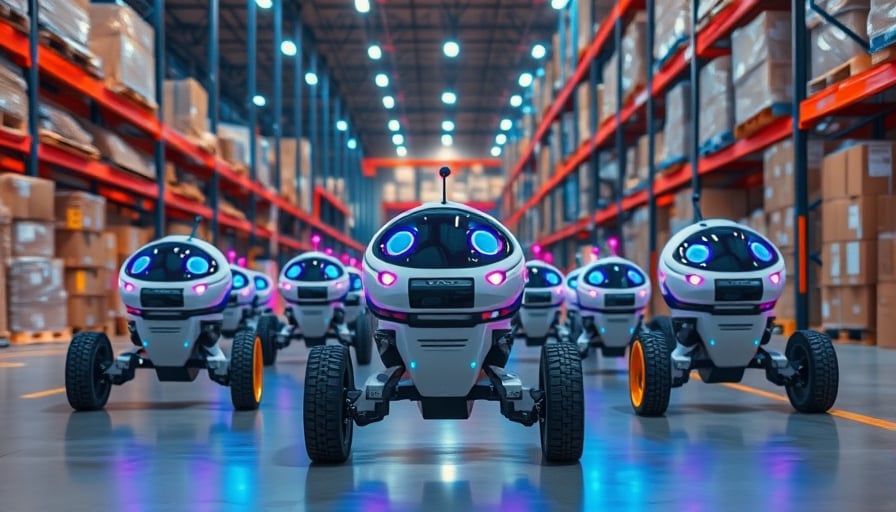
Aptiv PLC (NASDAQ: APVT) has entered into a strategic partnership with Vecna Robotics, a leading developer of autonomous mobile robots (AMRs). The collaboration, announced on the New York Stock Exchange, will see Aptiv’s cutting‑edge perception and machine‑learning (ML) technologies integrated into Vecna’s autonomy and orchestration platform. The objective is to deliver safer, smarter, and more cost‑effective automation solutions for warehouses and manufacturing facilities.
Strategic Rationale
Complementary Technology Portfolios
- Aptiv: Renowned for its hardware and software ecosystem that powers automotive OEMs with advanced safety, electrified architectures, and intelligent connectivity. Its core strengths lie in perception sensors (lidar, radar, cameras) and ML‑driven decision engines.
- Vecna Robotics: Specializes in AMRs that navigate dynamic environments using sophisticated autonomy stacks, fleet orchestration, and task‑management algorithms.
By combining Aptiv’s perception and ML expertise with Vecna’s robust robotic platforms, the partnership aims to enhance end‑to‑end automation performance, reduce operational costs, and accelerate deployment timelines across logistics and manufacturing operations.
Market Dynamics in Industrial Automation
The industrial‑automation market is experiencing rapid expansion, driven by:
- Digital transformation in supply chains and manufacturing, demanding higher throughput and flexibility.
- Labor shortages and rising labor costs, prompting investment in autonomous solutions.
- COVID‑19 acceleration, which highlighted the need for contactless and remote‑operated systems.
According to recent market research, the AMR segment is projected to grow at a CAGR of 35 % over the next five years, reaching a valuation of approximately $12 billion by 2030. Aptiv’s entry into this space positions it to capture a share of this lucrative growth trajectory.
Competitive Positioning
| Company | Core Offering | Strengths | Market Focus |
|---|---|---|---|
| Aptiv | Automotive electronics, perception sensors, ML safety software | Strong OEM relationships, extensive R&D in AI safety | Automotive OEMs, autonomous vehicle suppliers |
| Vecna Robotics | AMR hardware, fleet orchestration platform | Proven field deployments, scalable software architecture | Warehouses, distribution centers, light manufacturing |
| Joint Offering | Integrated perception‑enabled AMRs | Combined safety and autonomy, reduced total cost of ownership | High‑volume logistics, large‑scale production facilities |
The partnership leverages Aptiv’s global supply chain and Vecna’s specialized robotics expertise, creating a differentiated product that competes with incumbents such as Amazon Robotics, Fetch Robotics, and Kiva Systems.
Economic Implications
- Cost Efficiency: Integration of advanced perception reduces the need for manual intervention and enhances fault tolerance, lowering the cost per operating hour.
- Scalability: The platform’s modular design supports rapid scaling, allowing enterprises to expand robot fleets without proportionally increasing infrastructure costs.
- Job Creation: While AMRs displace certain manual tasks, the partnership emphasizes upskilling and redeployment of human workers into supervisory and maintenance roles.
From a macroeconomic perspective, widespread adoption of such autonomous systems could enhance productivity in the logistics sector, thereby supporting broader supply‑chain resilience and mitigating inflationary pressures in freight and manufacturing costs.
Conclusion
The Aptiv‑Vecna collaboration represents a convergence of automotive‑grade perception technology and industrial‑automation robotics. By integrating sophisticated ML‑driven safety and perception systems into a proven AMR platform, the partnership addresses pressing demands for safer, more efficient, and economically viable automation across warehouses and factories. The strategic alignment positions both companies to capitalize on the accelerating adoption of autonomous logistics solutions, while simultaneously reinforcing their competitive foothold in the rapidly evolving landscape of industrial automation.