
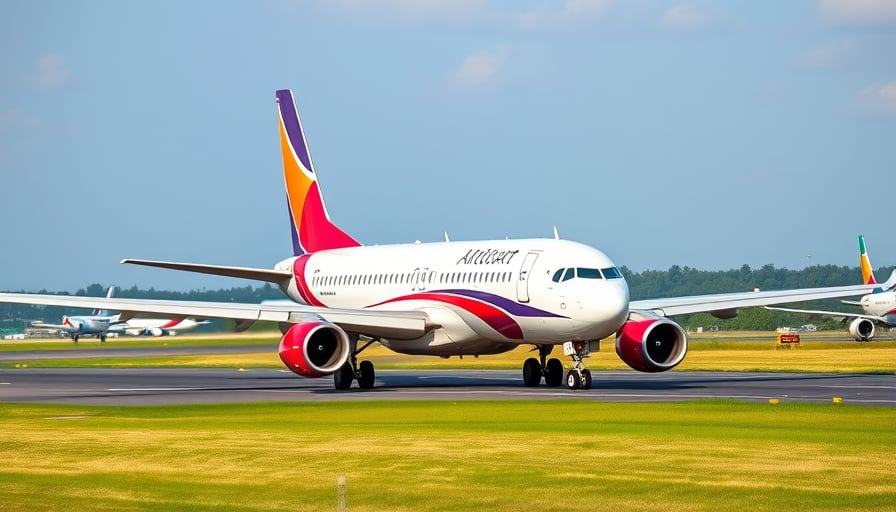
Corporate Performance Analysis of AerCap Holdings NV within the Transport Equipment and Leasing Sector
AerCap Holdings NV, the largest aircraft‑leasing company by fleet value, continues to exhibit resilience amid a constellation of macro‑economic and industry‑specific headwinds. The firm’s share price remains anchored near the upper end of its recent annual trading band, underscoring a confidence that is not uniformly shared across the transport equipment and leasing market.
Impact of Inflation on Capital Expenditure
Inflation exerts a dual pressure on aircraft leasing operators. On the one hand, rising input costs—particularly in materials and energy—inflate the capital expenditure required to maintain and expand a modern aircraft fleet. On the other, inflation erodes the real return on capital for lease agreements, prompting operators to seek longer lease terms and higher residual values. AerCap’s ability to negotiate favorable pricing in its fleet acquisition contracts, coupled with a diversified mix of aircraft types, has helped to mitigate these inflationary shocks. This strategic positioning is reflected in the company’s stable yield spread relative to competitors.
Tariff Tensions and Trade Policy Uncertainty
The ongoing tariff tensions between major aviation markets have introduced an additional layer of complexity to the supply chain. Import duties on aircraft components, particularly those sourced from the United States and China, increase the cost of spare parts and affect maintenance, repair, and overhaul (MRO) schedules. AerCap’s extensive global MRO network and in‑house engineering capabilities provide a buffer against these disruptions. By leveraging in‑country manufacturing partnerships, the company can reduce exposure to volatile tariffs and maintain service continuity for its lease customers.
Supply‑Chain Disruptions and Production Bottlenecks
Recent supply‑chain disruptions—stemming from semiconductor shortages, shipping constraints, and workforce limitations—have strained the production timelines of new aircraft orders. For lease providers, delays in aircraft delivery translate into missed revenue windows and increased inventory carrying costs. AerCap’s proactive approach to inventory management, characterized by a lean stock of spare parts and a focus on high‑turnover components, has enabled the firm to absorb these delays with minimal impact on lease delivery schedules.
Technological Innovation and Productivity Metrics
In the heavy‑industry context of aircraft manufacturing, productivity is increasingly measured by the integration of additive manufacturing (AM) and digital twins. AM reduces part count and weight, directly influencing fuel efficiency—a critical cost driver for airlines. Digital twins allow for predictive maintenance and real‑time performance monitoring, shortening aircraft downtime and improving asset utilization rates. AerCap’s portfolio, which includes a high proportion of narrow‑body, fuel‑efficient models, benefits from these technological advances. The company’s capital allocation strategy reflects a preference for aircraft that can deliver superior fuel efficiency and lower life‑cycle maintenance costs, thereby enhancing productivity metrics for its leasing portfolio.
Regulatory Environment and Environmental Commitments
Regulatory changes—particularly those related to carbon emissions and noise standards—have reshaped the demand for new aircraft. The European Union’s Carbon Border Adjustment Mechanism (CBAM) and the International Civil Aviation Organization’s (ICAO) Carbon Offsetting and Reduction Scheme for International Aviation (CORSIA) place a premium on low‑emission fleets. AerCap’s focus on newer-generation aircraft, such as the Boeing 787 and Airbus A350, aligns with these regulatory imperatives, positioning the firm to capitalize on airlines’ transition toward greener fleets.
Infrastructure Spending and Market Outlook
Infrastructure investment in aviation hubs—expansion of runways, modernization of air traffic control systems, and upgrades to maintenance facilities—supports the broader growth of the aviation leasing market over the coming decade. These investments increase aircraft utilization rates, thereby improving the attractiveness of leasing as an alternative to outright ownership for airlines. Analysts project a steady expansion of the aviation leasing market, driven by rising demand for modern, fuel‑efficient aircraft and a sustained preference for leasing over purchase in uncertain economic climates.
Capital Expenditure Trends in the Leasing Sector
Capital expenditure trends in the leasing sector reflect a balance between fleet renewal and diversification. The high cost of acquiring modern aircraft necessitates disciplined capital allocation, often financed through a combination of debt and equity. AerCap’s robust credit profile and access to low‑cost financing have enabled it to maintain a steady pace of fleet expansion while preserving financial flexibility. In contrast, peers with higher debt levels or less diversified aircraft mixes may face greater constraints in capital deployment.
The above analysis synthesizes current industry dynamics, technological advancements, and macroeconomic factors affecting AerCap Holdings NV. It highlights how the company’s strategic focus on efficient fleets, supply‑chain resilience, and regulatory alignment positions it favorably within the evolving landscape of transport equipment and leasing.