
Corporate News Analysis: Capital Allocation and Infrastructure Investment in the Utility Sector
American Electric Power (AEP) has emerged as a prominent participant in the recent shift away from corporate share‑buyback programs toward increased equity issuance. In the second quarter of 2026, several utilities and infrastructure firms, including AEP, announced new share offerings, a move that reflects a broader trend among capital‑intensive companies reallocating resources to support growth initiatives. The announcement has prompted market observers to question how this shift will influence equity supply and the balance between new issuance and buyback activity, which has historically helped keep valuations stable.
While the news surrounding AEP’s equity sales does not directly address its operational performance, it does highlight the changing financial strategies within the utilities sector. In the context of the ongoing earnings season, companies will be scrutinised for how effectively they translate capital expenditures into sustained profitability, especially as inflationary pressures and rising energy costs continue to influence margins. Analysts are therefore likely to assess AEP’s forthcoming earnings for indications that the capital raised is being deployed effectively and that cash‑flow generation remains robust.
1. Impact of Equity Issuance on Grid‑Stability and Renewable Integration
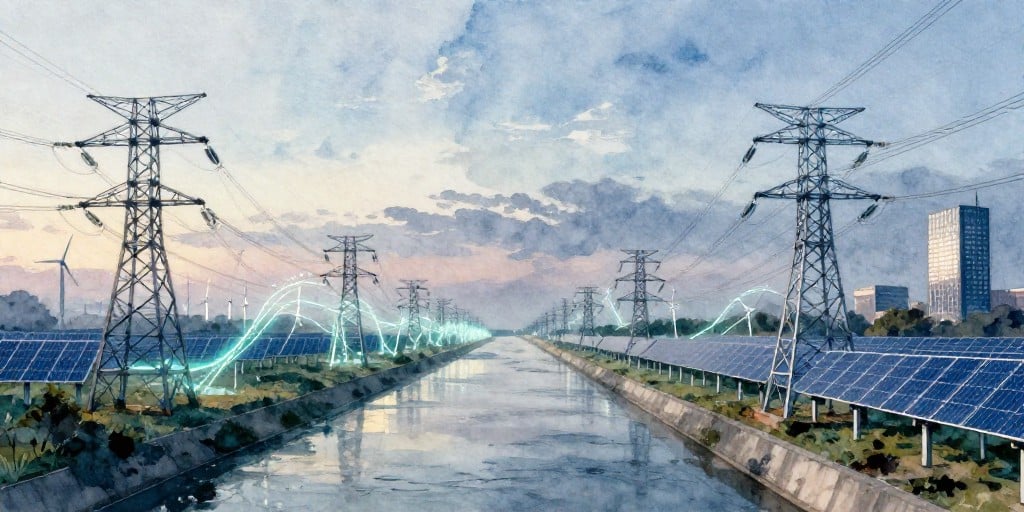
The utility industry is undergoing a technological and regulatory transition that requires significant infrastructure upgrades to accommodate higher penetrations of intermittent renewable resources. Equity issuances provide the necessary capital to:
- Enhance transmission capacity to connect remote wind and solar farms to load centers.
- Deploy advanced grid‑automation equipment, including phasor measurement units (PMUs) and wide‑area monitoring systems (WAMS), to maintain synchronisation and dampen oscillatory modes.
- Invest in energy‑storage facilities such as utility‑scale batteries and pumped‑hydro storage, which act as virtual inertia and help smooth supply‑demand mismatches.
From an engineering perspective, each of these investments directly contributes to maintaining system inertia, reducing the risk of voltage collapse, and limiting frequency excursions that could otherwise lead to widespread outages.
2. Infrastructure Investment Requirements and Cost Implications
Modernising the grid involves capital‑intensive projects that often exceed $10 billion for a single utility to fully upgrade its transmission network over a decade. The following cost drivers are salient:
| Infrastructure Component | Capital Cost | Operational Benefit |
|---|---|---|
| High‑Voltage Direct Current (HVDC) corridors | $2–4 billion per 300 km | Enables efficient long‑distance transmission of renewable energy |
| Dynamic line rating (DLR) systems | $150–250 k per mile | Increases capacity without new conductors |
| Battery Energy Storage Systems (BESS) | $300–700 kWh | Provides frequency support and peak shaving |
| Advanced protection & control (APC) | $1–3 billion | Improves fault detection and isolation |
| Substation automation | $1–2 billion | Reduces outage duration and maintenance costs |
The capital required for these upgrades can be partially offset by long‑term savings in operational expenditures and improved reliability metrics. However, the initial outlay can strain financial statements, thereby influencing the balance sheet metrics that investors monitor closely.
3. Regulatory Frameworks and Rate Structures
The regulatory environment shapes both the feasibility of infrastructure projects and the economic return on equity investments. Key regulatory mechanisms include:
Rate‑of‑Return Regulation – Utilities are granted a regulated profit margin (the “rate of return”) that allows them to recover capital costs over time. For instance, a 5.5% return on invested capital (ROC) is common in many jurisdictions.
Performance‑Based Regulation (PBR) – Incentivizes utilities to meet reliability and environmental targets by tying a portion of revenue to performance metrics (e.g., SAIDI, SAIFI, or renewable integration percentages).
Capacity Markets – Some regions have introduced capacity payment mechanisms to ensure that utilities maintain sufficient capacity reserves, thereby encouraging investment in infrastructure that enhances system reliability.
Renewable Portfolio Standards (RPS) – Mandates a certain percentage of electricity to come from renewable sources. Utilities must invest in generation and transmission to meet these mandates, often through procurement contracts and new build programs.
Rate structures also evolve to accommodate the economics of renewable integration. Time‑of‑use (TOU) tariffs and demand response programs redistribute load, reducing strain on transmission assets and aligning consumer behavior with system needs.
4. Economic Impacts of Utility Modernization
Modernization yields a range of economic outcomes for utilities, consumers, and the broader economy:
Utility Profitability – Capital investments financed through equity issuance can lower debt service costs and reduce interest‑rate exposure, potentially improving earnings per share (EPS) if the projects generate incremental revenue or cost savings.
Consumer Costs – While infrastructure upgrades typically necessitate higher capital costs, regulatory mechanisms (e.g., cost‑of‑service models) can moderate rate impacts. The net effect on consumer bills depends on the balance between operational savings from improved reliability and the amortization of capital expenditures.
Job Creation – Large‑scale grid projects generate employment in engineering, construction, and manufacturing. AEP’s equity raising may catalyse such jobs, supporting local economies and reinforcing the utility’s community relationships.
System Reliability – Enhanced grid stability reduces outage costs for both utilities and consumers. The economic value of reliability is often quantified in terms of avoided costs, which can be substantial (e.g., $20–$30 per kilowatt‑hour per outage hour for commercial customers).
Market Competitiveness – Utilities that modernise early may gain a competitive edge by offering lower volatility in energy prices and higher quality of service, attracting new customers and potentially expanding their market share.
5. Engineering Insights into Power System Dynamics
- Frequency Control and Inertia Management
- Intermittent renewables reduce the synchronous inertia of the grid. Modern storage and flexible load mechanisms (e.g., inverter‑based resources with synthetic inertia) are employed to counteract this effect. The dynamic response of the grid can be modelled using the swing equation, which relates frequency deviations to net power imbalance.
- Voltage Stability
- High penetration of voltage‑controlled resources (PV inverters) can influence voltage profiles. Deployment of static VAR compensators (SVCs) and dynamic voltage regulators (DVRs) mitigates voltage fluctuations, preserving stability across the network.
- Contingency Analysis
- N‑1 and N‑2 contingency studies ensure that the grid can withstand single or double component failures. Advanced simulators (e.g., PSS®S/S, DIgSILENT PowerFactory) evaluate post‑contingency performance, guiding reinforcement decisions.
- Cyber‑Physical Security
- As grid automation increases, so does the attack surface. Implementing secure communication protocols (IEC 61850, DNP3) and real‑time intrusion detection systems is critical to prevent cascading failures.
- Reliability Assessment
- Metrics such as SAIFI (System Average Interruption Frequency Index) and SAIDI (System Average Interruption Duration Index) quantify reliability. Utilities aim to reduce these indices through proactive maintenance, redundancy, and rapid fault isolation.
6. Strategic Considerations for AEP and Peers
- Capital Allocation Discipline – With equity issuance on the rise, utilities must prioritize projects with the highest return on equity (ROE), balancing short‑term financial metrics with long‑term resilience goals.
- Stakeholder Engagement – Transparent communication about how raised capital will be deployed can alleviate investor concerns regarding margin compression and valuation pressures.
- Partnership Opportunities – Leveraging technology firms’ expertise in AI‑driven grid analytics and digital twins can accelerate deployment and optimize operations, potentially reducing capital intensity.
- Regulatory Advocacy – Utilities should actively participate in policy dialogues to shape favorable rate structures and incentive programs that recognize the value of grid modernization.
7. Conclusion
The shift toward equity issuance exemplified by AEP signals a broader realignment of capital strategies within the utility industry. This financial pivot, coupled with the imperative to integrate renewable generation and reinforce grid stability, underscores a complex interplay between engineering demands, regulatory frameworks, and economic outcomes. As utilities navigate this transition, the ability to deploy capital efficiently—while maintaining reliable service and managing consumer costs—will be decisive for sustaining profitability and supporting the broader energy transition.