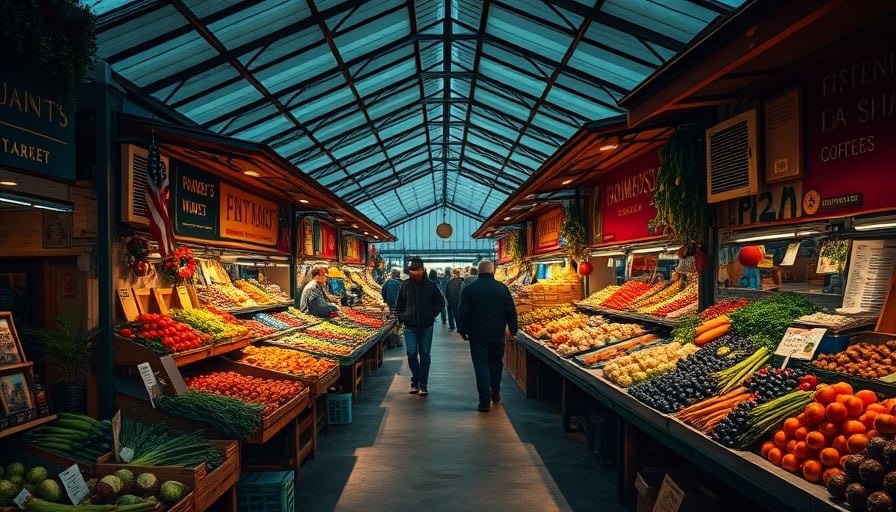
Digital‑Physical Retail Synergy and Shifting Consumer Tastes: A Lens on the Food & Agriculture Sector
The food and agriculture industry sits at the intersection of long‑term commodity economics and rapidly evolving consumer preferences. Recent market activity—exemplified by the modest decline in Archer‑Daniels‑Midland (ADM) shares—offers a microcosm of how traditional commodity players must navigate an increasingly digitised retail landscape, generational spending patterns, and new experiential demands.
1. ADM’s Current Market Context
Archer‑Daniels‑Midland (ADM) experienced a modest decline in its most recent trading session, with the share price falling slightly below the level seen the previous day. The move occurred amid a broader market environment that was otherwise gaining modestly, reflecting the company’s position within a sector that is sensitive to commodity price fluctuations and supply‑chain dynamics. Analysts noted that ADM’s holdings in the food and agricultural inputs space are exposed to shifts in input costs and changing demand patterns for plant‑based products, which may influence short‑term valuation movements. The decline was not large enough to signal a significant reversal but highlighted the ongoing volatility in the commodity‑heavy segment of the market. The company’s performance is being watched by investors looking for stability in dividend‑paying enterprises, as ADM’s history of consistent payouts remains a key factor for many portfolio managers. Overall, the recent price movement suggests a temporary adjustment rather than a sustained trend, with market participants continuing to evaluate ADM’s exposure to the evolving dynamics in food processing, animal feed, and industrial applications.
2. Lifestyle Trends and the Rise of Plant‑Based Consumption
Consumer interest in plant‑based and sustainably sourced foods has accelerated, driven by health consciousness, climate‑awareness, and a generational shift toward ethical consumption. Millennials and Gen Z now represent a growing share of purchasing power, favouring brands that can articulate transparent supply chains and environmental stewardship. For companies like ADM, whose portfolio includes soy, corn, and other key feedstocks, this trend translates into:
- Higher demand for alternative protein sources: Plant‑based proteins require more efficient cultivation and processing, creating opportunities for technology‑savvy suppliers.
- Premium pricing potential: Brands that successfully differentiate their products can command higher margins, offsetting volatile commodity costs.
- Collaborations with food‑tech startups: Strategic partnerships can accelerate the development of novel ingredients and reduce time‑to‑market.
3. Generational Spending Patterns and Digital Transformation
Digital commerce is reshaping how consumers purchase groceries. While Gen Y and Gen Z lean heavily toward online platforms, older cohorts still maintain a strong preference for physical retail, albeit increasingly augmented by digital tools (e.g., mobile coupons, QR‑based product information). This duality creates a hybrid retail environment:
- Omnichannel supply chains: Manufacturers must deliver to both brick‑and‑mortar suppliers and direct‑to‑consumer e‑commerce platforms. Integrated logistics solutions reduce lead times and inventory costs.
- Data‑driven inventory management: Real‑time sales data enables predictive analytics, mitigating waste in perishable categories.
- Personalised marketing: Leveraging consumer data allows brands to tailor promotions, fostering loyalty across generational divides.
4. Evolution of Consumer Experiences
The modern consumer seeks experiences beyond mere product consumption—expecting authenticity, community engagement, and ethical narratives. These expectations influence:
- Packaging innovation: Eco‑friendly, informative packaging enhances brand perception and meets regulatory pressures.
- In‑store experiential design: Physical retailers are investing in interactive displays and farm‑to‑table storytelling to differentiate themselves.
- Digital engagement: Augmented reality (AR) applications that reveal ingredient sourcing stories or nutritional information elevate the shopping journey.
5. Forward‑Looking Analysis: Market Opportunities for ADM
- Investment in Sustainable Farming Tech: ADM could expand its footprint in precision agriculture tools that reduce input waste and boost yields, aligning with the sustainability mandates of younger consumers.
- Strategic Alliances with Food‑Tech Innovators: Co‑development of plant‑based protein blends would position ADM as a key ingredient supplier to emerging brands.
- Digital Supply‑Chain Platforms: Building or adopting cloud‑based logistics solutions can improve responsiveness to volatile commodity markets and consumer demand spikes.
- Brand Extension into Value‑Added Products: Leveraging existing commodity expertise to create ready‑to‑eat or meal‑prep solutions can capture higher margin segments.
6. Conclusion
The modest dip in ADM’s share price reflects broader market volatility rather than a fundamental shift in the company’s strategic trajectory. However, it underscores the urgency for commodity‑heavy firms to adapt to the confluence of digital transformation, generational spending behavior, and evolving consumer experiences. By proactively aligning with these societal shifts—through sustainability investments, digital integration, and experiential innovation—ADM and its peers can turn current challenges into compelling market opportunities.