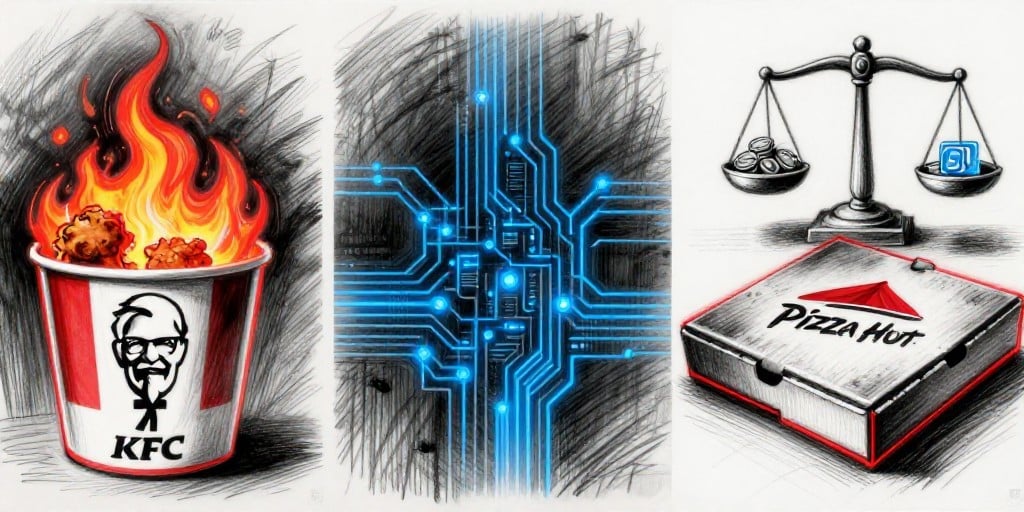
Corporate Analysis: Potential Divestiture of KFC and Pizza Hut Operations in Southeast Asia
CVC Capital Partners PLC is reportedly preparing to exit its stake in Massive Equity Sdn Bhd, the holding company that owns QSR Brands, the operator of the KFC and Pizza Hut franchises across Malaysia, Singapore, Brunei and Cambodia. The announcement, sourced from insiders familiar with the transaction, signals a strategic pivot by CVC, JCorp and the Employees Provident Fund (EPF), the trio that collectively controls the majority of Massive Equity. The potential sale, valued at approximately RM 4 billion (US ≈ $95 million), is being managed by Citi and targeted at buyers in the Middle East.
1. Business Fundamentals of QSR Brands
1.1 Revenue Trajectory
QSR Brands’ financial statements for the year ended 31 December 2025 demonstrate a 12 % revenue growth compared with the previous fiscal year, driven largely by store expansion and menu diversification. The company’s 800 KFC outlets and 500 Pizza Hut restaurants reported consolidated revenue of RM 3.2 billion—up from RM 2.8 billion a year earlier.
1.2 Profitability Resurgence
After a period of operating losses in 2023 and 2024, QSR Brands returned to profitability in 2025, achieving an EBITDA margin of 8.5 %. This turnaround is attributed to:
- Operational efficiency gains through automation of back‑of‑house processes and improved supply‑chain visibility.
- Portfolio optimisation that involved closing underperforming outlets and consolidating duplicate stores.
- Enhanced customer experience initiatives, such as mobile‑order integrations and loyalty programmes, which increased average transaction value by 4 %.
1.3 Cost Structure and Margin Pressures
Commodity price inflation—particularly in poultry, grain and oil—has increased food cost averages by 5.8 % in 2025. While QSR Brands has implemented hedging strategies for key inputs, the gross margin erosion remains a concern, especially with the rising energy costs linked to geopolitical tensions in the Middle East and Europe.
2. Regulatory and Macro‑Economic Environment
2.1 Food‑and‑Beverage Sector Regulations
The Malaysian Food Authority and the Singapore Ministry of Trade have tightened regulations around food safety, packaging waste, and carbon emissions. Compliance costs for franchise operators have increased by 3 % annually. Moreover, Singapore’s impending Food Safety and Hygiene Act (FSHA) amendments require franchises to invest in digital traceability systems—a capital outlay that may reduce short‑term profitability.
2.2 Currency Volatility
The Malaysian Ringgit has fluctuated between RM 4.20 and RM 4.65 per US $ during 2024‑2025, affecting the cost of imported ingredients and equipment. Exchange‑rate hedging is therefore essential for maintaining margin stability.
2.3 Competitive Dynamics
The quick‑service restaurant (QSR) market in Southeast Asia is highly fragmented, with local brands such as OldTown and New World Restaurants, as well as global competitors like McDonald’s and Starbucks, vying for market share. Consumer preference is shifting toward health‑conscious and sustainable offerings, challenging traditional fast‑food models.
3. Market Research & Competitive Landscape
| Segment | Market Share (2025) | Key Trend |
|---|---|---|
| KFC Franchise | 28 % (Malaysia) | Rise in delivery‑only outlets |
| Pizza Hut Franchise | 22 % (Singapore) | Expansion of plant‑based pizza line |
| Local QSR Brands | 18 % (Malaysia) | Emphasis on digital payment and loyalty |
| International Brands | 36 % (Singapore) | Consolidation through acquisitions |
The QSR sector’s compound annual growth rate (CAGR) of 4.2 % (2022‑2025) is projected to decelerate to 3.0 % by 2028, as growth becomes increasingly price‑elastic and driven by consumer demand for healthier options.
4. Risks & Opportunities for Potential Buyers
4.1 Risks
- High Operational Costs: Rising commodity prices and regulatory compliance expenses may erode margins if not controlled.
- Brand Dilution: Managing two legacy brands (KFC and Pizza Hut) under a single corporate umbrella could lead to overlapping marketing spend.
- Supply‑Chain Disruptions: Global supply chains remain fragile, potentially affecting ingredient availability and costs.
4.2 Opportunities
- Strategic Expansion: Acquiring QSR Brands offers a ready‑made footprint in 1,300+ restaurants across four countries, with strong brand recognition.
- Digital Upscaling: The existing digital platforms (mobile ordering, loyalty programmes) provide a foundation for further investment in data analytics and AI‑driven customer insights.
- Synergy Realisation: A buyer from the Middle East could leverage its own logistics and supply‑chain networks to reduce costs and improve resilience.
5. Investment Thesis
CVC’s decision to divest appears to align with its broader portfolio‑leaning strategy of concentrating on high‑growth, defensible businesses. However, the sale price of RM 4 billion may undervalue the long‑term cash‑flow generation potential of the KFC and Pizza Hut operations, especially if a buyer can implement aggressive cost‑control measures and digital transformation.
Conclusion: While the market’s current sentiment may focus on the immediate impact of commodity price spikes and regulatory changes, a strategic buyer who can integrate QSR Brands’ assets with their own supply‑chain and digital capabilities stands to unlock significant value. The transaction underscores the need for investors to look beyond headline figures, scrutinizing underlying operational efficiencies and macro‑environmental factors that shape long‑term profitability in the fast‑service restaurant sector.