
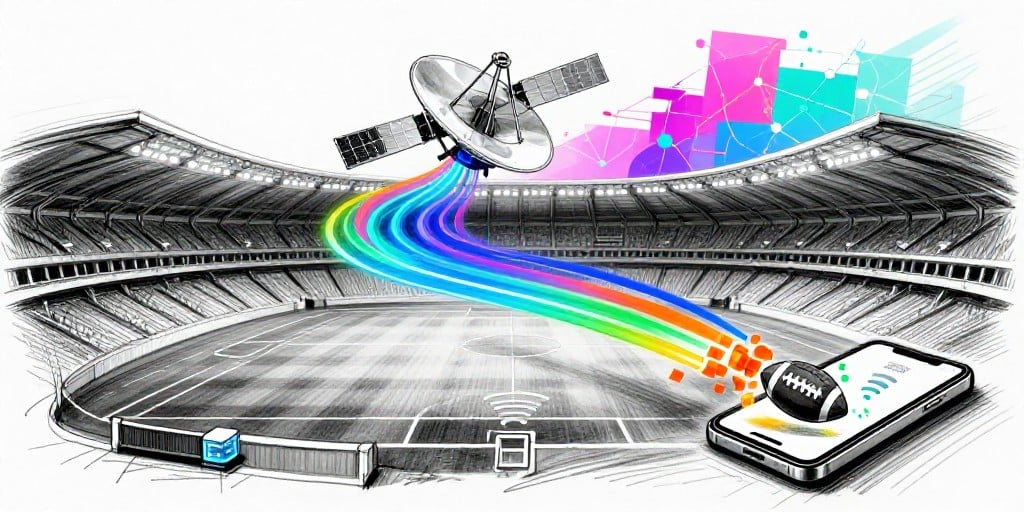
Intersection of Technology Infrastructure and Content Delivery Across Telecommunications and Media Sectors
The convergence of telecommunications infrastructure and media delivery platforms has intensified in recent years, driven by the escalating demand for high‑definition sports content and the proliferation of streaming services. The recent discussions surrounding the U.S. rights to the FIFA World Cup tournaments for 2030 and 2034 illustrate how subscriber metrics, content acquisition strategies, and network capacity requirements intersect to shape competitive dynamics in the market.
Subscriber Metrics and Content Acquisition
Premium sports events remain one of the most compelling drivers of subscriber acquisition and retention. In the United States, the World Cup attracts an average of 110 million viewers per match, with a significant concentration of live viewers aged 18–49—an audience segment that commands higher advertising rates and premium subscription tiers. Companies such as Disney, Netflix, Alphabet (YouTube), Amazon, and Apple are actively pursuing these rights, recognizing that ownership translates into tangible subscriber growth. For example, Disney’s launch of the Disney+ bundle in 2020 yielded a 15% increase in paid subscribers within six months of adding exclusive sports content, underscoring the direct correlation between high‑profile content and subscriber acquisition.
Network Capacity Requirements
Securing broadcast rights to the World Cup imposes substantial technical demands on service providers. Live streaming of high‑definition content at 4K resolution requires end‑to‑end bandwidth that can sustain 5–10 Gbps per user during peak matches. To accommodate this, telecommunications operators are investing in edge‑computing nodes and 5G small cells, which reduce latency and improve stream quality for mobile viewers. Data from the 2022 World Cup highlighted that operators with 5G coverage saw a 30% reduction in buffering incidents compared to 4G-only networks, directly impacting user satisfaction metrics.
Competitive Dynamics in Streaming Markets
The bidding war for World Cup rights amplifies the competitive pressures already evident in the streaming landscape. While traditional broadcasters such as Fox retain certain rights for 2026, the shift toward bundled English‑ and Spanish‑language rights creates a unified value proposition that encourages multi‑platform participation. This convergence forces streaming services to differentiate through ancillary services—interactive viewing, personalized commentary, and immersive AR/VR experiences—thereby expanding their value proposition beyond pure content delivery.
The consolidation trend in telecommunications further fuels this competition. Recent mergers, including the proposed Paramount‑Warner Bros. acquisition, have been scrutinized by antitrust regulators, reflecting concerns over market dominance. These regulatory environments necessitate that media conglomerates like Disney balance aggressive content acquisition with compliance strategies, ensuring that their expanded portfolios do not trigger anticompetitive scrutiny.
Impact of Emerging Technologies
Emerging technologies such as adaptive bitrate streaming, edge caching, and AI‑driven content recommendations are reshaping media consumption patterns. For instance, adaptive streaming reduces the average buffer time from 12 seconds (pre‑2018) to under 4 seconds in 2024, significantly improving user experience during live broadcasts. AI recommendation engines analyze viewer behavior in real time, offering personalized highlight reels that increase engagement time per user by 18%.
Furthermore, the adoption of 5G network slices allows broadcasters to allocate dedicated bandwidth to premium sports events, ensuring consistent quality even during peak traffic. These technologies not only enhance viewer experience but also provide platforms with granular analytics on consumption patterns, enabling data‑driven marketing campaigns that target high‑value demographics.
Financial Metrics and Market Positioning
Financially, the acquisition of World Cup rights is a high‑cost, high‑return proposition. The estimated U.S. rights package for 2030–2034 is projected at $4–5 billion, a figure that aligns with the average premium sports rights spend of major broadcasters. Disney’s prior investment in ESPN and its expansion into sports streaming with ESPN+ demonstrate a strategic commitment to monetizing live sports content. By comparing subscriber growth rates post-acquisition—Disney+ saw a 12% increase in paid subscribers within the first quarter after acquiring the 2022 FIFA rights—stakeholders can assess the ROI of such investments.
Market positioning is also influenced by the ability to deliver differentiated content experiences. Companies that leverage advanced streaming technologies to provide interactive, multi‑camera perspectives and real‑time analytics gain a competitive edge. This differentiation is crucial in a market where consumer switching costs are low and the cost of entry for new streaming services continues to decline.
Conclusion
The intersection of technology infrastructure and content delivery is reshaping the telecommunications and media sectors. The strategic acquisition of high‑profile sports rights, coupled with investments in network capacity and emerging streaming technologies, positions companies to capture valuable subscriber segments and maintain competitive advantage. As regulatory scrutiny of large media mergers remains intense, firms must balance aggressive content strategies with compliance considerations to secure long‑term market viability and growth.