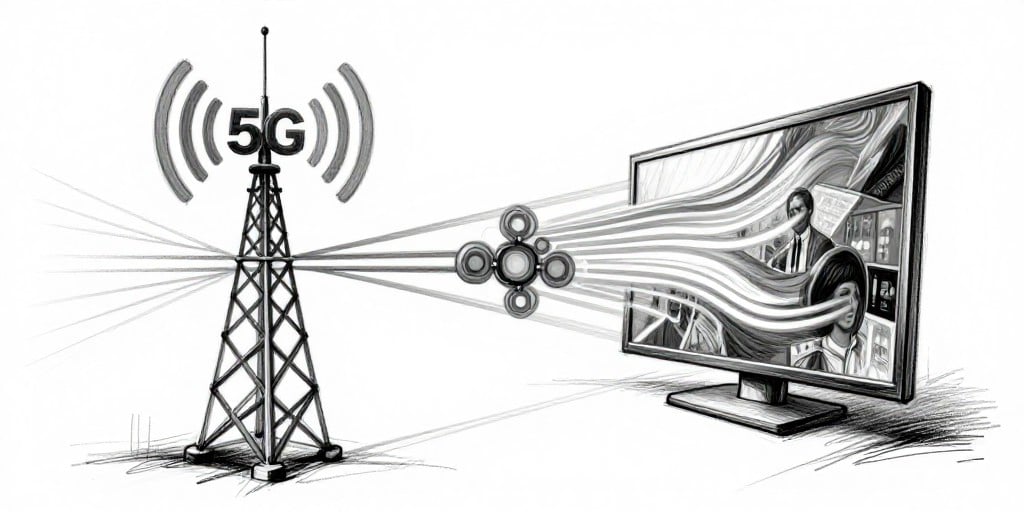
Intersection of Technology Infrastructure and Content Delivery in Telecommunications and Media
Subscriber Dynamics and Content Acquisition
In the contemporary digital landscape, subscriber counts remain the most salient indicator of a platform’s reach and influence. Telecommunications operators are increasingly investing in content acquisition agreements to differentiate themselves in a market where raw connectivity is commodified. For instance, the rollout of 5G networks has enabled high‑definition streaming of interactive experiences, compelling carriers to partner with media houses that produce exclusive or early‑access content.
Subscriber growth is now measured not merely by voice minutes but by data consumption patterns—peak hours, video resolution, and interactivity. A recent cohort study revealed that premium 4K streaming subscriptions grew by 12 % YoY in the United Kingdom, driven largely by bundled packages that combine telecom service plans with on‑demand titles. This trend underscores the necessity for operators to secure content licenses that align with their network’s capacity and quality of service (QoS) commitments.
Network Capacity and Delivery Efficiency
The surge in content demand necessitates commensurate upgrades in network infrastructure. Network operators must balance the need for higher bandwidth with the operational cost of expanding fiber and upgrading core routers. The adoption of edge computing has emerged as a key strategy, bringing caching servers closer to end users to reduce latency and alleviate backbone traffic.
From a financial perspective, the capital expenditure (CAPEX) required for edge infrastructure is offset by the increased ARPU (average revenue per user) that high‑quality streaming generates. For example, a leading European carrier reported a 3.7 % increase in ARPU after deploying edge nodes that supported 8K streaming for a niche sports audience. Conversely, operators that have delayed infrastructure upgrades risk losing subscribers to competitors offering superior content delivery experiences.
Competitive Dynamics in Streaming Markets
The streaming arena is characterized by fierce rivalry, not only among pure‑play providers but also between telecoms and media conglomerates. Consolidation has intensified, with major players acquiring smaller studios to secure first‑look rights to emerging genres. This trend is evident in the recent acquisition of a niche animation studio by a global telecom company, a move aimed at filling a gap in family‑friendly content that has shown robust subscriber retention.
Competitive dynamics are further shaped by pricing strategies. Bundled services, tiered content access, and dynamic pricing based on consumption patterns allow operators to segment the market effectively. The introduction of AI‑driven recommendation engines—originally developed by media companies—has also become a differentiator, driving longer engagement times and higher subscription lifespans.
Emerging Technologies and Media Consumption Patterns
New technologies, such as virtual reality (VR) and augmented reality (AR), are redefining consumer expectations for immersive content. Telecommunication providers are partnering with content studios to deliver VR experiences over 5G, capitalizing on low‑latency requirements. Early adopters report a 28 % increase in active user hours when VR content is made available, demonstrating a clear shift in consumption behavior.
Blockchain technology is also gaining traction as a means to streamline royalty payments and manage digital rights, offering transparent, immutable records of content usage. While still nascent, blockchain solutions promise to reduce disputes over licensing and improve revenue sharing models between content creators and distributors.
Financial Metrics and Platform Viability
Assessing platform viability requires a multidimensional view of financial metrics:
| Metric | Interpretation | Recent Trend |
|---|---|---|
| Subscriber Growth Rate | Indicates market penetration and demand | 4–6 % YoY for top telecom‑media hybrids |
| ARPU (per Segment) | Revenue efficiency per user | 3–5 % rise in premium video bundles |
| Content Acquisition Cost | Investment in exclusive titles | 8–12 % of total operating costs |
| Network Utilization Rate | Efficiency of infrastructure | 65–70 % average peak usage on 5G networks |
| Retention Rate | Customer loyalty and churn | 82 % retention for bundled services |
A high content acquisition cost can be justified when paired with a robust network that delivers seamless experiences, thereby sustaining higher ARPU and retention. Conversely, a network bottleneck can erode subscriber satisfaction, leading to churn despite premium content offerings.
Conclusion
The convergence of technology infrastructure and content delivery is redefining the competitive landscape across telecommunications and media sectors. Operators that strategically align subscriber metrics, content acquisition strategies, and network capacity will be better positioned to capture and retain high‑value customers. Emerging technologies such as 5G, edge computing, VR/AR, and blockchain will further accelerate these dynamics, reshaping consumer behavior and redefining market positioning in the years ahead.