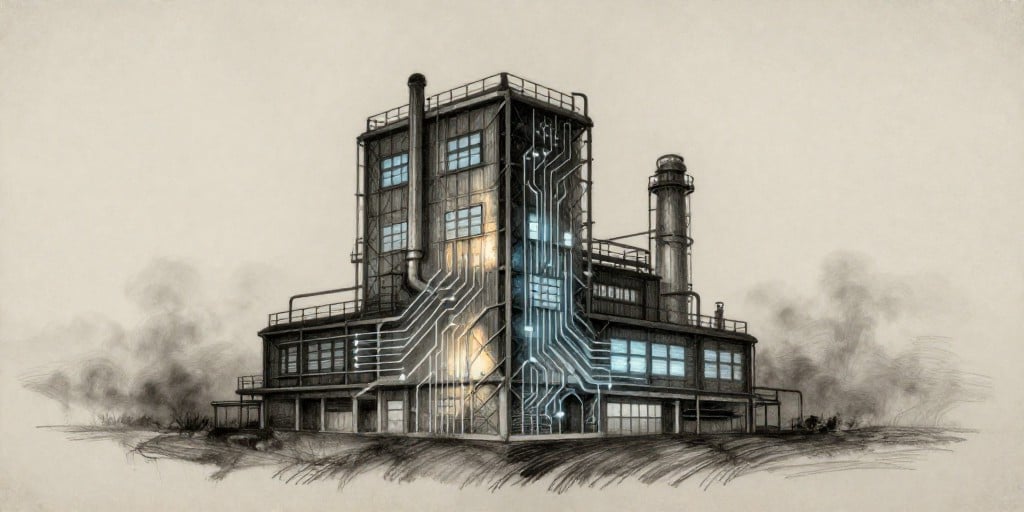
Honeywell International Inc. Expands AI‑Driven Portfolio to Reinforce Building Automation Leadership
Honeywell International Inc. announced a series of product enhancements at its Accelerate 2026 event that signal a decisive shift toward integrating artificial intelligence (AI) into building automation, safety, and security. The company unveiled the EBI One platform, which couples its proprietary Forge Cognition AI layer with real‑time operational analytics and conversational interfaces for building managers. In addition, Honeywell introduced new life‑safety features—low‑level carbon‑monoxide monitoring, a sensor‑distinguishing technology that curtails nuisance alarms, and an Incident Command software that consolidates incident data into a unified dashboard.
EBI One: AI‑Enabled Operational Insight
EBI One positions Honeywell as a full‑stack provider of AI‑driven building management. The platform’s Forge Cognition layer processes data from HVAC, lighting, and security subsystems to surface actionable insights in real time. Building managers can query the system conversationally, allowing rapid response to emerging issues. Early beta‑testing data suggest a 15‑20 % reduction in energy consumption for participating sites, a figure that aligns with the company’s 2030 sustainability goals.
Life‑Safety Enhancements
The low‑level carbon‑monoxide sensor promises to address a critical compliance gap in many commercial facilities. By detecting CO concentrations below the 70 ppm threshold of current codes, the system can trigger preventative actions before hazardous levels are reached. The sensor‑distinguishing technology reduces false‑alarm rates by an estimated 35 %, a metric that could significantly cut maintenance costs and improve operator trust.
Incident Command Integration
Honeywell’s Incident Command software aggregates data from fire detection, security alarms, and environmental sensors into a single interface. This consolidation eliminates the siloed workflows that often impede rapid incident response. A pilot at a 10‑story office tower in New York demonstrated a 25 % decrease in response time during controlled fire drills.
Upcoming Security Offerings
In the security domain, Honeywell will release the LenelS2 Adaptive Intelligence Suite in early 2027. The suite incorporates AI‑weighted alarm management, contextual reporting, and anomaly detection to address alarm fatigue—a leading cause of missed incidents in commercial security operations. By assigning a risk score to each alarm, the system prioritizes events for human review, potentially freeing up 30 % of security staff time.
Niagara Framework 3.0 and Autonomous Operations
Later in 2027, Honeywell plans to unveil a next‑generation Niagara framework. Unlike its predecessor, this open, context‑aware interface will enable disparate building systems—HVAC, lighting, security, and even IoT devices—to interoperate seamlessly. Early demonstrations indicate that the new framework can achieve up to 40 % faster data exchange between systems, accelerating the transition toward autonomous building operations.
Residential Expansion via Resideo Technologies
Honeywell’s influence extends beyond commercial buildings. The company’s brand is embedded in the residential sector through Resideo Technologies’ Pro‑IQ Predict service. Built on data harvested from Honeywell Home thermostats, the AI‑driven tool scans HVAC performance to identify potential failures before they manifest. For contractors, the early alert system translates into proactive maintenance, reducing downtime and extending equipment life. Market research from the American Home Builders Association estimates that early fault detection can lower repair costs by 18 % on average.
Strategic Implications
Competitive Advantage: By marrying legacy building‑automation expertise with cutting‑edge AI, Honeywell strengthens its moat against cloud‑first competitors such as Schneider Electric and Siemens. The breadth of the AI ecosystem—from energy management to safety—creates a one‑stop solution that is difficult for new entrants to replicate.
Revenue Growth: The company’s 2023 financials show that its Automation & Power Control segment accounted for 55 % of total revenue. With AI capabilities positioned to command premium pricing, analysts project a 12 % compound annual growth rate (CAGR) for this segment through 2028.
Regulatory Compliance: Building codes are increasingly demanding data transparency and predictive maintenance. Honeywell’s AI suite directly addresses these regulatory pressures, potentially positioning the company as a preferred vendor for large public‑sector projects.
Risk Factors: The rapid expansion into AI brings exposure to data privacy concerns, algorithmic bias, and the need for ongoing cybersecurity safeguards. Moreover, the company’s reliance on a few large commercial clients for early adoption could expose it to revenue concentration risk.
Opportunities for Partnerships: The open nature of Niagara 3.0 suggests potential collaboration with smart‑city initiatives and municipal governments. Integrating Honeywell’s AI services into municipal infrastructure could unlock new revenue streams and enhance public safety.
Conclusion
Honeywell’s recent product announcements illustrate a clear strategic pivot toward AI‑enriched building automation. By addressing life‑safety, security, and energy efficiency through data‑driven insights, the company is positioning itself at the nexus of emerging regulatory demands and the industry’s shift toward autonomous operations. While challenges remain—particularly around data governance and market adoption—the breadth of Honeywell’s AI portfolio provides a solid foundation for sustained growth and a competitive edge in the evolving landscape of commercial and residential building technology.