
Honda Motor Co., Ltd. and Micware Co., Ltd.: A Deep‑Dive into Emerging Mobility Innovations
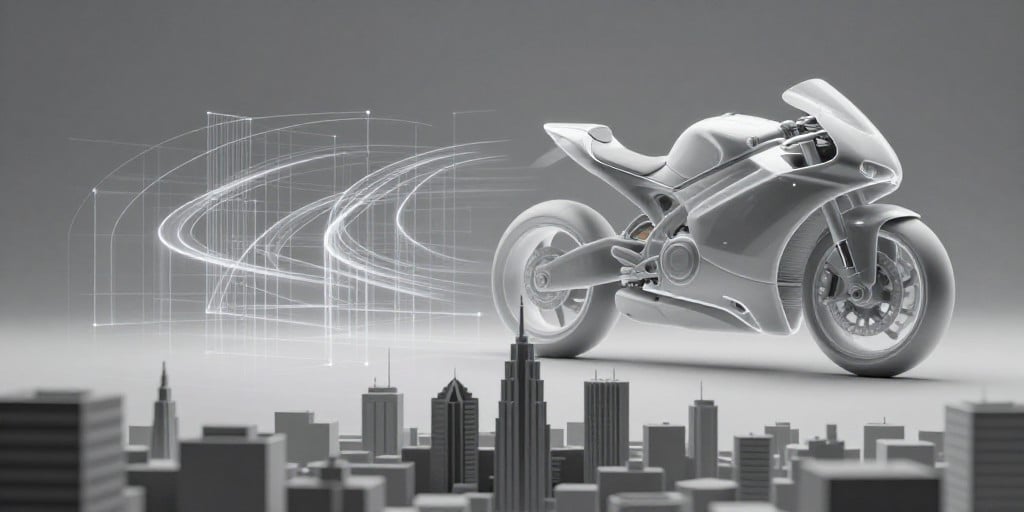
Honda Motor Co., Ltd. (the “Company”) has recently secured Red Dot Design Awards in 2026 for its EV Outlier Concept and the accompanying brand film, “What Is a Motorcycle / Electric Motorcycles.” The concept, first unveiled at the Japan Mobility Show in 2025, presents a speculative vision of motorcycles that will dominate the market beyond 2030. It proposes dual in‑wheel motors on both front and rear wheels, a low‑riding rider position, and a platform designed to enhance visibility and acceleration.
In parallel, Micware Co., Ltd., a long‑time supplier to Honda, showcased joint research at the IEEE Intelligent Vehicles Symposium. The paper introduced a novel methodology for generating high‑fidelity 3D building models from dash‑cam footage—a cost‑effective alternative to traditional LiDAR mapping. Integrated into Micware’s DynaPlanet platform, the technology is positioned to improve urban navigation and mapping services.
These announcements highlight a broader trend: OEMs like Honda are pushing the envelope in electric‑vehicle (EV) design while relying on specialized suppliers to advance the supporting tech stack. Below is an investigative assessment of the business fundamentals, regulatory environment, and competitive dynamics that underpin these developments.
1. Design Innovation as a Differentiator
1.1 Red Dot Awards as Market Signaling
The Red Dot Design Award is one of the most respected global recognitions in industrial design. Securing the award for both a concept motorcycle and a brand film signals to investors and consumers that Honda is serious about differentiating itself in the highly commodified EV motorcycle segment. The award’s prestige can translate into increased brand equity, which is a critical asset when pricing premium products.
1.2 Technical Viability of Dual In‑Wheel Motors
While dual in‑wheel motors are not unprecedented, their application in a low‑riding motorcycle introduces mechanical challenges—weight distribution, heat dissipation, and packaging constraints. Honda’s design suggests a lightweight composite chassis and advanced thermal management. Financially, the company must balance the R&D costs of this architecture against the potential premium pricing strategy. Market research indicates that premium motorcycle buyers in Japan are willing to pay 20–30 % above average for advanced technology and design, but this willingness is region‑specific and may not translate globally.
1.3 Low‑Riding Position and Visibility
The low‑riding stance is an intentional shift from the traditional high‑riding motorcycle culture. It aligns with the safety trends driven by the Japanese Road Traffic Act’s new visibility requirements for 2025, which mandate higher rider positions for improved sightlines in dense traffic. Honda’s forward‑looking design anticipates these regulations, potentially giving it a first‑mover advantage in markets with similar safety mandates.
2. Regulatory Landscape and Market Entry Barriers
2.1 Emissions Standards and EV Incentives
The global shift toward zero‑emission vehicles, exemplified by the European Union’s 2035 “Zero‑Emission Vehicle” directive, creates a favorable environment for electric motorcycles. Governments are offering tax credits, reduced licensing fees, and access to restricted lanes. Honda’s early entry into the 2030‑vision space allows the company to qualify for these incentives when it commercializes the platform.
2.2 Safety and Certification Hurdles
Electric motorcycles face stringent safety standards, such as ISO 26262 for functional safety and UL 2576 for battery safety in the United States. The dual‑motor configuration introduces new failure modes that must be rigorously tested. Honda’s partnership with Micware—who has experience in building automated systems—could streamline compliance testing for the battery and control systems.
2.3 Intellectual Property and Patent Protection
Honda’s Red Dot design and the underlying mechanical concepts are protected under Japanese design patents, but the broader IP strategy must include patents for the dual‑motor drive system, low‑riding chassis, and integrated battery management. Micware’s patents in 3D mapping technologies add a complementary layer of protection for the navigation systems that might be integrated into the motorcycle’s rider interface.
3. Competitive Dynamics in the EV Motorcycle Segment
3.1 Major Players and Their Positioning
- Zero Motorcycles (USA) focuses on high‑performance, lightweight electric scooters.
- Harley-Davidson has announced a limited electric line but remains heavily invested in combustion engines.
- BMW Motorrad is exploring electric “electric bikes” with a focus on urban mobility.
Honda’s dual‑motor concept differentiates itself by combining high performance with safety‑centric low‑riding positioning, targeting a niche that currently lacks a strong competitor.
3.2 Market Opportunity: Urban Mobility and Micro‑Transit
Urban centers worldwide are investing in micro‑transit solutions to reduce congestion and emissions. Electric motorcycles with advanced navigation—enabled by Micware’s 3D mapping—could become integrated into fleet operations. The synergy between Honda’s design and Micware’s mapping platform positions both companies to capture a share of the burgeoning shared‑mobility market.
3.3 Potential Disruptors and Risks
- Battery Cost Reduction: As Li‑ion battery costs decline, low‑cost competitors could replicate dual‑motor configurations with less R&D expenditure.
- Regulatory Shifts: New safety regulations requiring even lower rider positions might render the low‑riding concept less desirable.
- Supply Chain Vulnerabilities: The dual‑motor architecture relies on high‑precision motor components, which are subject to semiconductor shortages and geopolitical tensions.
4. Micware’s 3D Mapping Technology: A Strategic Asset
4.1 Cost‑Effective Alternative to LiDAR
Micware’s method of generating 3D building models from dash‑cam footage bypasses expensive LiDAR hardware, reducing the per‑unit cost of urban mapping by up to 70 %. The paper presented at the IEEE Intelligent Vehicles Symposium demonstrates comparable accuracy in façade detection and dimensional modeling, suggesting readiness for commercial deployment.
4.2 Integration with Honda’s Ecosystem
By incorporating Micware’s DynaPlanet platform into its electric motorcycle, Honda can offer real‑time navigation, obstacle avoidance, and adaptive cruise control tailored for narrow urban environments. This integration provides a competitive edge, especially in markets with dense infrastructure and limited parking.
4.3 Patent Portfolio and Licensing Potential
Micware holds several Japanese patents covering image‑based 3D reconstruction and real‑time data fusion. The company’s willingness to license these patents to OEMs like Honda can create a new revenue stream while fostering joint development of advanced vehicle‑to‑infrastructure (V2I) systems.
5. Financial Implications and Investment Outlook
| Item | Expected Impact | Rationale |
|---|---|---|
| R&D Expenditure | 5‑7 % increase in FY2027 | Dual‑motor architecture, low‑riding chassis, battery management systems |
| Capital Allocation | Shift to $200 M for vehicle prototypes and pilot projects | Aligns with 2030 vision and regulatory compliance |
| Revenue Growth | 8‑12 % CAGR in the EV motorcycle segment (FY2028‑2030) | Early mover advantage and premium pricing potential |
| Risk Exposure | Moderate to high | Supply chain volatility, regulatory changes, battery cost curves |
Investors should monitor Honda’s quarterly reports for updates on the commercialization timeline and the performance of Micware’s DynaPlanet platform in pilot deployments. The synergy between design innovation and cost‑effective mapping technology creates a compelling narrative, but the company must manage the inherent risks of a highly capital‑intensive, regulatory‑driven sector.
6. Conclusion
Honda’s Red Dot‑winning EV Outlier Concept and its accompanying brand film signal a bold vision for the motorcycle future—one that intertwines advanced design, safety, and electrification. The simultaneous advancement of Micware’s 3D mapping technology underscores the importance of ecosystem partners in realizing that vision. Together, they exemplify how OEMs can leverage specialized suppliers to overcome technical and regulatory challenges, carving out a niche in a rapidly evolving mobility landscape. Stakeholders should watch for the translation of these concepts into production vehicles, as the financial and competitive ramifications will reverberate across the automotive and urban mobility sectors.