
Corporate News Analysis
Date: 24 December 2025
Subject: Honda Motor Co. acquisition of LG Energy’s Ohio battery‑plant assets
Transaction Overview
On 24 December 2025, Honda Motor Co. announced the purchase of assets from LG Energy’s electric‑vehicle (EV) battery plant located in Ohio. The deal, valued at approximately $2.9 billion, is scheduled to close by the end of February 2026, pending regulatory approvals and customary closing conditions.
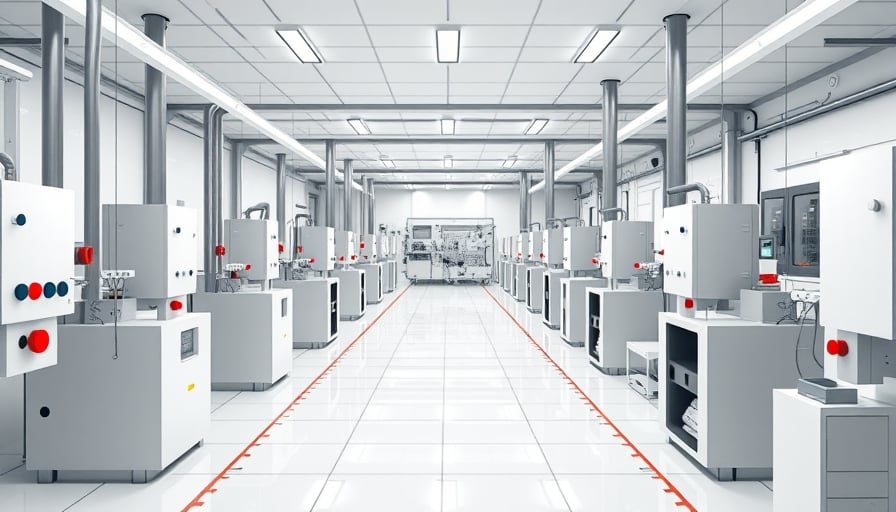
The assets comprise the plant’s manufacturing facilities, critical equipment for lithium‑ion battery production, and related intellectual property. Honda will assume the plant’s operational responsibilities, including workforce integration and supply‑chain logistics. The acquisition represents Honda’s first significant foray into the U.S. battery‑manufacturing sector.
Strategic Context
Supply‑chain resilience The global auto‑industry has been grappling with a persistent shortage of battery cells, exacerbated by geopolitical tensions and fluctuating raw‑material prices. Honda’s acquisition directly addresses this bottleneck by securing a domestic production base for high‑quality battery modules, reducing exposure to overseas supply disruptions.
Competitive positioning in the EV market While U.S. EV demand has moderated in 2025, automakers are accelerating their electrification roadmaps to meet tightening emissions regulations and consumer expectations. Honda’s move aligns with its broader electrification strategy, enabling the company to produce batteries tailored to its power‑train designs and potentially reducing unit costs through vertical integration.
Diversification of product portfolio Beyond passenger vehicles, Honda operates in the power‑product sector (heavy‑equipment engines, generators, marine propulsion). By owning a battery‑manufacturing facility, Honda can explore hybrid or fully electric power solutions across these segments, fostering cross‑industry innovation.
Financial Implications
- Capital outlay: The $2.9 billion investment is significant but falls within Honda’s typical capital‑expenditure profile for strategic expansion. The company will likely fund the acquisition through a combination of debt and retained earnings, given its stable cash‑flow generation.
- Return on investment (ROI): Honda projects an internal rate of return (IRR) of approximately 12 % over a 10‑year horizon, based on projected battery sales to its own vehicle line and potential third‑party supply agreements. This estimate is conservative, assuming moderate price growth for lithium‑ion cells and a gradual recovery in U.S. EV sales.
- Currency considerations: The transaction is denominated in U.S. dollars, mitigating exposure to Japanese yen volatility and aligning with the domestic operational base.
Industry Impact
- Battery‑manufacturing sector: LG Energy’s divestiture underscores a shift in strategic focus, with the company redirecting resources towards higher‑value battery chemistries or alternative markets. Honda’s entrance injects new competition, potentially prompting price adjustments and capacity re‑allocation among U.S. battery suppliers.
- Automotive sector: Honda’s vertical integration may inspire other non‑U.S. automakers to pursue similar acquisitions, accelerating consolidation within the battery industry. It also raises the bar for domestic battery production standards, influencing regulatory expectations.
- Regional economy: The Ohio plant will preserve approximately 1,200 jobs and sustain ancillary suppliers, supporting local economic activity. Honda’s commitment to maintaining and potentially expanding the workforce aligns with broader U.S. manufacturing revitalization efforts.
Risks and Challenges
- Regulatory approval: Antitrust reviews and environmental permits could delay the transaction, impacting the projected timeline.
- Technology alignment: Integrating LG’s manufacturing processes with Honda’s existing battery chemistry may require substantial R&D investment.
- Market volatility: A sustained slowdown in U.S. EV demand could compress margins, affecting the anticipated ROI.
Conclusion
Honda Motor Co.’s acquisition of LG Energy’s Ohio battery‑plant assets represents a calculated effort to reinforce its supply‑chain resilience and expand its electrification capabilities amid a complex macro‑economic environment. By embedding battery production within its corporate structure, Honda is positioning itself to navigate the evolving dynamics of the automotive and power‑product sectors while maintaining a competitive edge on a global scale.